

Your Body May Be Sending Signals You Have Learned To Ignore
Many people live in a state of nervous system dysregulation without realizing it.
They assume they are just tired.
They assume they are too busy.
They assume they need more discipline, more motivation, or better habits.
But sometimes what feels like a personal failure is actually your body trying to communicate that something deeper needs attention.
Your nervous system is one of the most important systems in your body.
It helps you respond to challenges.
It controls your ability to focus.
It influences your emotions, energy, movement, sleep, and recovery.
It is constantly taking in information and deciding:
“Am I safe, or do I need to protect myself?”
This system was designed to help you survive and adapt.
When a challenge appears, your nervous system increases awareness, energy, and readiness.
When the challenge passes, your body should naturally return to a state of rest and recovery.
That rhythm is essential.
Activation.
Recovery.
Action.
Rest.
The problem is that many people live in a world where the stress never fully turns off.
Constant responsibilities.
Digital stimulation.
Emotional pressure.
Poor sleep.
Little recovery.
Over time, the nervous system can begin spending more time in a protective state and less time in a restorative state.
This is what many people experience as nervous system dysregulation.
The body becomes better at preparing for stress than returning to calm.
And eventually, this state can start to feel normal.
You may think:
“This is just who I am now.”
“I have always been this tired.”
“I am just an anxious person.”
“I have always had trouble slowing down.”
But the truth is, your nervous system is adaptable.
The same system that learns stress patterns can also learn regulation, safety, and balance.
The first step is awareness.
You cannot change a pattern you do not recognize.
Here are seven signs your nervous system may be asking for support.
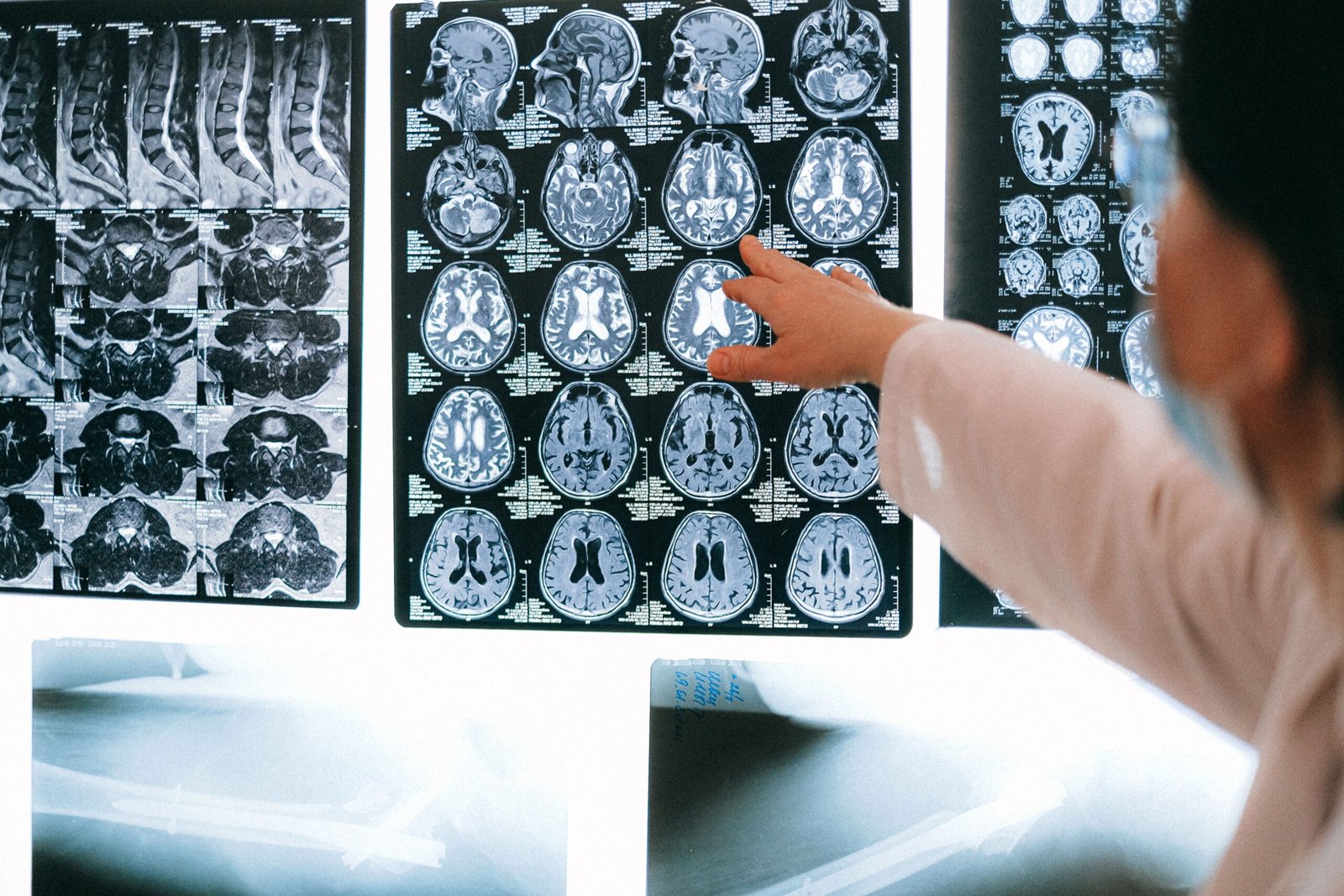
The Surprising Truth Behind Nervous System Dysregulation
Nervous system dysregulation does not mean your nervous system is broken.
It means your body has adapted to the signals it has repeatedly received.
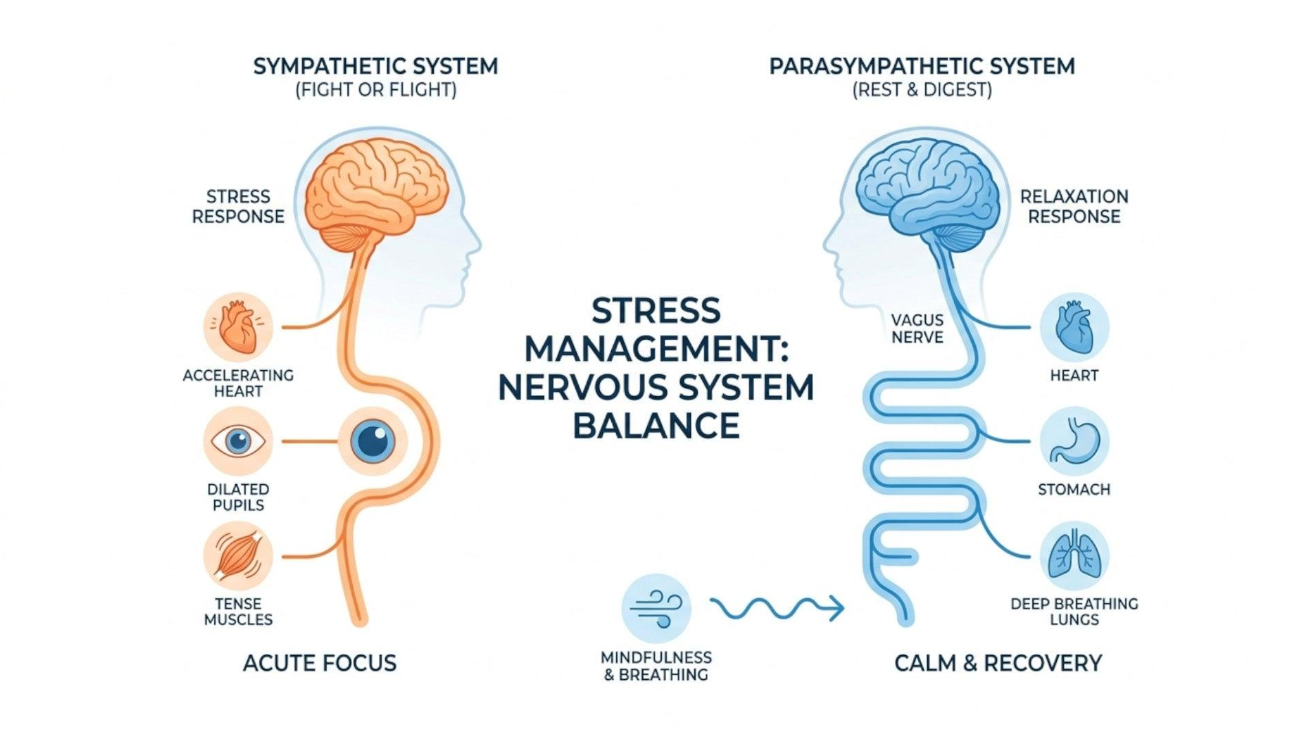
Your nervous system has two primary states that work together:
One helps you respond.
One helps you recover.
The sympathetic nervous system helps mobilize energy when you need action.
It is responsible for your fight-or-flight response.
This system is valuable.
It helps you perform.
It helps you react quickly.
It helps you handle challenges.
The problem happens when the body spends too much time in this activated state without enough recovery.
Your system begins to operate as if demands are always coming.
A stressful conversation.
A difficult deadline.
A lack of sleep.
A constant stream of information.
A life with no margin.
Each individual stressor may seem manageable.
But the nervous system responds to the total accumulation.
Eventually, you may notice:
- Your patience is shorter.
- Your energy feels unpredictable.
- You have difficulty relaxing.
- Your body feels tense.
- Your mind feels constantly active.
- Things that used to feel easy now feel overwhelming.
This is why nervous system regulation is not about eliminating stress.
Stress is part of life.
The goal is rebuilding the ability to move between challenge and recovery.
A healthy nervous system can rise to meet demands and return to balance afterward.
That flexibility is resilience.
7 Hidden Signs Your Nervous System May Be Dysregulated
Your nervous system does not always communicate through obvious symptoms.
Sometimes it speaks through patterns.
The small things you begin noticing.
The things you quietly adapt to.
The changes you assume are just part of getting older or becoming busier.
But these signals matter.
1. You Feel Tired But You Can’t Fully Rest
One of the most common signs of nervous system dysregulation is feeling exhausted but unable to truly relax.
Your body wants rest.
But your mind keeps moving.
You finish the day tired, yet you find yourself scrolling, thinking, planning, or searching for more stimulation.
You may feel like you are waiting for something.
Even when nothing is happening.
This happens because your body may have difficulty shifting from a state of demand into a state of recovery.
Rest is not only about stopping activity.
Your nervous system has to receive the message that it is safe to slow down.
2. Small Things Feel Bigger Than They Should
Have you ever had a moment where something small creates a reaction that feels much bigger than the situation itself?
A minor inconvenience.
A simple comment.
A small change in plans.
Sometimes this happens because your nervous system is already carrying a heavy load.
When your stress capacity is reduced, your emotional threshold becomes smaller.
The issue may not be the size of the problem.
The issue may be how much your system is already trying to manage.
3. Your Mind Feels Constantly Busy
A busy mind is another common sign.
You may constantly replay conversations.
Think about future problems.
Create endless mental lists.
Search for solutions.
Your brain is designed to solve problems.
But when it rarely gets a chance to settle, thinking can become exhausting.
The mind stays active because the nervous system continues sending signals that something needs attention.
4. Your Sleep Does Not Feel Restorative
Sleep is one of the most important ways your nervous system resets.
But many people struggle with sleep even when they are physically tired.
You may:
- Wake up throughout the night
- Have trouble falling asleep
- Wake up feeling exhausted
- Feel like your brain never fully shuts off
Quality sleep requires the body to move into a state of restoration.
When your nervous system remains activated, recovery can become more difficult.
5. You Struggle To Focus Or Stay Present
Your attention is directly connected to your nervous system state.
When your system is overwhelmed, your ability to focus can suffer.
You may notice:
- Difficulty concentrating
- Constantly checking your phone
- Jumping between tasks
- Feeling mentally scattered
This is not always a discipline problem.
Sometimes your brain has simply adapted to constant stimulation.
6. Your Body Feels Stuck Between Tension And Fatigue
Many people describe this feeling as:
“Wired but tired.”
Your body feels exhausted, but it also feels unable to fully settle.
You may experience:
- Muscle tension
- Tight shoulders
- Shallow breathing
- Restlessness
- Feeling physically drained
Your body is trying to protect you while also needing recovery.
7. You No Longer Feel Like Yourself
This is often the sign people connect with the most.
You may notice:
“I don’t feel like the old me.”
“I don’t enjoy things the same way.”
“I feel disconnected.”
“I am always reacting instead of being present.”
When your nervous system spends too much time in survival mode, life can start feeling smaller.
You may lose access to patience, creativity, joy, and connection.
But this is important:
Your nervous system is not your identity.
It is a system that can change.
Awareness creates the opportunity for transformation.

How To Begin Regulating Your Nervous System Again
Recognizing the signs of nervous system dysregulation is important.
But awareness is only the beginning.
The next step is teaching your body a different pattern.
A regulated nervous system is not created by one perfect day.
It is built through repeated experiences that tell your body:
“I am safe.”
“I can slow down.”
“I can recover.”
Many people try to fix stress by adding more effort.
They push harder.
They work longer.
They demand more from themselves.
But a nervous system that is already overwhelmed usually does not need more pressure.
It needs a different signal.
It needs opportunities to move from constant protection into restoration.
Here are some simple ways to begin rebuilding that balance.
Create Moments Of Stillness
One of the most powerful things you can do for your nervous system is create space where nothing is demanding your attention.
Modern life rarely gives you silence.
There is always something competing for your focus.
A notification.
A message.
A task.
A new piece of information.
Even small moments of stillness can become powerful recovery signals.
Sit outside.
Take a quiet walk.
Spend a few minutes without your phone.
Allow your mind to slow down without immediately filling the space.
Stillness is not wasted time.
It is where your nervous system begins processing and recovering.
Use Movement As Regulation
Movement is one of the ways your body naturally releases stress.
This does not mean every workout needs to be intense.
Sometimes regulation comes through:
- Walking
- Mobility work
- Stretching
- Strength training
- Gentle movement
Your nervous system communicates through your body.
When you move intentionally, you remind yourself that you are present and capable.
Strength training, in particular, can be a powerful practice because it teaches your body how to experience challenge, adapt, and recover.
The goal is not always to push harder.
Sometimes the goal is to reconnect.
Slow Your Breathing
Your breath is one of the simplest tools available to influence your nervous system.
When stress rises, breathing often becomes faster and more shallow.
By intentionally slowing your breathing, you can begin sending your body a different message.
You are telling your system:
“There is no immediate danger.”
“You can soften.”
“You can return to balance.”
Even a few minutes of slow, controlled breathing can become a daily practice of regulation.
Protect Your Recovery
Recovery is not something you earn after everything is finished.
Because if your nervous system is overwhelmed, everything may never feel finished.
Sleep.
Nutrition.
Hydration.
Quiet time.
Healthy boundaries.
These are not luxuries.
They are signals that tell your body recovery matters.
The strongest people are not the ones who can push forever.
They are the ones who understand when to recover so they can continue moving forward.
Reduce Unnecessary Stimulation
Your nervous system is constantly learning from what you expose yourself to.
This does not mean technology is bad.
It means awareness matters.
Pay attention to how much constant input you are allowing into your day.
Consider:
- Turning off unnecessary notifications
- Creating phone-free moments
- Reducing endless scrolling
- Spending more time creating than consuming
You do not need to escape the modern world.
You simply need moments where your nervous system is not being asked to process more.

Your Nervous System Can Learn Safety Again
One of the most important things to understand about nervous system dysregulation is this:
Your current state is not a life sentence.
Your nervous system is adaptable.
The same way your body can learn patterns of stress, tension, and protection, it can also learn patterns of calm, resilience, and recovery.
This is the foundation of neuroplasticity.
Your brain and nervous system are constantly changing based on your experiences, habits, and environment.
Every day, you are sending signals to your body.
Some signals communicate urgency.
Some communicate safety.
Some reinforce stress.
Some create recovery.
The goal is not to create a life where nothing difficult happens.
That is impossible.
The goal is to build a system that can experience difficulty without losing its ability to return to balance.
A strong nervous system is not one that never feels stress.
It is one that knows how to recover from stress.
This is why small daily practices matter.
A few minutes of intentional breathing.
A walk outside.
Strength training.
Better sleep habits.
Moments of silence.
Choosing awareness before reaction.
These may seem simple, but your nervous system responds to repetition.
Over time, these small choices create new patterns.
You begin becoming more aware of your thoughts.
You create more space between a trigger and your response.
You recover faster after stressful moments.
You feel more connected to yourself.
This is the process of regulation.
Not perfection.
Not avoiding challenges.
Not becoming someone who never struggles.
It is learning how to return home to yourself more consistently.
Because underneath all the stress, all the habits, and all the patterns your body has developed, there is still a nervous system designed for balance.
It is not about becoming a different person.
It is about reconnecting with the person you were created to be.
Here’s The Path
Your nervous system is always listening.
It is learning from your environment.
It is learning from your habits.
It is learning from the way you respond to stress, rest, challenges, and recovery.
The question is not whether your nervous system is adapting.
It is.
The question is:
What are you teaching it every day?
If your life is filled with constant pressure, overstimulation, and little recovery, your body will naturally begin preparing for more pressure.
But when you begin creating different signals through movement, stillness, awareness, and intentional habits, your nervous system can begin changing direction.
You do not regulate your nervous system by forcing yourself to be calm.
You regulate it by creating experiences that allow calm to become familiar again.
Start small.
Take a breath before reacting.
Move your body.
Protect your recovery.
Create moments of silence.
Pay attention to what your body has been trying to tell you.
Your nervous system is not your enemy.
It has been trying to protect you.
Now you have the opportunity to teach it that you are safe.
Because true strength is not just the ability to handle more.
True strength is the ability to return to balance.
That’s the path.
The Research Behind This Article
Stress and the Brain: From Adaptation to Disease
Nature Reviews Neuroscience
Research examining how repeated stress affects brain systems involved in adaptation, emotional regulation, and the body’s stress response.
The Human Stress Response
Nature Reviews Endocrinology
Research explaining how the body’s stress response is regulated through interconnected neural and hormonal systems, including the hypothalamic-pituitary-adrenal (HPA) axis.
Physiological Biomarkers of Chronic Stress: A Systematic Review
Neuroscience & Biobehavioral Reviews
A systematic review examining biological markers associated with chronic stress, including cortisol, autonomic nervous system activity, and stress-related physiological changes.
Physical Activity and Mental Health: A Large-Scale Study of Over 1.2 Million Individuals
The Lancet Psychiatry
Research examining how regular physical activity is associated with improved mental health outcomes and greater resilience against stress.
The research continues to show that the nervous system is not a fixed system. It adapts based on repeated experiences, stress exposure, movement, recovery, sleep, and daily habits. Understanding this gives us an important perspective: You are not simply trying to “manage stress.” You are creating the conditions for your nervous system to learn a healthier pattern.
Continue Your Journey
Your nervous system influences everything from your energy and emotions to your performance and recovery.
Continue learning how daily habits, stress, and movement shape the way you feel:
The Hidden Warning Signs Your Nervous System Needs Help
https://fullarmorhq.com/the-hidden-warning-signs-your-nervous-system-needs-help/
How Overstimulation Is Draining Your Nervous System
https://fullarmorhq.com/how-overstimulation-is-draining-your-nervous-system/
How Strength Training Helps Regulate Your Nervous System
https://fullarmorhq.com/how-strength-training-helps-regulate-your-nervous-system/
Start Here
If you are feeling overwhelmed, disconnected, or stuck in a cycle of stress, start with simple daily practices.
Download the FREE Full Armor Nervous System Reset Guide.
Inside you will discover practical habits designed to help you:
- Regulate your nervous system
- Reduce stress and overwhelm
- Build healthier daily rhythms
- Improve recovery
- Reconnect with yourself
Download the FREE guide:
https://fullarmorhq.com/free-guide/
If You Want To Go Deeper…
Awareness is the first step.
But lasting change comes from consistent practice.
The Full Armor 21 Day Method was created to help you build a daily framework around nervous system regulation, movement, recovery, and intentional living.
Inside the method, you will learn how to:
- Create habits that support nervous system balance
- Build consistency without relying on motivation alone
- Strengthen your mind and body
- Develop greater resilience to stress
- Create a daily rhythm that supports who you are becoming
You do not transform your nervous system by changing everything overnight.
You transform it by creating better signals every day.
If you want to go deeper, the Full Armor 21 Day Method gives you the framework to begin.
Explore the Full Armor 21 Day Method:
https://fullarmorhq.com/fullarmormethod/
No responses yet