

The Hidden Impact Of Chronic Stress On Your Body And Mind
Most people think chronic stress begins and ends in the mind.
They think stress is simply feeling overwhelmed, worried, or having too much on their plate.
But stress is not just a thought.
It is a full-body experience.
Every stressful situation creates a response throughout your nervous system.
Your brain communicates with your body.
Your body adjusts your breathing, heart rate, hormones, energy, and attention based on what it believes you need in that moment.
This system is designed to protect you.
It is one of the greatest survival mechanisms humans have.
When you face a challenge, your nervous system helps you respond.
It increases awareness.
It prepares your body for action.
It gives you the energy and focus needed to handle what is in front of you.
The problem is not stress itself.
Stress is a normal and necessary part of life.
The problem happens when stress becomes constant and your body rarely receives the message that the threat has passed.
When this happens, your nervous system can begin spending more time in protection mode and less time in recovery mode.
This is what many people describe as feeling stuck in survival mode.
You may notice:
- You feel tired but cannot fully relax
- Your mind keeps racing even when life slows down
- Small problems feel bigger than they should
- Your patience and emotional tolerance decrease
- You struggle to feel present
- Your body feels tense and worn down
Eventually, this state can begin to feel normal.
You may think:
“This is just how life is.”
“I am just getting older.”
“I have always been this way.”
But often, what feels like your personality may actually be your nervous system adapting to prolonged stress.
Your body is not failing.
It is responding exactly how it was designed to respond.
The question is whether it has been given enough opportunities to return to balance.
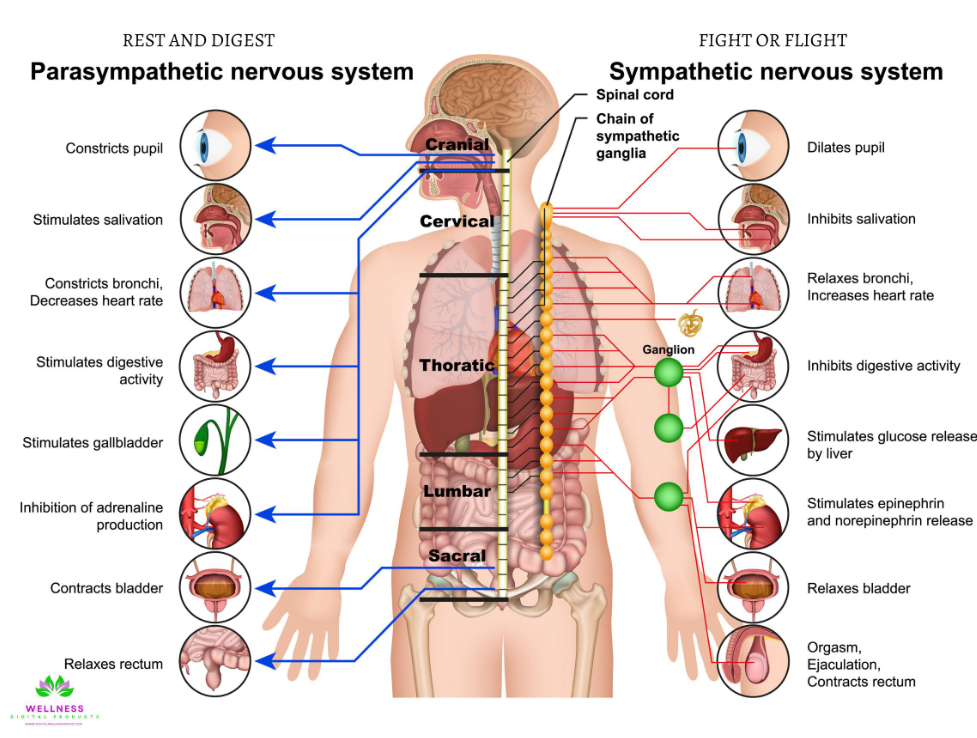
What Survival Mode Actually Means
The phrase “survival mode” is often used casually, but there is a deeper biological process happening underneath it.
Survival mode describes a state where your nervous system spends more time preparing for threats than experiencing safety and recovery.
Your nervous system is constantly asking:
“What is happening?”
“Am I safe?”
“Do I need to prepare?”
This process happens automatically.
You do not consciously decide to enter a stress response.
Your body does it for you.
When a challenge appears, the sympathetic nervous system helps you mobilize.
Your heart rate increases.
Your attention becomes sharper.
Your body releases energy.
You become ready to respond.
This response is valuable.
It helps you perform under pressure.
It helps you react during emergencies.
It helps you handle difficult moments.
The problem is when the body stays there.
A healthy nervous system is flexible.
It knows how to activate when needed and how to return to rest afterward.
Stress.
Recovery.
Action.
Rest.
That rhythm is what creates resilience.
But chronic stress disrupts that rhythm.
Instead of returning fully to recovery, the body can begin operating from a place of constant readiness.
This can create the feeling of always being “on.”
Even when nothing urgent is happening.

Why Chronic Stress Changes The Way Your Nervous System Responds
Your nervous system is built to adapt.
That is one of its greatest strengths.
Every experience you have teaches your body something.
Your nervous system learns from movement.
It learns from relationships.
It learns from your environment.
It learns from repeated stress.
This ability to adapt is what helps humans survive.
But adaptation is not always positive.
Just like your body adapts when you train consistently, it also adapts when it experiences repeated stress.
Over time, chronic stress can influence how your brain and body respond.
The nervous system may become more sensitive to potential threats.
Recovery may become more difficult.
Your baseline level of tension may increase.
Your ability to relax may decrease.
This is why someone can say:
“I don’t even know how to relax anymore.”
They are not necessarily incapable of resting.
Their nervous system may simply be more familiar with activation than calm.
The body has learned a pattern.
And patterns can be changed.

The Hidden Cost Of Living In Survival Mode and Chronic Stress
Living in survival mode affects more than your stress levels.
It can influence the systems responsible for how you think, feel, move, and recover.
Sleep Quality
Sleep requires the body to shift into a restorative state.
But when the nervous system remains activated, it can become harder to fully settle.
You may fall asleep but wake up feeling like you never truly recovered.
Emotional Regulation
When your system is already carrying a high stress load, your emotional capacity can become smaller.
Things that once felt manageable may suddenly feel overwhelming.
Focus And Concentration
A stressed brain prioritizes protection.
This can make it harder to focus, create, problem-solve, or stay present.
Physical Recovery
Your workouts, movement, and physical performance are connected to your nervous system.
A body that is constantly stressed may struggle to recover as efficiently.
Energy Levels
Many people experience the frustrating combination of feeling exhausted while also feeling unable to slow down.
This is one of the most common signs that your body needs more recovery signals.

Why Overwhelm and Chronic Stress Starts To Feel Normal
One of the most overlooked parts of chronic stress is how quickly the body adapts.
The nervous system is designed to recognize patterns.
When something happens repeatedly, the brain begins treating it as familiar.
Not necessarily healthy.
Just familiar.
This is why someone can live with:
- Constant rushing
- Poor sleep
- Endless notifications
- Emotional pressure
- No quiet time
- Little recovery
and eventually think:
“This is just normal life.”
But normal and healthy are not always the same thing.
A body can adapt to conditions that are not actually helping it thrive.
Over time, you may stop noticing the signals.
You stop recognizing how tense you are.
You stop noticing how exhausted you feel.
You simply adjust.
This is why awareness matters.
You cannot change a pattern you no longer recognize.

The Modern World Keeps The Nervous System and Chronic Stress Activated
The modern world has created incredible opportunities.
Technology connects us.
Information is available instantly.
Communication is easier than ever.
But there is also a cost.
The nervous system was not designed for constant stimulation without recovery.
Many people experience:
- Nonstop notifications
- Endless information
- Constant comparison
- Difficulty disconnecting
- Work and personal life blending together
- Little time without input
The problem is not technology itself.
The problem is the lack of rhythm.
The human body needs cycles.
Effort and recovery.
Focus and rest.
Challenge and restoration.
Without those cycles, the nervous system can begin feeling like it always needs to prepare for the next demand.

How To Begin Moving Out Of Survival Mode and Chronic Stress
The nervous system does not change through one major moment.
It changes through repeated signals.
Small actions practiced consistently teach your body a new pattern.
Slow Your Breathing
Your breathing is one of the easiest ways to influence your internal state.
Slow, intentional breathing can help create a signal of safety and awareness.
Move Your Body
Movement helps your body process stress.
Walking, mobility work, and strength training all provide opportunities to reconnect with yourself.
Get Morning Light
Light exposure helps regulate your body’s natural rhythms and supports healthy sleep patterns.
Prioritize Recovery
Sleep, hydration, nutrition, and rest are not optional extras.
They are part of building a resilient nervous system.
Reduce Overstimulation
Create moments where your brain is not constantly processing new information.
Silence is a form of recovery.
Practice Awareness
Notice your patterns.
Notice your reactions.
Notice what your body has been trying to communicate.
Awareness creates the ability to change.

Your Nervous System Is Not Broken
This may be the most important thing to understand.
Your nervous system is not your enemy.
It has been trying to protect you.
The tension.
The exhaustion.
The constant alertness.
The difficulty slowing down.
These are not signs that you are weak.
They are signs that your body has been carrying something for a long time.
The goal is not to eliminate every stressful moment.
That is impossible.
The goal is to rebuild your ability to move through stress without becoming trapped by it.
Your nervous system can learn.
It can adapt.
It can become more resilient.
The same system that learned patterns of stress can learn patterns of safety.
Here’s The Path
Your nervous system is always listening.
It is learning from your environment.
It is learning from your habits.
It is learning from the way you respond to stress, recovery, and daily life.
The question is not whether your nervous system is adapting.
It is.
The question is:
What are you teaching it every day?
If your body receives constant signals of urgency, pressure, and stimulation, it will naturally prepare for more of the same.
But when you begin creating different signals through movement, stillness, breathwork, recovery, and awareness, your nervous system can begin changing direction.
You do not escape survival mode by fighting yourself harder.
You create a new pattern through consistency.
One breath.
One walk.
One healthier choice.
One moment of awareness at a time.
Your body has been protecting you.
Now you can begin teaching it that it is safe to recover.
Because true strength is not just the ability to endure more.
True strength is the ability to return to balance.
That’s the path.
The Research Behind This Article
The connection between chronic stress and nervous system function has been studied extensively across neuroscience, psychology, and physiology.
Research shows that prolonged stress exposure can influence how the brain and body respond to challenges, affecting areas involved in emotional regulation, recovery, sleep, and overall resilience.
Chronic Stress And The Brain’s Stress Response
Stress and the Brain: From Adaptation to Disease
Nature Reviews Neuroscience – This research examines how repeated stress exposure affects brain systems involved in adaptation, emotional regulation, and the body’s ability to respond to challenges.
How Chronic Stress Affects The Body
The Human Stress Response
Nature Reviews Endocrinology – This review explains how stress activates interconnected systems throughout the body, including the nervous system and hormonal pathways involved in the stress response.
Sleep, Recovery, And Emotional Regulation
Sleep and Emotion Regulation: An Intimate Relationship
Neuroscience & Biobehavioral Reviews – This review explores the relationship between sleep quality, emotional regulation, and the brain’s ability to recover from daily stress.
Movement And Stress Resilience
Physical Activity and Mental Health: A Large-Scale Study of Over 1.2 Million Individuals
The Lancet Psychiatry – This study examined the relationship between physical activity and improved mental health outcomes, supporting the role of movement in building resilience and reducing the impact of stress.
Continue Your Journey
Your nervous system affects much more than stress. It influences your energy, emotions, physical performance, recovery, focus, and your ability to feel present in your own life. Continue exploring how daily habits, movement, and awareness can help you rebuild resilience:
The Hidden Warning Signs Your Nervous System Needs Help
Learn how your body communicates when stress has become your baseline and what signals you may have been overlooking.
7 Hidden Signs Your Nervous System Is Dysregulated
Discover the common patterns that may reveal your nervous system is spending too much time in protection mode.
How Overstimulation Is Draining Your Nervous System
Understand how constant input, digital overload, and lack of recovery can keep your body stuck in a state of stress.
Start Your Recovery
If your nervous system has been carrying too much for too long, the first step is awareness.
The Full Armor Nervous System Reset Guide was created to help you build simple daily practices that support regulation, recovery, and a healthier relationship with stress.
Inside you’ll discover practical tools to help you:
- Calm an overwhelmed nervous system
- Create healthier daily rhythms
- Support recovery through movement, breathwork, and awareness
- Build habits that help you feel more balanced and connected
Start creating a stronger foundation today.
Download the free guide:
If You Want To Go Deeper
Awareness is where change begins.
But lasting transformation comes from consistent practice.
The Full Armor 21 Day Method is designed to help you create a daily framework around nervous system regulation, movement, recovery, nutrition awareness, and intentional living.
Inside the method, you will learn how to:
- Build habits that support nervous system balance
- Develop greater resilience under stress
- Improve consistency without relying on motivation alone
- Strengthen your mind and body together
- Create a lifestyle that supports who you are becoming
Your nervous system changes through the signals you repeat.
If you want to go deeper, the Full Armor 21 Day Method gives you the framework to begin.
No responses yet