

If you don’t feel like yourself anymore, it is easy to assume something is wrong with you.
Maybe you feel more tired than usual.
Maybe you are less motivated.
Maybe things you used to enjoy do not feel the same.
Maybe you find yourself saying:
“I don’t know what happened to me.”
“I just don’t feel like myself anymore.”
Many people assume this means they have lost who they are.
But often, something deeper is happening.
Your nervous system may have been carrying more stress, pressure, and stimulation than it was designed to handle.
Your nervous system is constantly communicating with your brain and body.
It influences:
- energy
- emotions
- focus
- motivation
- recovery
- connection
- your ability to feel present
When your nervous system is overwhelmed for too long, your body adapts.
Not because it is broken.
Because it is trying to protect you.
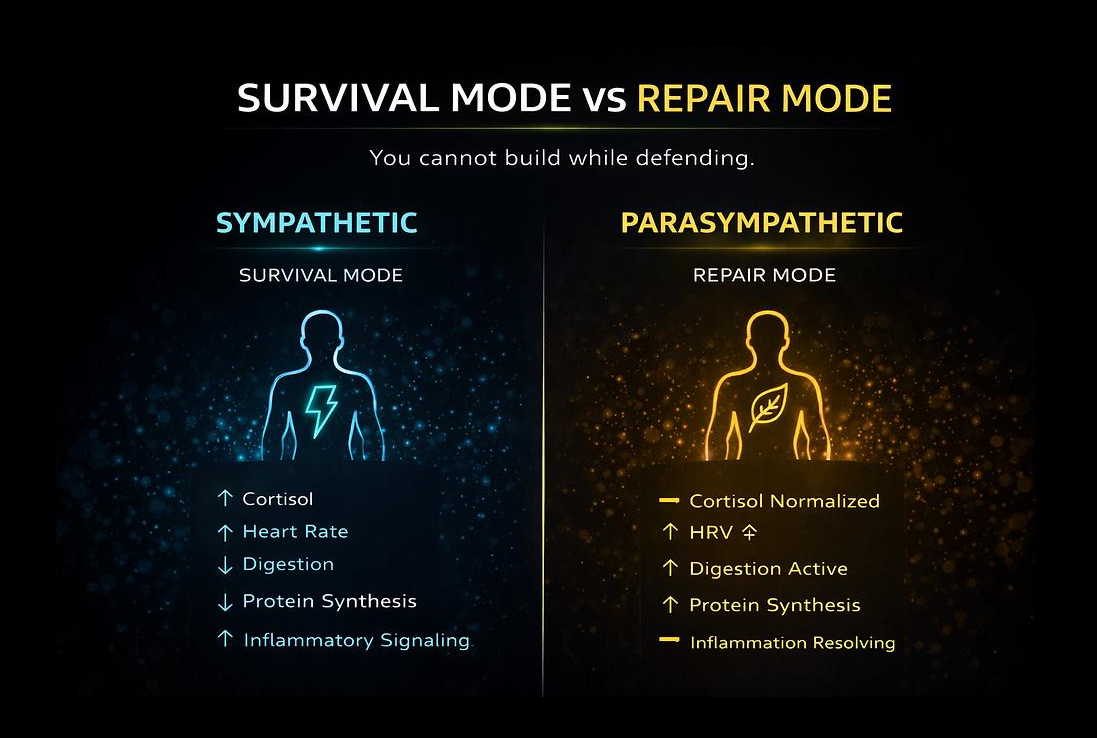
What’s Actually Happening Underneath The Surface When You Don’t Feel Like Yourself Anymore
Your Nervous System Is Designed For Balance
Your nervous system has one major responsibility:
To help you respond to life and return to balance.
When challenges appear, your body activates.
You become more alert.
Your attention increases.
Your energy shifts toward handling the situation.
This is healthy.
Stress itself is not the enemy.
The problem happens when the body stays activated without enough time to recover.
Modern life creates a constant stream of stress signals:
- Work pressure
- Financial stress
- Digital overload
- Emotional demands
- Lack of sleep
- Constant stimulation
Over time, your nervous system can begin prioritizing protection over restoration.
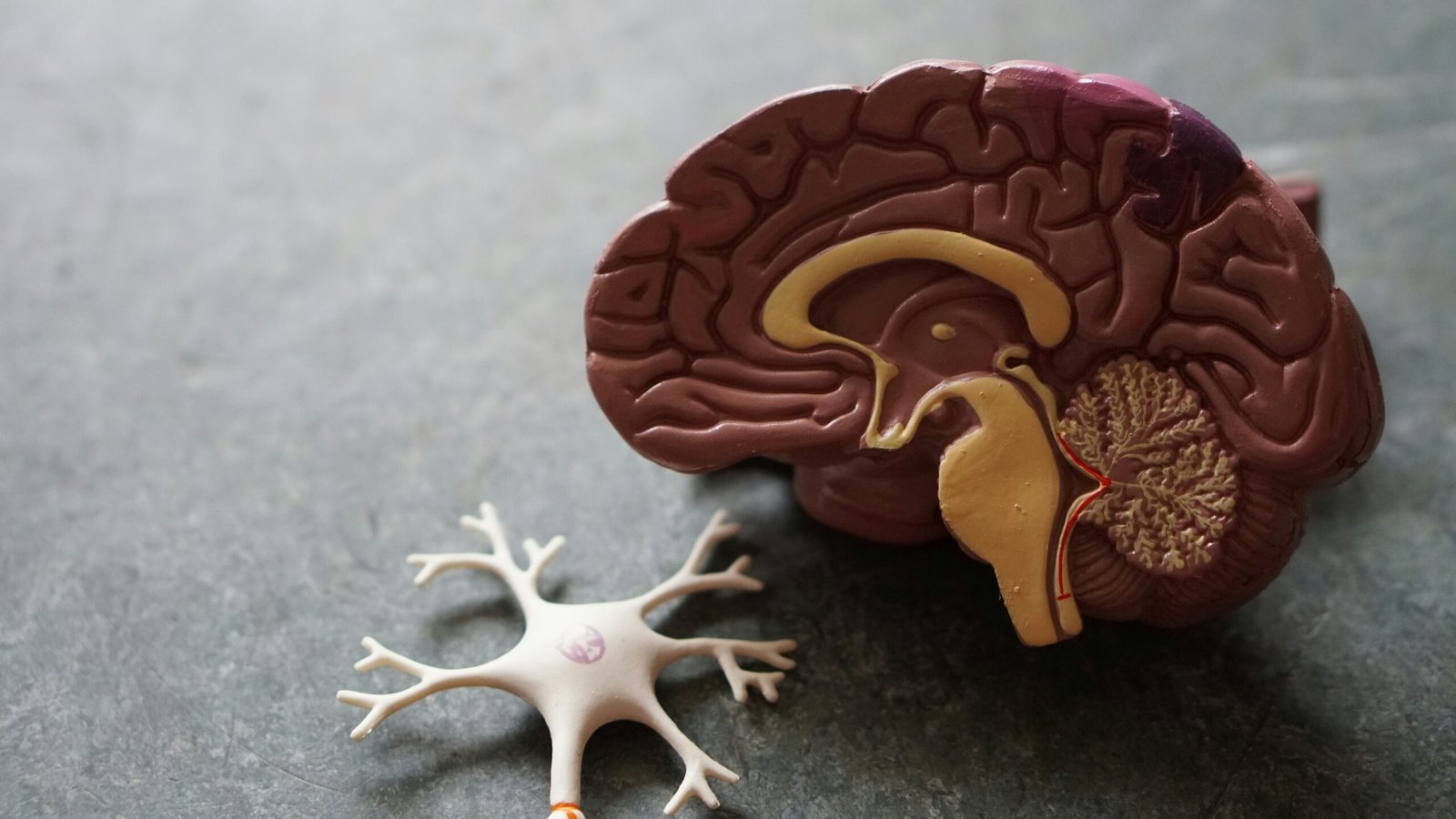
Chronic Stress Can Change Your Baseline
The body adapts to repeated experiences.
This is a survival mechanism.
But the same system that helps you adapt to challenges can also adapt to prolonged stress.
Eventually:
- Calm may feel unfamiliar
- Rest may feel difficult
- Small problems may feel bigger
- Your emotional capacity may decrease
You are not becoming a different person.
Your nervous system is simply operating from a different state.
The Hidden Signs Of Why You Don’t Feel Like Yourself Anymore
Why You Feel Disconnected From Yourself
One of the most confusing experiences of chronic stress is feeling disconnected.
You may think:
“Why don’t I enjoy things like I used to?”
“Why do I feel emotionally flat?”
“Why am I just going through the motions?”
This can happen when your nervous system has been focused on survival for too long.
When the body is constantly managing stress, it has fewer resources available for creativity, curiosity, joy, and connection.

Emotional Numbness Is Often A Protective Response
Emotional numbness is not always a lack of emotion.
Sometimes it is the nervous system attempting to reduce overload.
When too much stress accumulates, the body may protect itself by turning down sensitivity.
This can feel like:
- Feeling detached
- Feeling tired all the time
- Difficulty getting excited
- Feeling unlike yourself
Why This Happens Is Not What Most People Think
Your Nervous System Is Adapting — Not Failing
Many people respond to these feelings by trying harder.
They push themselves.
They demand more discipline.
They criticize themselves.
But if the nervous system is overloaded, more pressure is usually not the answer.
The body does not need more threat.
It needs signals of safety.
This is where recovery begins.

The Connection Between Your Nervous System And Your Sense Of Self
When people say, “I don’t feel like myself anymore,” they are usually describing more than stress.
They are describing a loss of connection.
Connection to their energy.
Connection to their emotions.
Connection to the things that once made them feel alive.
Your nervous system plays a role in how you experience the world around you.
When your system is constantly focused on managing pressure, it can become harder to access curiosity, creativity, joy, and presence.
You may still be functioning.
You may still be getting things done.
But internally, something feels different.
That feeling is often the body’s way of communicating that it needs attention.
How To Start Feeling Like Yourself Again
The path back does not begin by forcing yourself to become more productive.
It begins by becoming aware of what your body has been carrying.
Ask yourself:
- When did I start feeling disconnected?
- What changed in my daily life?
- Have I allowed myself enough time to recover?
- Am I constantly consuming but rarely creating?
- Am I living from intention or simply reacting?
Awareness creates the first opportunity for change.
You cannot restore something you have never stopped to notice.
Here’s The Path
Feeling like yourself again is not about going backward.
It is about creating the conditions for your natural strengths, emotions, and personality to come forward again.
Your nervous system is constantly responding to the environment around you.
That means the way you live each day matters.
Small choices become powerful signals:
- Moving your body
- Creating moments of stillness
- Spending time outside
- Breathing intentionally
- Reducing unnecessary stimulation
- Building rhythms that support recovery
The goal is not perfection.
The goal is reconnection.
Because underneath the stress, the pressure, and the exhaustion, there is still a person who is capable of growth, purpose, creativity, and connection.
Sometimes the first step toward feeling like yourself again is simply creating enough space to hear yourself.
The Research Behind Feeling Like Yourself Again
The feeling of “not being yourself” can be difficult to explain because it involves more than one system in the body. Research shows that prolonged stress can influence brain function, emotional regulation, sleep, attention, and the way we respond to our environment. The nervous system is constantly adapting to the signals it receives.
When the body experiences prolonged stress without enough recovery, those adaptations can influence how connected, energized, and emotionally balanced we feel.
Chronic Stress, Sleep, And Cognitive Function
Stress-related Exhaustion Disorder—Clinical Manifestation of Burnout? A Review of Assessment Methods, Sleep Impairments, Cognitive Disturbances, and Neuro-biological and Physiological Changes in Clinical Burnout
Scandinavian Journal of Psychology
This review examines how prolonged stress and burnout are associated with sleep disturbances, cognitive impairment, emotional exhaustion, and measurable neurobiological changes. It supports the idea that chronic stress can influence how people feel, think, and function over time.
Emotional Exhaustion, Burnout, And Feeling Disconnected
Burnout: A Review of the Literature
Update: Applications of Research in Music Education
This review explains burnout as a condition characterized by emotional exhaustion, detachment, reduced motivation, and diminished well-being. It provides a helpful overview of how prolonged stress can affect how people think, feel, and function.
Stress, Sleep, And The Ability To Recover
Sleep and Emotion Regulation: An Organizing, Integrative Review
Sleep Medicine Reviews
This review examines the relationship between sleep and emotional regulation, showing how sleep plays an important role in processing emotions and recovering from daily stress.
The research points to an important idea: Sometimes feeling disconnected from yourself is not a sign that you have lost who you are. It may be a sign that your body has adapted to a season of prolonged pressure. When you begin changing the signals your nervous system receives, you create the opportunity for a different response.
Continue Your Journey
Understanding why you don’t feel like yourself anymore is the first step. The next step is learning how to recognize the patterns, habits, and stress signals that may be keeping your nervous system from returning to balance. Continue exploring:
7 Hidden Signs Your Nervous System Is Dysregulated
Your body often communicates before your mind understands what is happening. Learn the signs that your nervous system may be spending too much time in protection mode.
Read next:
https://fullarmorhq.com/7-signs-your-nervous-system-is-dysregulated/
Why Chronic Stress Keeps Your Nervous System Stuck In Survival Mode
Discover how prolonged stress can change the way your body responds and why recovery becomes harder when stress becomes your baseline.
Read next:
https://fullarmorhq.com/chronic-stress-survival-mode/
How Overstimulation Is Draining Your Nervous System
Learn how constant information, notifications, and daily stimulation can overwhelm your nervous system and make it harder to feel calm and present.
Read next:
https://fullarmorhq.com/how-overstimulation-is-draining-your-nervous-system/
How Strength Training Helps Regulate Your Nervous System
Explore how intentional movement and physical challenge can build resilience, improve stress tolerance, and strengthen the connection between your body and nervous system.
Read next:
https://fullarmorhq.com/how-strength-training-helps-regulate-your-nervous-system/
Start Your Recovery
If you have been feeling disconnected, overwhelmed, or like you have lost your normal rhythm, the first step is creating awareness.
The Full Armor Nervous System Reset Guide was created to help you build simple daily practices designed to support regulation, recovery, and a stronger connection between your mind and body.
Inside the guide, you’ll learn:
- Nervous system regulation basics
- Simple daily recovery habits
- Breathwork techniques
- Stress reset tools you can use anytime
- Practical ways to create healthier daily rhythms
Small daily actions create powerful changes over time.
Start your recovery today.
Download the FREE Full Armor Nervous System Reset Guide:
https://fullarmorhq.com/free-guide/
If You Want To Go Deeper…
Awareness is where change begins.
The Full Armor 21 Day Method takes the next step by helping you create a structured daily framework around nervous system regulation, movement, recovery, nutrition awareness, and intentional living.
Inside the method, you will learn how to:
- Build consistent habits that support nervous system balance
- Improve recovery and resilience
- Create a stronger mind-body connection
- Develop discipline without relying only on motivation
- Build daily practices that support the person you are becoming
Your nervous system changes through the experiences you repeat.
If you want to go deeper, the Full Armor 21 Day Method gives you the structure to begin.
Explore the Full Armor 21 Day Method:
https://fullarmorhq.com/fullarmormethod/
No responses yet