

You can have a great training program and still feel like something is missing.Nutrition for recovery is your answer.
You train hard. You show up consistently. You push yourself. Maybe you’re getting stronger, but your endurance feels flat. Maybe your workouts feel harder than they should. Maybe you’re sore longer than expected or you simply don’t feel like you have the energy you used to.
Sometimes the problem isn’t your training.
Sometimes you’re asking your body to do more than you’re giving it the resources to recover from.
Nutrition for recovery isn’t just about what you eat after a workout. It’s about giving your body enough energy, protein, carbohydrates, fluids, and nutrients to handle the demands you’re placing on it.
And here’s where things get interesting.
The nutrition that works for someone doing mostly low-intensity exercise may not be enough for someone combining endurance training, strength training, and muscle building.
Your body responds to the work you give it.
So your nutrition needs to support that work.

Nutrition for Recovery Starts With Understanding the Demand
One of the biggest mistakes in fitness is treating nutrition like there is one perfect formula for everybody.
There isn’t.
A person walking three times a week has different nutritional demands than someone lifting weights four days a week.
And someone combining strength training with running, intervals, conditioning, or endurance events has different demands again.
This matters because exercise is a stressor.
That’s not a bad thing.
Training is supposed to challenge your body. You’re asking your muscles to produce force, your cardiovascular system to deliver oxygen, your nervous system to coordinate movement, and your entire system to adapt to a demand it hasn’t completely mastered yet.
But adaptation requires resources.
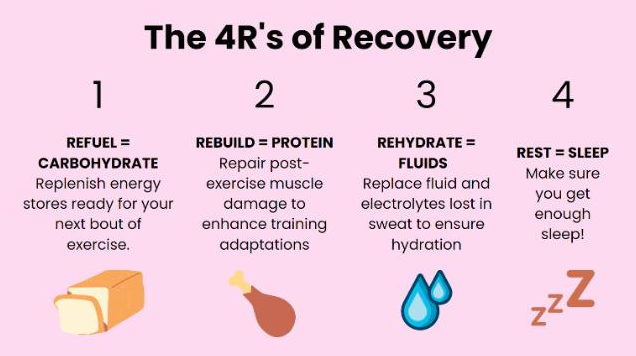
Your body needs energy to restore glycogen. It needs amino acids to support muscle repair and remodeling. It needs fluids and electrolytes to replace losses. And it needs enough total nutrition to support the processes happening between workouts.
The Academy of Nutrition and Dietetics, Dietitians of Canada, and American College of Sports Medicine specifically recognize carbohydrate and protein as important components of meeting the demands of high physical activity, including glycogen replenishment and tissue repair.
That gives us a simple starting point:
Don’t just ask, “What diet should I follow?”
Ask:
“What am I asking my body to do?”
Then build your nutrition around that reality.

Nutrition for Recovery and the Nervous System
There’s another layer that’s easy to miss.
Your muscles don’t exist separately from your nervous system.
Every workout requires your brain and nervous system to coordinate movement, regulate effort, maintain attention, respond to fatigue, and control force production.
Then, when the workout ends, your body has to shift toward repair and restoration.
Nutrition doesn’t magically “reset” your nervous system. But adequate energy and nutrient availability are part of the environment your body needs to recover from physical stress.
This is why constantly training hard while under-eating can become a problem.
You are creating demand without adequately supporting the recovery side of the equation.
And eventually, you may notice it.
Your energy drops.
Your performance stalls.
Your motivation changes.
Your workouts feel heavier.
Your recovery takes longer.
You may start thinking you need more discipline.
But sometimes you don’t need more discipline.
You need to stop asking your body to run on empty.
That’s a very different conversation.
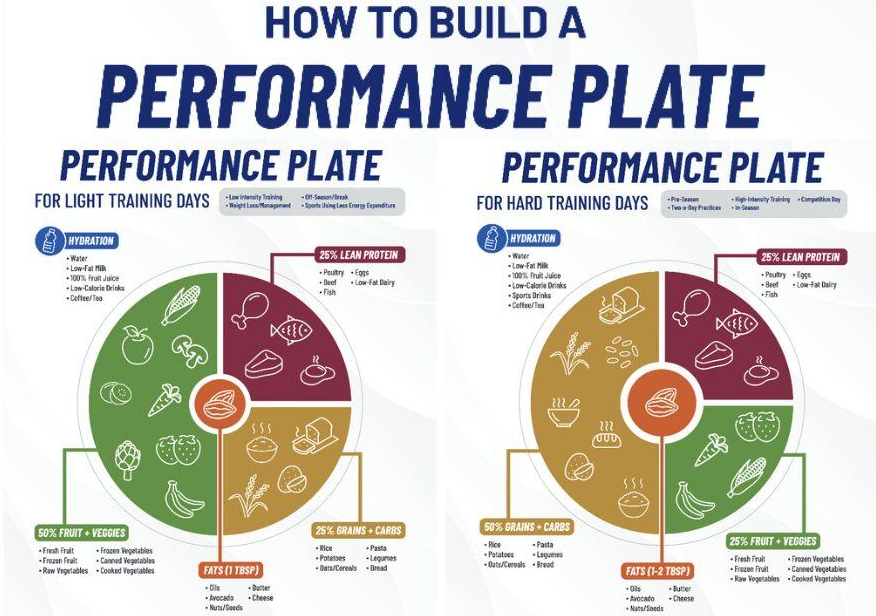
Nutrition for Endurance: Why Carbohydrates Matter
This is where nutrition for recovery becomes especially important for endurance training.
Carbohydrates have become controversial in modern fitness.
Some people avoid them because they’re trying to lose body fat. Others have been told that their body can perform perfectly well without them.
And there’s nuance here.
Lower-carbohydrate approaches can work for some people and some types of training.
But that doesn’t mean carbohydrate availability is irrelevant when endurance demands increase.
Your muscles store carbohydrate as glycogen, and carbohydrate availability becomes particularly important as exercise intensity and duration rise.
In fact, a 2026 consensus paper addressing low-carbohydrate diets and endurance performance concluded that strategies supporting carbohydrate availability remain the best-supported approach for optimizing endurance performance.
That doesn’t mean you need to eat enormous amounts of carbohydrates all day.
It means the harder and longer you’re asking your body to work, the more important it becomes to consider whether you’re providing enough carbohydrate to support that work.
Think about the difference between:
- Walking for 30 minutes
- Lifting weights for an hour
- Running intervals
- Long-distance running
- Hyrox-style conditioning
- Repeated high-intensity efforts
- Preparing for a demanding endurance event
Those are not the same physiological demand.
Your nutrition shouldn’t pretend they are.

Why Lower-Carb Isn’t Always Better for Endurance
This is one of the biggest lessons I think people can take away from this conversation.
A nutrition strategy isn’t automatically better because it sounds more disciplined.
If you’re training hard for endurance while aggressively restricting carbohydrates, you may find yourself struggling to maintain the quality of your training.
You might feel like you have enough energy for everyday life but not enough for repeated high-output training.
That’s an important distinction.
Your body can absolutely use fat as fuel.
But that doesn’t mean carbohydrate availability stops mattering.
Endurance training can involve long periods of moderate effort, but it can also include surges, hills, intervals, running, repeated accelerations, and high-intensity work.
Those demands increase the importance of having carbohydrate available.
And there’s another reason this matters:
Recovery doesn’t end when the workout ends.
After endurance exercise, your body needs to restore glycogen so you’re better prepared for the next training session.
Research examining recovery from endurance exercise has found that carbohydrate and protein play complementary roles in glycogen restoration and muscle protein remodeling, particularly when recovery time is limited.
So if you’re training again tomorrow, what you eat today matters.

Nutrition for Muscle Building: Protein Is Necessary, But Not Everything
Now let’s move to the other side of the equation.
If you’re trying to build muscle, protein matters.
A lot.
Resistance training creates a stimulus for muscle adaptation, and protein provides the amino acids your body uses to support muscle protein synthesis and remodeling.
A large meta-analysis of 49 randomized controlled trials found that protein supplementation increased gains in fat-free mass and strength during prolonged resistance training, with benefits generally leveling off around total protein intakes of approximately 1.6 g/kg/day in the analyzed data.
But here’s where people sometimes get stuck.
They focus so heavily on protein that they forget about everything else.
You don’t build muscle from protein alone.
You need enough total energy.
You need training.
You need recovery.
You need carbohydrates to support demanding training.
You need dietary fat for essential fatty acids and fat-soluble vitamins.
And you need enough overall nutrition to give your body a reason—and the resources—to adapt.
Protein is a building material.
It isn’t the entire construction crew.
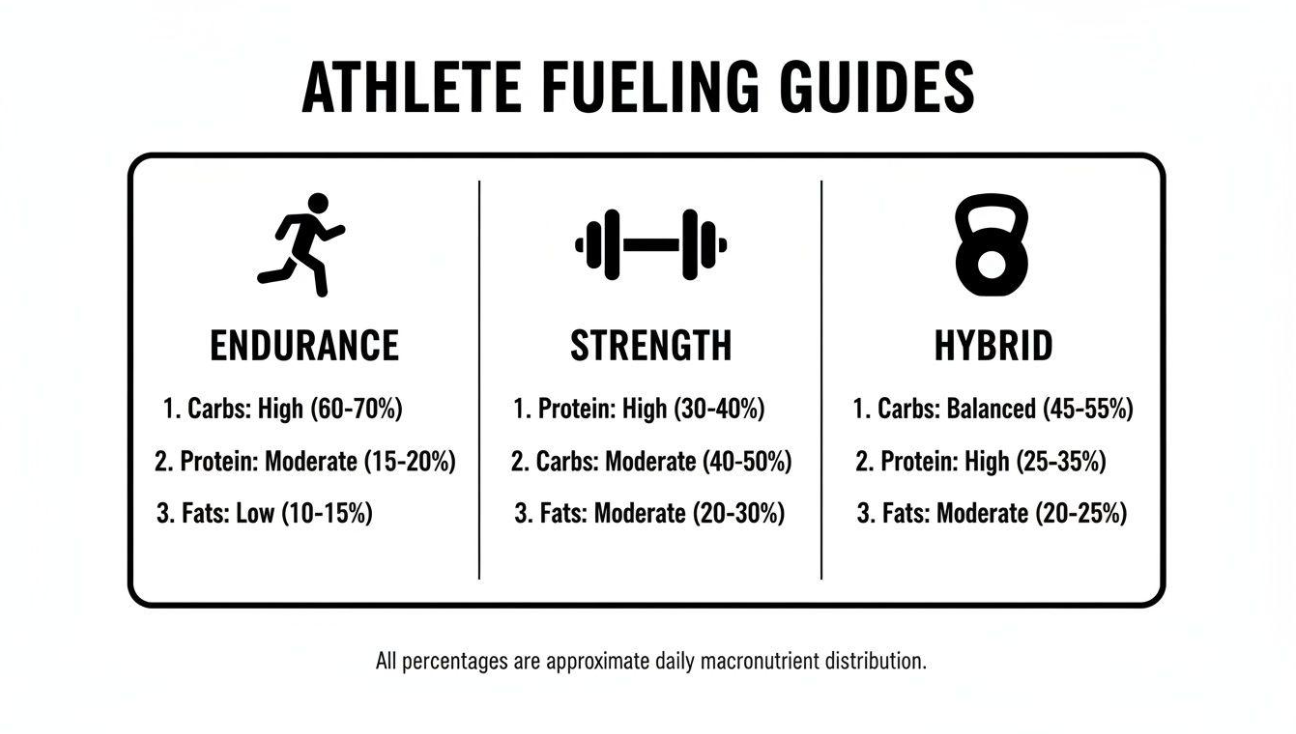
Nutrition for Muscle Growth and Endurance Are Not Opposites
This is where things get really interesting for people who train the way many active adults actually train.
You may want to build muscle.
You may also want to improve endurance.
You may want to get stronger.
You may want better conditioning.
You may want to lose some body fat.
And you may want to feel good while doing all of it.
That changes the nutritional conversation.
You’re no longer simply asking:
“How do I build muscle?”
You’re asking:
“How do I fuel multiple competing demands without constantly running myself into the ground?”
That’s a much better question.
If you train for muscle growth but don’t eat enough, your ability to recover and build can suffer.
If you train heavily for endurance while keeping carbohydrates extremely low, your ability to repeatedly perform high-quality endurance work may suffer.
If you try to do both while aggressively restricting calories, you may end up compromising the very adaptations you’re training for.
The answer isn’t necessarily to eat everything in sight.
It’s to match your nutrition to your training demands.

Nutrition for Recovery Means Eating Enough
This may be one of the least exciting pieces of nutrition advice.
It’s also one of the most important.
Eat enough.
Not endlessly.
Not mindlessly.
Enough to support what you’re asking your body to do.
There’s a difference between creating a reasonable calorie deficit for fat loss and chronically under-fueling a body that’s being asked to perform demanding training.
When training volume increases, your energy needs increase too.
That doesn’t mean every athlete needs a huge calorie surplus.
It means your nutrition needs to be evaluated in the context of your workload.
If you’re constantly hungry, exhausted, losing performance, struggling to recover, or watching your training quality decline, those signals are worth paying attention to.
Sometimes the answer isn’t another supplement.
Sometimes it’s another meal.
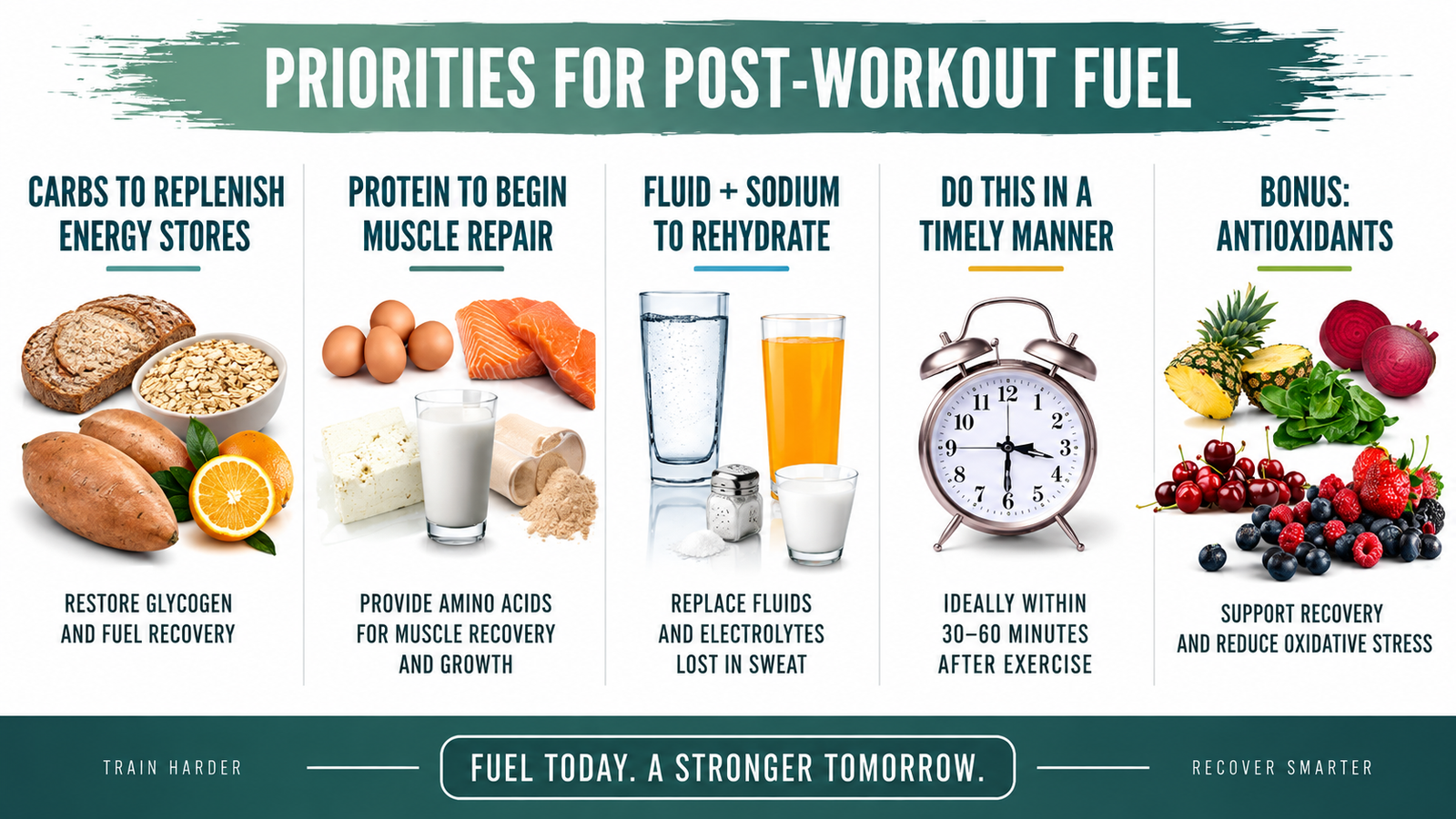
Protein, Carbohydrates, and Fat Each Have a Job
You don’t need to turn nutrition into a complicated spreadsheet.
Start by understanding what the major macronutrients are doing.
Protein
Protein provides amino acids needed for muscle repair and remodeling.
Useful sources include:
- Eggs
- Chicken
- Turkey
- Beef
- Fish
- Greek yogurt
- Cottage cheese
- Milk
- Whey or other protein supplements when convenient
- Legumes and other plant-based sources
For active people, spreading protein across the day can be a practical strategy rather than trying to consume most of it in one giant meal. Sports nutrition guidance commonly recommends regular protein feedings across the day.
Carbohydrates
Carbohydrates help provide fuel for training and replenish muscle glycogen.
Examples include:
- Rice
- Potatoes
- Oats
- Fruit
- Whole-grain bread
- Pasta
- Beans
- Other minimally processed carbohydrate sources
The amount you need depends heavily on how much and how intensely you’re training.
Dietary Fat
Fat provides energy and essential fatty acids and helps your body absorb fat-soluble vitamins.
Examples include:
- Avocado
- Olive oil
- Nuts
- Seeds
- Eggs
- Fatty fish
- Other whole-food sources
The goal isn’t to make one macro-nutrient the enemy.
The goal is to make your nutrition match your life and your training.

Nutrition for Recovery Around Your Workout
Timing doesn’t have to become obsessive.
You don’t need to panic because you didn’t eat within some imaginary ten-minute anabolic window.
But timing can be useful.
If you’re training around midday, for example, your pre-workout meal can provide the energy you’ll need for the session.
That might look like:
Protein + carbohydrates + some fat
Depending on your digestion and the type of workout, you might choose something like eggs with a bagel, Greek yogurt with fruit and oats, or chicken and rice.
After training, you’re looking to start the recovery process with another balanced meal.
Protein + carbohydrates + fluids
For someone doing demanding endurance work, replacing carbohydrate stores becomes especially important.
For someone focused heavily on resistance training, adequate protein and total energy become particularly important.
And if you’re training again later that day or early the next morning, recovery nutrition becomes even more relevant.
The more demanding your schedule, the less you can afford to treat nutrition as an afterthought.
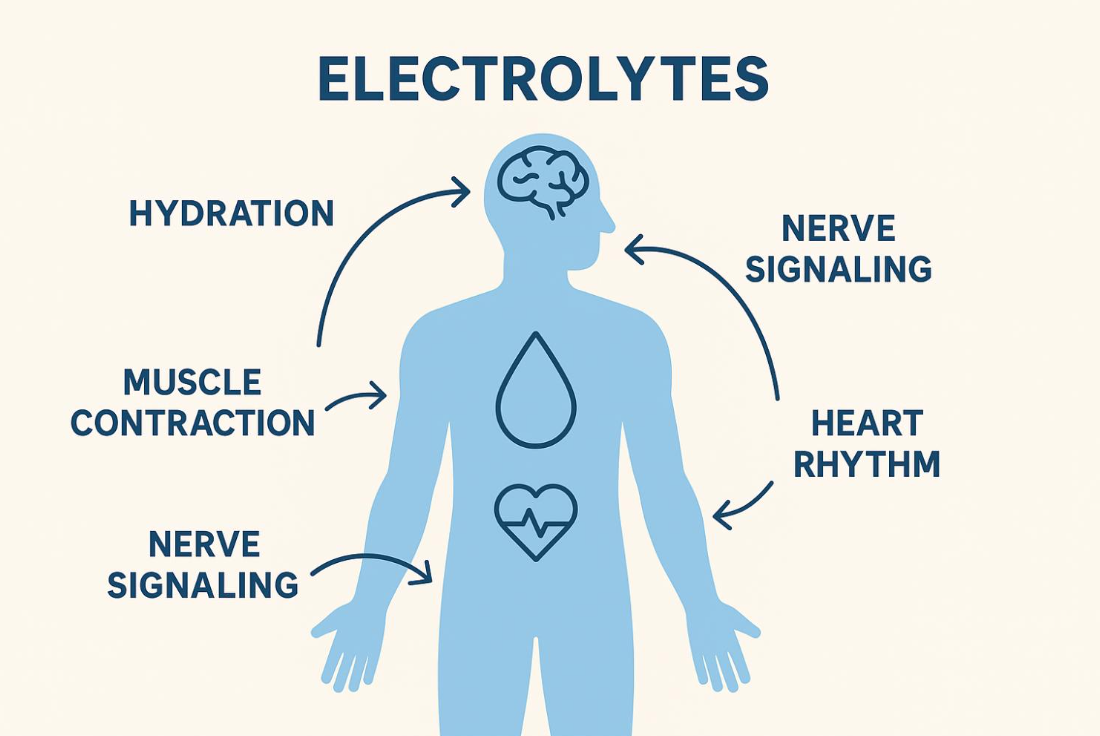
Hydration and Electrolytes Are Part of Recovery Too
Nutrition isn’t only about food.
Fluid balance matters.
You lose water through sweat, and depending on the duration, intensity, environment, and individual sweat rate, you may also lose meaningful amounts of sodium and other electrolytes.
For a short, easy workout, ordinary meals and normal hydration may be enough.
For longer or harder sessions—especially in heat—your hydration strategy may need more attention.
The ACSM position statement on nutrition and athletic performance emphasizes appropriate fluid intake before, during, and after exercise to support performance and recovery.
Again, context matters.
You don’t need to turn every gym session into an electrolyte experiment.
But if you’re sweating heavily for an extended period, hydration becomes part of your performance strategy.
The Problem With Treating Every Training Day the Same
Here’s a simple way to think about this.
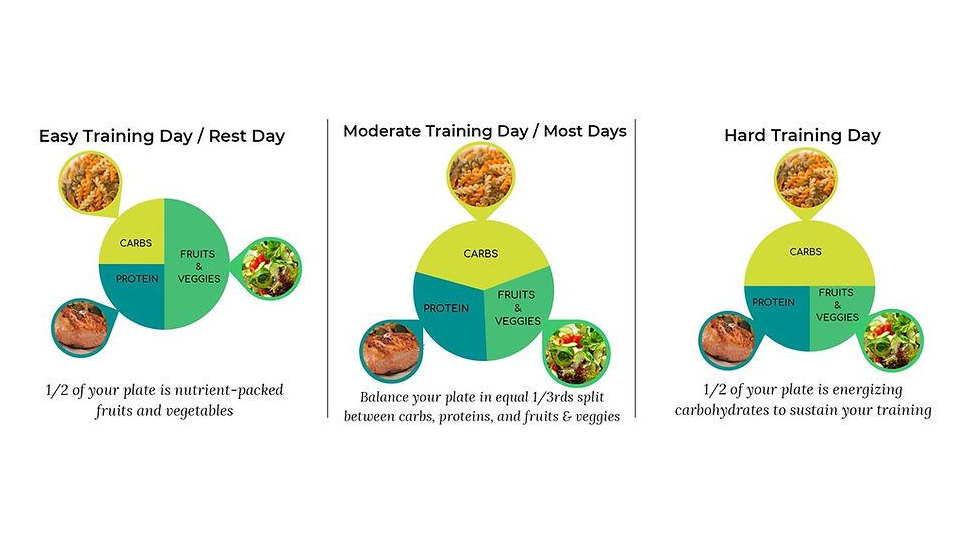
Your body doesn’t experience every workout the same way.
So why should every training day have exactly the same nutritional approach?
A hard endurance day may require more carbohydrate.
A heavy strength session may place greater emphasis on adequate protein and total energy.
A recovery day may require less total fuel because the training demand is lower.
A long conditioning session in the heat may require more attention to fluids and electrolytes.
This doesn’t mean you need a completely different diet every day.
It means you can adjust portions and emphasis according to the work you’re doing.
Think of nutrition as a dial rather than an on/off switch.
More demand?
Turn the dial up.
Less demand?
Turn it down.
That is often more sustainable than following rigid rules every day of the year.
Nutrition for Recovery After 40
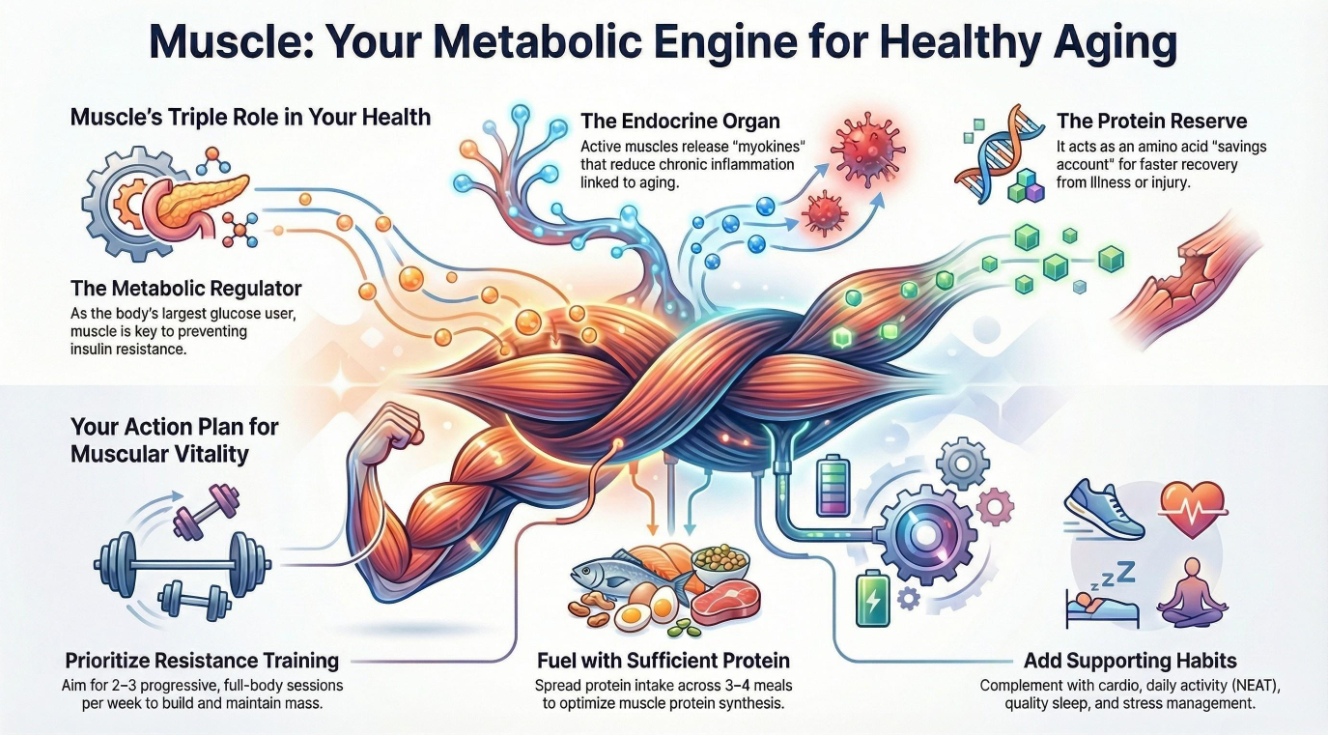
As you get older, the answer isn’t to stop training.
It’s to become more intentional about how you train and recover.
Muscle becomes more important.
Strength becomes more important.
Maintaining aerobic capacity becomes more important.
Recovery becomes more important.
And nutrition becomes part of that equation.
Protein becomes particularly valuable because maintaining muscle mass and strength is one of the foundations of healthy aging.
At the same time, completely ignoring carbohydrate needs while doing demanding endurance or conditioning work may make training harder than necessary.
This is where the goal shifts from chasing the smallest possible number on the scale to building a body that can continue doing what you love.
You aren’t just eating for today’s workout.
You’re eating to support the body you want to have years from now.
A Simple Way to Think About Nutrition for Recovery
You don’t have to completely redesign your diet tomorrow.
Start with a few questions.
What am I training for?
If endurance is a major goal, make sure you’re not accidentally under-fueling the carbohydrate demands of that training.
Am I getting enough protein?
If muscle growth or strength is a priority, protein needs to be consistently adequate.
Am I eating enough total food?
Don’t overlook overall energy intake.
Am I recovering between sessions?
Look at sleep, hydration, stress, and nutrition together.
Does my nutrition support the training I’m actually doing?
This may be the most important question of all.
Because sometimes the diet you chose six months ago made sense for the person you were then.
But your training changed.
Your goals changed.
Your workload changed.
And your nutrition never caught up.
That’s when problems begin.
Here’s The Path
There’s a tendency in fitness to turn nutrition into a battle.
Carbs versus no carbs.
High protein versus high fat.
Eat this.
Never eat that.
But your body isn’t a nutrition argument.
It’s a living system responding to the demands you place on it.
If you’re asking it to build muscle, give it the materials to build.
If you’re asking it to perform endurance work, give it the fuel to sustain that work.
If you’re asking it to recover from repeated training, give it enough energy and nutrients to repair and adapt.
And if you’re asking your nervous system to repeatedly handle physical stress, remember that recovery isn’t something separate from performance.
It’s part of it.
The goal isn’t to find the most restrictive diet you can tolerate.
It’s to find the nutrition strategy that supports the person you’re trying to become.
Sometimes that means eating less.
Sometimes it means eating more.
Sometimes it means adding carbohydrates back into a diet because your training has changed.
Sometimes it means realizing that another protein shake isn’t going to fix a lack of sleep or chronic under-eating.
Pay attention.
Train with intention.
Fuel the work.
Recover from it.
Then let your body do what it was designed to do:
adapt.
The Research Behind This Article
Nutrition and Athletic Performance
American College of Sports Medicine Joint Position Statement. Nutrition and Athletic Performance
Medicine & Science in Sports & Exercise
The joint position statement from the Academy of Nutrition and Dietetics, Dietitians of Canada, and ACSM outlines how appropriate energy, carbohydrate, protein, fluids, and nutrient timing support athletic performance and recovery.
Protein and Muscle Growth
A systematic review, meta-analysis and meta-regression of the effect of protein supplementation on resistance training-induced gains in muscle mass and strength in healthy adults
British Journal of Sports Medicine
This meta-analysis included 49 studies and found that protein supplementation increased gains in muscle mass and strength during prolonged resistance training, with benefits generally plateauing around total protein intake of approximately 1.6 g/kg/day in the analyzed data.
Nutrition for Endurance Recovery
Nutrition to Support Recovery from Endurance Exercise: Optimal Carbohydrate and Protein Replacement
Current Sports Medicine Reports
This review explains how carbohydrate supports glycogen restoration while protein supports muscle protein remodeling after endurance exercise, particularly when the recovery window is short.
Low-Carbohydrate Diets and Endurance Performance
Does a low-carbohydrate diet impede endurance sports performance? Debate Consensus
The American Journal of Clinical Nutrition
This 2026 consensus paper addresses the ongoing debate around carbohydrate restriction and endurance performance and concludes that strategies supporting carbohydrate availability remain the best-supported approach for optimizing endurance performance.
Read the 2026 consensus paper on PubMed
Continue Your Journey
If you want to understand how nutrition fits into the larger Full Armor approach, these are good next steps:
- How Strength Training Regulates Your Nervous System
- Exercise Recovery Tips: 7 Proven Ways to Recover Faster
- Isometric Exercises: The Hidden Nervous System Benefits You Need
- Mobility After 40: The Key to Staying Strong and Active
- Coordination Exercises: Train Your Brain to Move Better
Start Here
If you want a simple place to begin, start with the FREE Full Armor Nervous System Reset Guide.
It gives you practical daily habits designed to help you regulate stress, support recovery, and build a stronger foundation.
Get the FREE Full Armor Nervous System Reset Guide
If You Want To Go Deeper…
The Full Armor 21 Day Method helps you put these principles into practice through a daily framework focused on nervous system regulation, movement, recovery, intentional habits, and building resilience.
No responses yet