
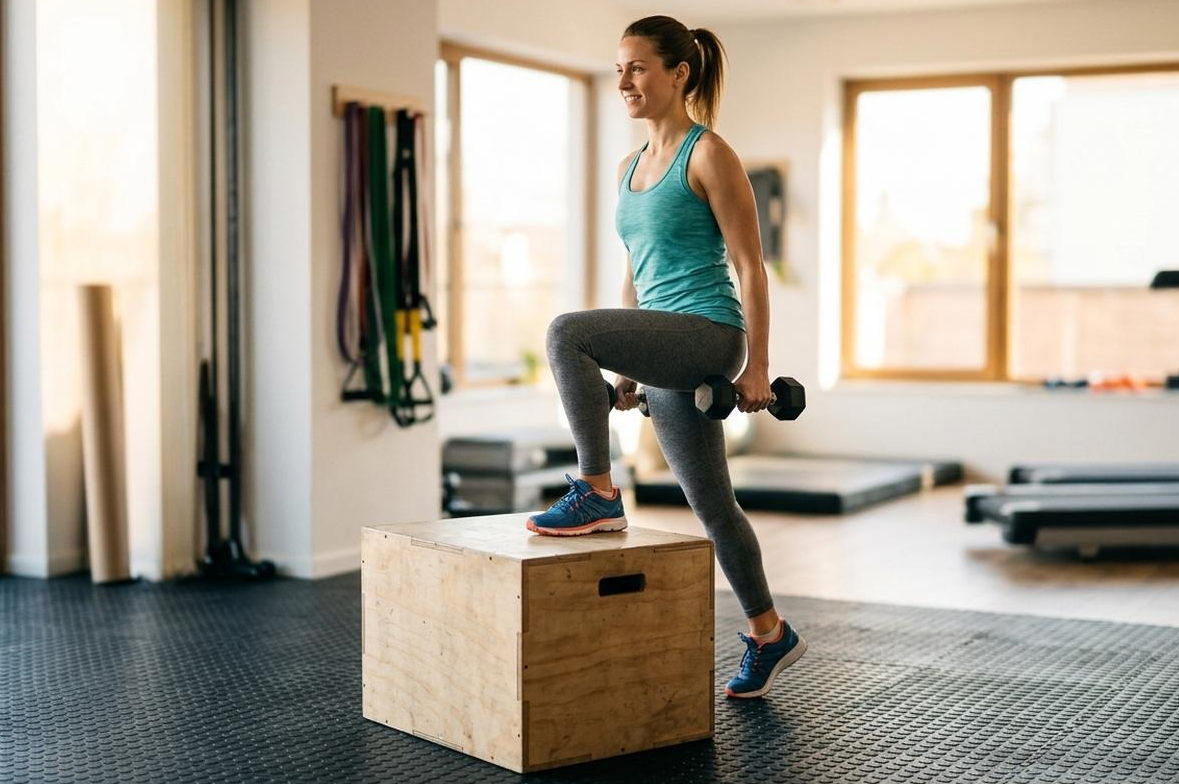
Unilateral training is an important part of building balanced, functional strength because it challenges each side of your body to work independently. Most people are familiar with traditional strength exercises. Squats, deadlifts, bench presses, rows, and overhead presses are staples of many training programs. These movements are effective, but there’s another dimension of strength that often gets overlooked: what happens when you train one side of your body at a time?
Unilateral training involves performing an exercise using one arm or one leg independently rather than using both sides simultaneously. Think of a split squat instead of a traditional squat, a single-arm row instead of a two-arm row, or a single-leg deadlift instead of a conventional deadlift.
It might seem like a small adjustment, but it changes the demands placed on your body.
When one side has to do the work independently, you challenge strength, balance, coordination, stability, and control in a different way. You also get a clearer opportunity to recognize differences between your left and right sides.
And that’s important because everyday life doesn’t always distribute physical demands evenly.
You step off one foot, reach with one arm, carry something on one side, and shift your weight as you move. Your training should prepare you for those demands.
What Is Unilateral Training?
Unilateral training is strength training performed with one limb working independently.
A few common examples include:
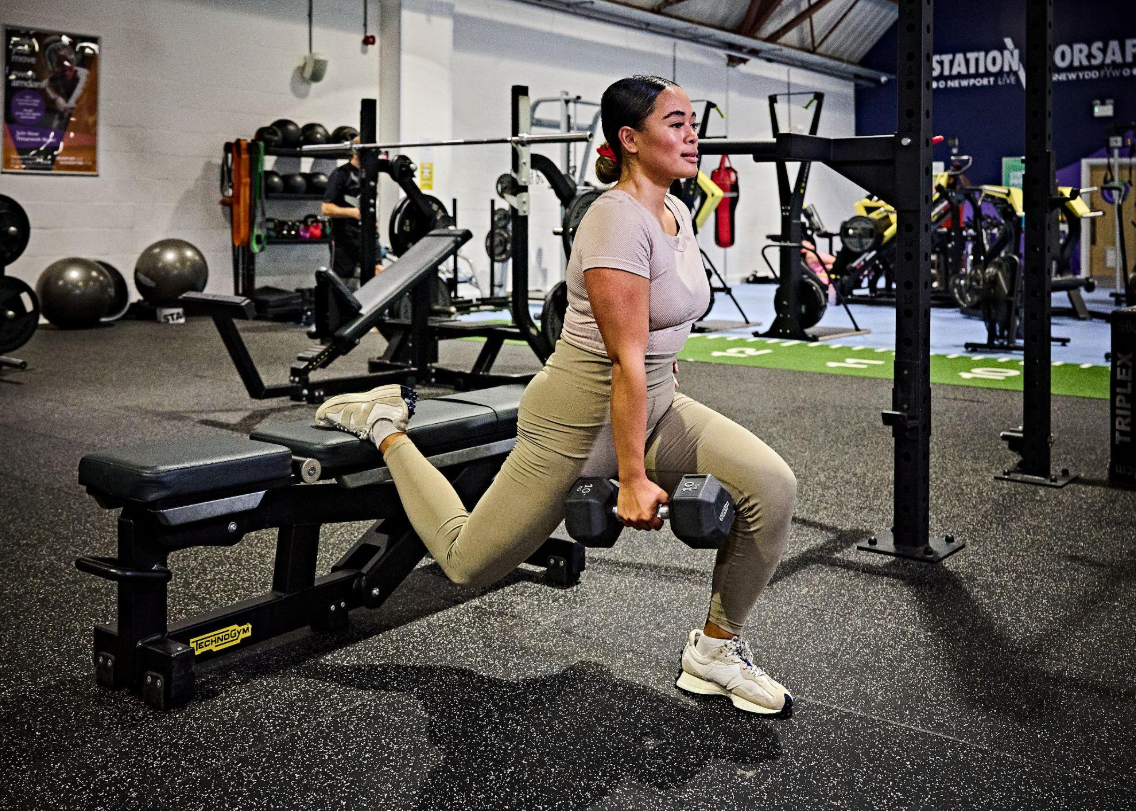
- Single-leg squats or split squats
- Reverse lunges
- Single-leg Romanian deadlifts
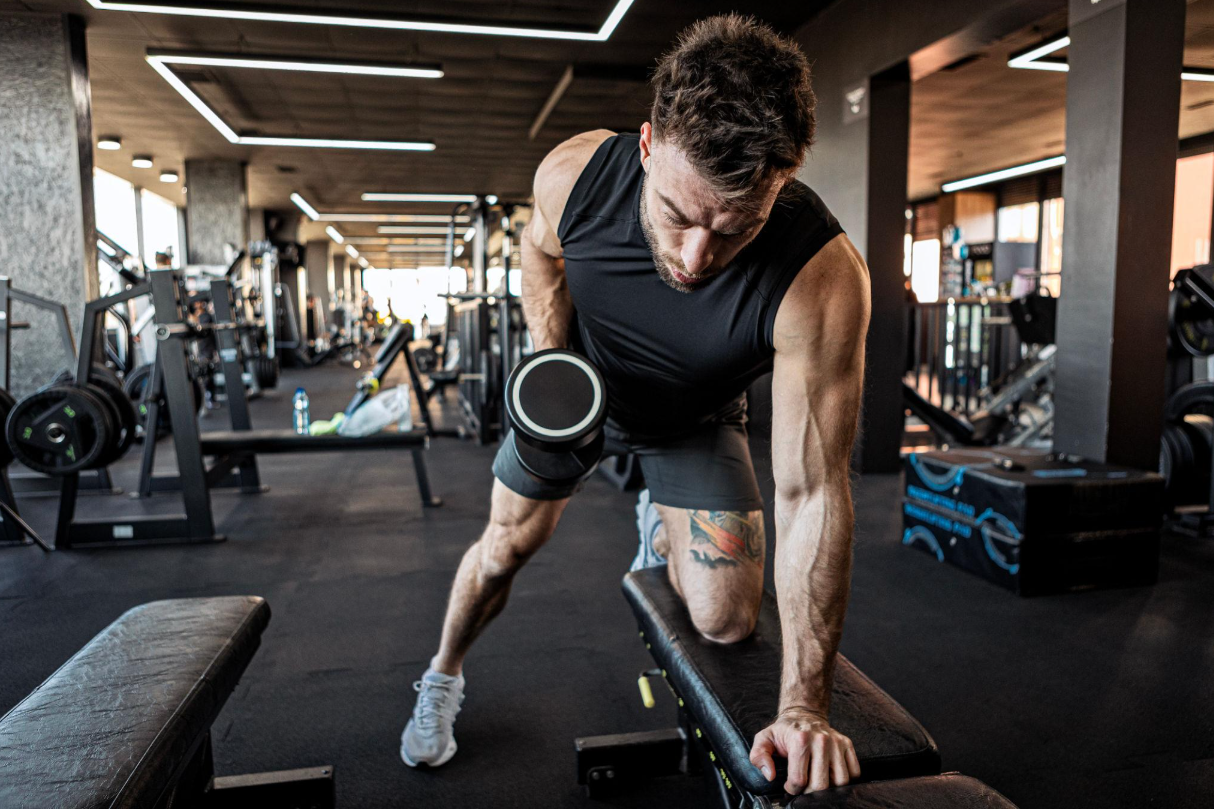
- Single-arm dumbbell rows
- Single-arm shoulder presses
- Single-arm carries
These exercises differ from bilateral exercises, which use both sides of the body together.
For example, a traditional squat is bilateral because both legs work together. A split squat is unilateral because each leg performs its own share of the work in a staggered stance.
Neither approach is automatically better. They simply create different training demands.
Bilateral exercises allow you to move heavier total loads and develop strength through coordinated movement on both sides. Unilateral exercises make each side contribute more independently and challenge your ability to control your body.
A well-rounded strength program can benefit from both.
Why Unilateral Training Helps?
One of the biggest advantages of unilateral training is that it makes it harder for one side to compensate for the other.
During a bilateral exercise, both sides work together. If one leg is stronger or more coordinated, it may contribute more to the movement without you noticing.
That doesn’t mean every bilateral exercise creates an imbalance. It simply means that using both sides together can make individual differences less obvious.
When you train one side at a time, you have a better opportunity to observe how each side performs.
1. Identify Differences Between Your Left and Right Sides
Have you ever noticed that one leg feels stronger during lunges? Maybe one arm feels more coordinated during a shoulder press. Or perhaps you feel more stable standing on one leg than the other.
These differences are common.
Your dominant side may feel more natural, but dominance doesn’t automatically mean that side is stronger in every movement. Your training history, daily habits, previous injuries, mobility, and movement experience can all influence how each side performs.
Unilateral exercises give you a way to observe those differences.
Pay attention to:
- How much resistance you can control
- Whether one side loses balance more easily
- Whether your range of motion differs
- Whether one side moves less smoothly
- Whether you compensate by rotating or shifting your body
The goal isn’t to make both sides perform identically in every situation. The goal is to recognize meaningful differences and train with better awareness.
2. Build Single-Side Strength
When you perform a single-arm or single-leg exercise, the working limb has to produce force without relying on the opposite side to complete the movement.
This makes unilateral training particularly useful when your goals involve single-limb strength.
For example, a split squat requires each leg to contribute independently. A single-arm row challenges one side of your upper body to pull and control the resistance.
This carries over to activities that involve one-sided movement, such as climbing stairs, stepping over obstacles, reaching, and changing direction.
Research comparing unilateral and bilateral resistance training suggests that training adaptations are partly specific to the movement being performed. A 2025 systematic review and meta-analysis found that unilateral training produced greater improvements in unilateral strength, while bilateral training produced greater improvements in bilateral strength. The review did not find a meaningful difference in muscle growth between the two approaches.
The practical takeaway is simple: train the movement you want to improve, and include both approaches when appropriate.
3. Challenge Balance and Stability
Unilateral exercises often introduce a balance challenge that isn’t present to the same degree in traditional two-sided exercises.
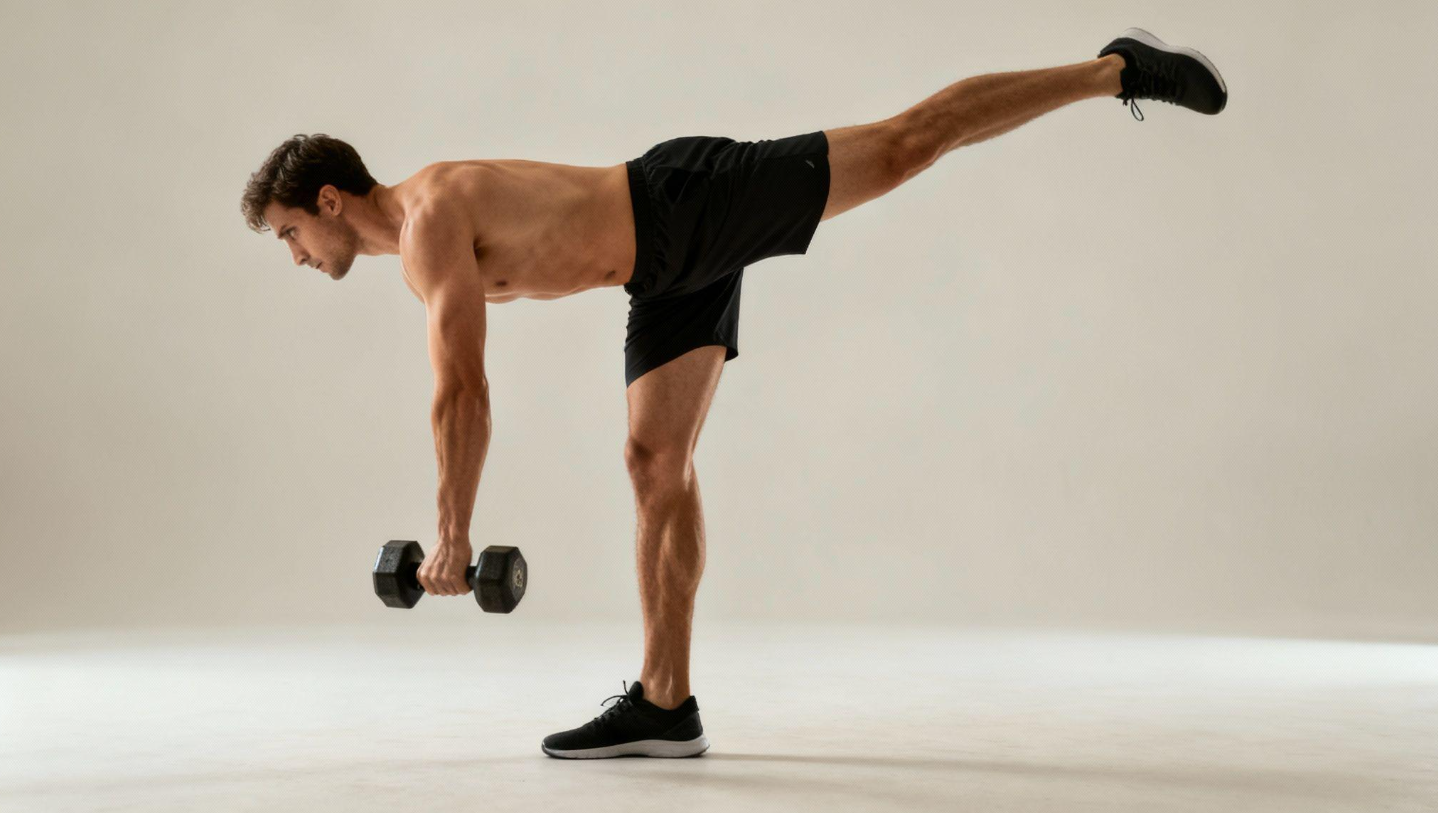
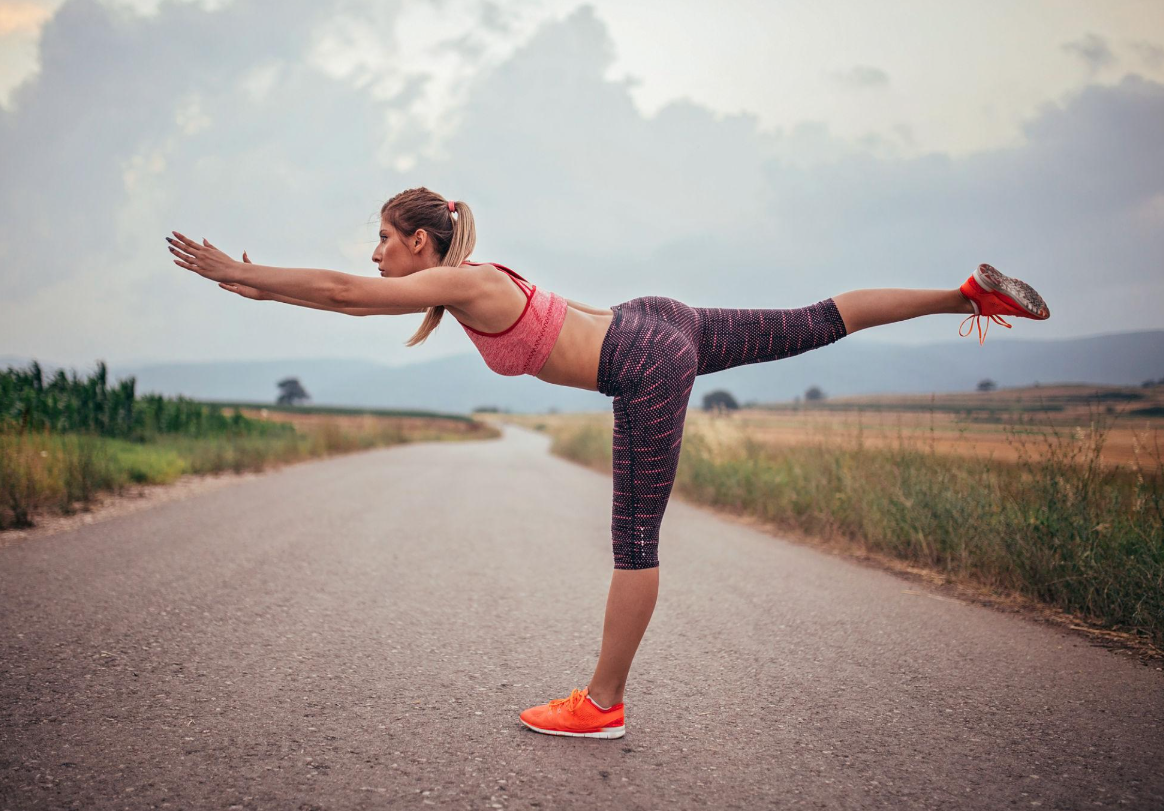
Consider a single-leg Romanian deadlift.
As you hinge forward on one leg, your body has to control several things at once:
- Your standing foot
- Your ankle and knee position
- Your hip stability
- Your pelvis and trunk position
- Your ability to maintain balance while moving
You’re not just training the muscles that extend your hip. You’re also practicing how to control your body while your support is limited.
This is useful because everyday movement frequently involves shifting your weight from one leg to another.
Walking, running, climbing stairs, and changing direction all require your body to manage periods of single-leg support.
4. Improve Coordination and Movement Control
Strength isn’t just about producing force. It’s also about controlling where that force goes.
Unilateral exercises require you to coordinate movement while managing your position and balance.
For example, during a reverse lunge, you have to step backward, control your descent, maintain your posture, and return to standing.
If your balance is limited or your movement is inconsistent, the exercise makes that easier to notice.
Over time, practicing these movements can help you become more comfortable controlling your body through different positions and ranges of motion.
That doesn’t mean unilateral training automatically improves every aspect of coordination. The benefit depends on the exercise, the way you perform it, and the movement skills you’re trying to develop.
6 Unilateral Training Exercises Worth Adding to Your Routine
You don’t need to fill your entire workout with single-side exercises. Start with a few movements that complement what you’re already doing.
Here are six options that can fit into a well-rounded strength program.
1. Reverse Lunge
The reverse lunge is a practical lower-body exercise that challenges each leg independently.
Step backward, lower your body under control, and push through your front foot to return to standing.
What it trains:
- Quadriceps
- Glutes
- Hamstrings
- Balance and coordination
- Single-leg strength
Coaching tip: Start with bodyweight. Keep your front foot stable, control the descent, and use a range of motion you can manage without losing your position.
2. Bulgarian Split Squat
The Bulgarian split squat places your rear foot on an elevated surface while your front leg performs most of the work.
It creates a substantial challenge for the front leg without requiring extremely heavy weights.
What it trains:
- Quadriceps
- Glutes
- Hip control
- Single-leg strength
- Balance
Coaching tip: Don’t rush to add weight. Find a stance that allows you to lower comfortably while maintaining control. Use a lower rear-foot support or a regular split squat if the elevated position is too demanding.
3. Single-Leg Romanian Deadlift
This movement challenges the posterior chain while requiring you to balance on one leg.
Stand on one foot, soften the standing knee, and hinge at the hip as the opposite leg moves behind you. Return to standing without twisting your torso.
What it trains:
- Hamstrings
- Glutes
- Hip stability
- Balance
- Movement control
Coaching tip: Begin without weight or use light support with one hand. Your priority is maintaining a controlled hip hinge—not reaching as low as possible.
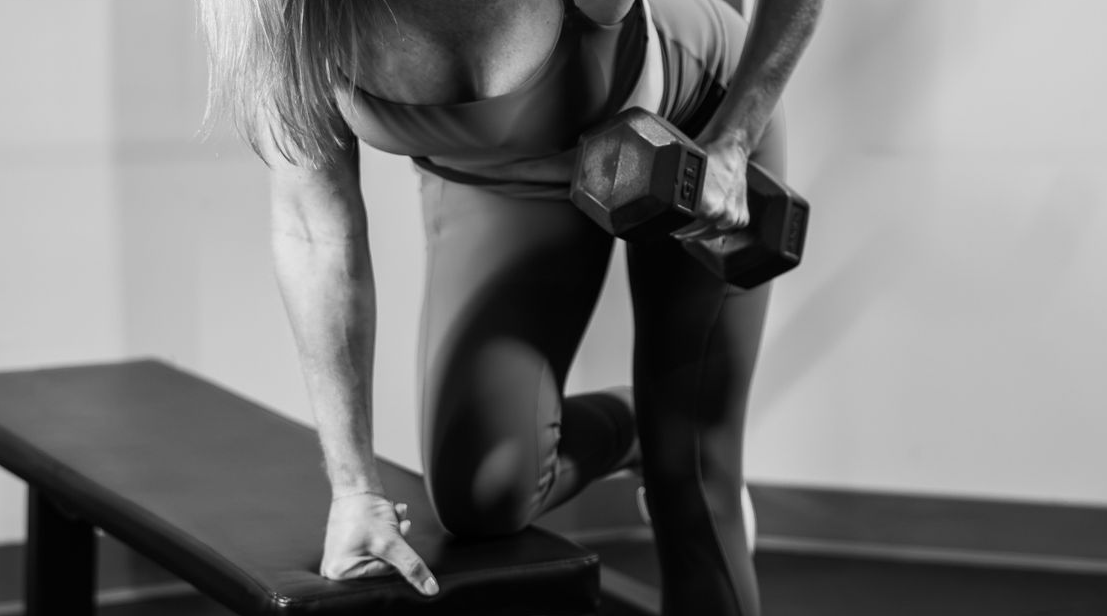
4. Single-Arm Dumbbell Row
A single-arm row allows you to train one side of your back independently.
Support yourself with one hand on a bench or stable surface, then pull the dumbbell toward your hip.
What it trains:
- Latissimus dorsi
- Upper back
- Rear shoulder
- Arm strength
- Trunk control
Coaching tip: Keep your torso steady. Avoid rotating your body to move the weight. If you have to twist or jerk the dumbbell, reduce the resistance.
5. Single-Arm Shoulder Press
Pressing with one arm introduces a different stability challenge than pressing with both arms together.
You can perform this movement standing or seated, depending on your ability and training goals.
What it trains:
- Shoulders
- Triceps
- Upper-body strength
- Trunk stability
Coaching tip: Start with a manageable weight. Keep your ribs and pelvis controlled rather than leaning backward to finish the press.
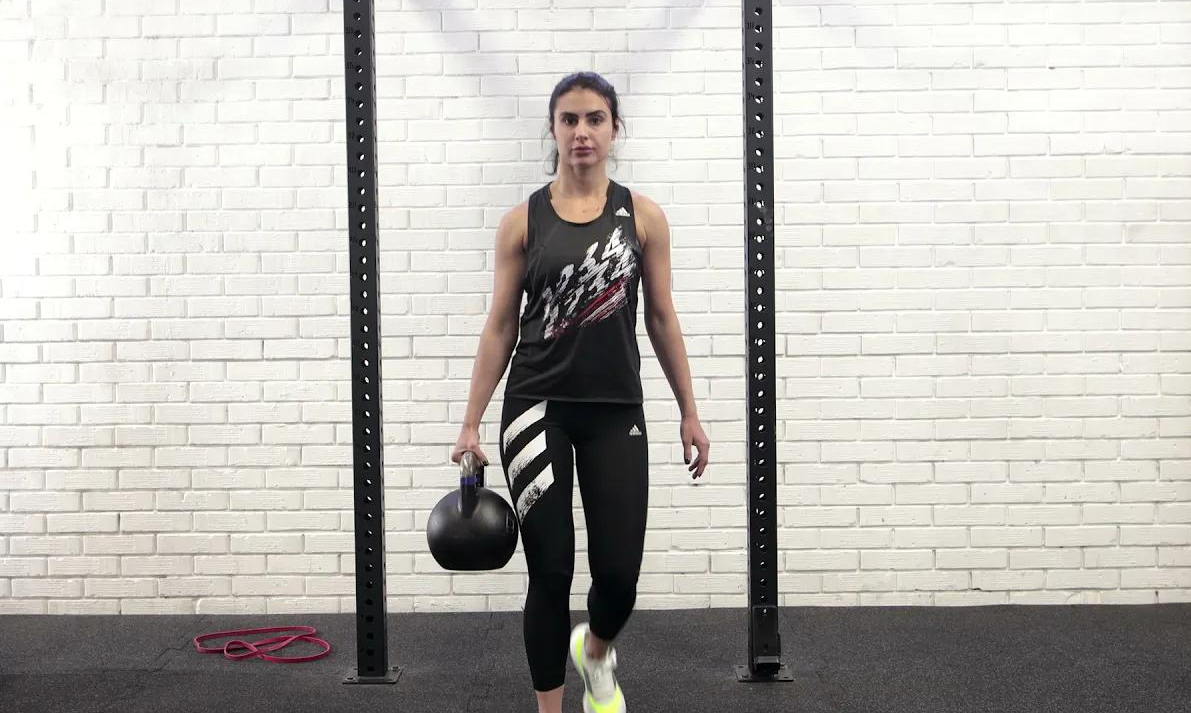
6. Single-Arm Farmer Carry
Hold a dumbbell or kettlebell in one hand and walk while maintaining an upright posture.
Because the weight is only on one side, your trunk has to resist being pulled toward the loaded side.
What it trains:
- Grip strength
- Core stability
- Shoulder stability
- Postural control
- Walking strength
Coaching tip: Walk slowly and naturally. Keep your shoulders level and avoid leaning away from the weight.
How to Add Unilateral Training to Your Existing Routine
You don’t need to rebuild your entire training program.
A simple way to introduce unilateral exercises is to replace one or two bilateral movements with a single-side variation.
For example:
| Traditional exercise | Unilateral alternative |
|---|---|
| Squat | Split squat |
| Romanian deadlift | Single-leg Romanian deadlift |
| Two-arm dumbbell row | Single-arm dumbbell row |
| Bilateral shoulder press | Single-arm shoulder press |
You can also add a unilateral exercise after your primary strength movement.
For example:
Lower-body workout
- Squat: 3 sets of 8–10 repetitions
- Reverse lunge: 2–3 sets of 8 repetitions per side
- Romanian deadlift: 3 sets of 8–10 repetitions
- Single-leg calf raise: 2 sets of 10–12 repetitions per side
Upper-body workout
- Bench press: 3 sets of 8–10 repetitions
- Single-arm dumbbell row: 3 sets of 8–10 repetitions per side
- Single-arm shoulder press: 2 sets of 8 repetitions per side
- Single-arm carry: 2–3 controlled walks per side
These are examples, not a requirement to perform every exercise. Adjust the movements, resistance, sets, and repetitions to your current ability and training goals.
Start with a manageable amount of work. Unilateral exercises can feel more demanding than expected, especially when balance and coordination are involved.
Should You Always Start With Your Weaker Side?
A useful approach is to begin with the side that feels less coordinated or less capable during a particular exercise.
Pay attention to how that side performs, then use the same resistance and repetition target on the other side.
For example, if your left leg completes eight controlled reverse lunges, use the same weight and target eight controlled repetitions on the right.
This gives you a consistent way to train both sides without automatically giving the stronger side more work.
However, don’t assume that every difference means you need to add extra sets or repetitions to the weaker side.
More work isn’t always better. If one side struggles because of pain, restricted movement, or poor control, adding more resistance or volume may not be the right answer.
First understand what is limiting the movement. Reduce the difficulty, improve the exercise setup, or seek professional guidance when appropriate.
The objective is to build better movement—not force symmetry at any cost.
Common Mistakes to Avoid With Unilateral Training
Unilateral training can be extremely useful, but only when you perform the exercises with appropriate control.
Watch for these common mistakes:
Using too much weight. A weight you can handle during a bilateral exercise may be too heavy when one limb works independently. Reduce the load until you can control the movement.
Rushing through repetitions. Balance and coordination are part of the challenge. Moving too quickly can turn a strength exercise into an uncontrolled attempt to finish the set.
Ignoring your weaker side. Don’t automatically give your dominant side more repetitions or resistance because it feels easier.
Chasing range of motion. A deeper lunge or lower hinge isn’t necessarily better if you lose control or experience discomfort.
Treating every difference as an imbalance that needs fixing. Some differences are normal. Focus on meaningful limitations in strength, control, or function rather than trying to make every measurement identical.
Replacing all bilateral exercises. Traditional squats, deadlifts, presses, and rows still have an important place in strength training. Unilateral work should complement your program, not automatically replace it.
Unilateral Training, Recovery, and Knowing Your Limits
As with any strength training method, your body needs time to adapt.
Single-side exercises can create more fatigue than you expect, particularly when you’re unfamiliar with them. They may also challenge muscles responsible for stabilizing your hips, ankles, and trunk in new ways.
Give yourself time to learn the movements.
Start with bodyweight or light resistance. Use controlled repetitions. Allow adequate recovery between sessions, and pay attention to how you feel afterward.
If an exercise causes sharp pain, significant discomfort, or symptoms that persist, don’t try to push through it. Modify the movement and seek appropriate professional guidance when needed.
Training should challenge your body while respecting its current capabilities.
How Do You Know Your Unilateral Strength Is Improving?
Progress isn’t limited to adding more weight.
You may notice:
- Better balance during single-leg movements
- More consistent control between sides
- Improved ability to maintain posture
- Greater confidence stepping, lunging, or reaching
- More controlled repetitions with the same resistance
- Increased resistance without sacrificing technique
You can also track your training by recording the resistance, repetitions, and how well you controlled each side.
Don’t get caught up in comparing your left and right sides after every workout. Look for steady improvements over time.
Here’s the Path: Build Strength on Both Sides With Unilateral Training
Unilateral training isn’t a replacement for traditional strength training. It’s another tool that helps you develop a more complete foundation.
Bilateral exercises help you build strength using both sides together. Unilateral exercises challenge each side to contribute independently.
Together, they help prepare you for the physical demands of training, sports, and everyday life.
Think about how often you rely on one leg, one arm, or one side of your body throughout the day. Your training should reflect those demands.
You don’t have to make every workout more complicated. You just have to be intentional about the movements you’re training and the capabilities you’re developing.
At Full Armor, we believe strength should serve more than your workout. It should help you move better, build confidence, and handle the demands of everyday life.
Train both sides. Build control. Develop strength you can use.
The Research Behind This Article
Kassiano, W., Nunes, J. P., Costa, B., Ribeiro, A. S., Loenneke, J. P., & Cyrino, E. S. (2025). “Comparison of Muscle Growth and Dynamic Strength Adaptations Induced by Unilateral and Bilateral Resistance Training: A Systematic Review and Meta-analysis.” Sports Medicine, 55, 923–936.
This systematic review and meta-analysis compared unilateral and bilateral resistance training. The researchers found no significant difference in muscle growth between the two approaches. Strength improvements were more specific to the type of movement trained: unilateral training favored unilateral strength, while bilateral training favored bilateral strength.
Source: https://pubmed.ncbi.nlm.nih.gov/39794667/
Xin, X., et al. (2026). “Comparative effects of unilateral versus bilateral training on performance adaptations: a systematic review and multilevel meta-analysis.” BMC Sports Science, Medicine and Rehabilitation, 18.
This review examined 24 randomized controlled trials. The findings indicated that unilateral training had advantages for unilateral strength and unilateral jump performance, while bilateral training showed an advantage for bilateral strength. The researchers concluded that exercise selection should reflect the movement and performance goals being trained.
Source: https://doi.org/10.1186/s13102-026-01834-2
Continue Your Journey
Building strength requires more than choosing the right exercises. It means understanding how to train, recover, and develop your body over time.
Continue exploring these related Full Armor articles:
- Functional Strength Training: Build Strength for Everyday Life — Learn how to build strength that carries over into everyday movement.
- Progressive Overload: The Proven Way to Build Strength That Lasts — Understand how to gradually increase training demands.
- Compound Exercises: 7 Proven Movements That Build Real Strength — Explore foundational movements that train multiple muscle groups together.
- Exercise Recovery Tips: 7 Proven Ways to Recover Faster — Learn how recovery supports consistent training and progress.
Start Here
At Full Armor, we bring personal training, performance, strength and conditioning, movement, recovery, breathwork, and nutrition together into one approach.
If you’re ready to build strength that supports the way you live, explore these resources:
- Personal Training: https://fullarmorhq.com/personal-training/
- Free Guide — 5 Daily Practices to Regulate Your Nervous System: https://fullarmorhq.com/free-guide/
- The Full Armor 21 Day Method: https://fullarmorhq.com/fullarmormethod/
No responses yet