

You can have your training dialed in. You can eat well. You can take your supplements, drink your water, stretch,recover, and show up consistently. And then you can sabotage a lot of that work by consistently cutting your sleep short. Moreover, Sleep and recovery are key to optimal performance.
I know how easy it is to think of sleep as the thing you do after everything else is finished. Training feels productive. Work feels productive. Checking things off the list feels productive.
Sleep?
It can feel like you’re doing nothing.
But that’s the strange part.
While you’re sleeping, your body isn’t doing nothing. It’s doing some of the work that makes your training actually worth doing in the first place.
Sleep and recovery aren’t separate from your training. They are part of the training process.
And when you start looking at it that way, the question changes from “How much can I train?” to “How well can I recover from what I’m asking my body to do?”

Why Sleep and Recovery Matter More Than Most People Think
Think about what happens during a hard workout.
You create a physical demand.
Your heart works harder.
Additionally, your muscles produce force.
Moreover, your energy stores are challenged.
Furthermore, your nervous system has to coordinate movement under stress.
Also, your attention and decision-making may be challenged, especially during demanding conditioning or technical work.
That’s the stress.
The adaptation comes afterward.
Your body needs resources and time to respond to that stress.
That’s why training isn’t simply:
Workout → get stronger.
It’s closer to:
Training stress → recovery → adaptation → improved capacity.
Sleep is one of the major pieces inside that middle part.
Additionally, the American Academy of Sleep Medicine recommends that adults get at least seven hours of sleep per night.
However, healthy sleep involves more than duration.
It includes sleep and recovery, along with quality, timing, regularity, and the absence of sleep disorders.
However, if you train hard and treat sleep as optional, you burden your body.
This hurts sleep and recovery, which provide the environment needed for adaptation.
That’s a different problem than simply needing more motivation.
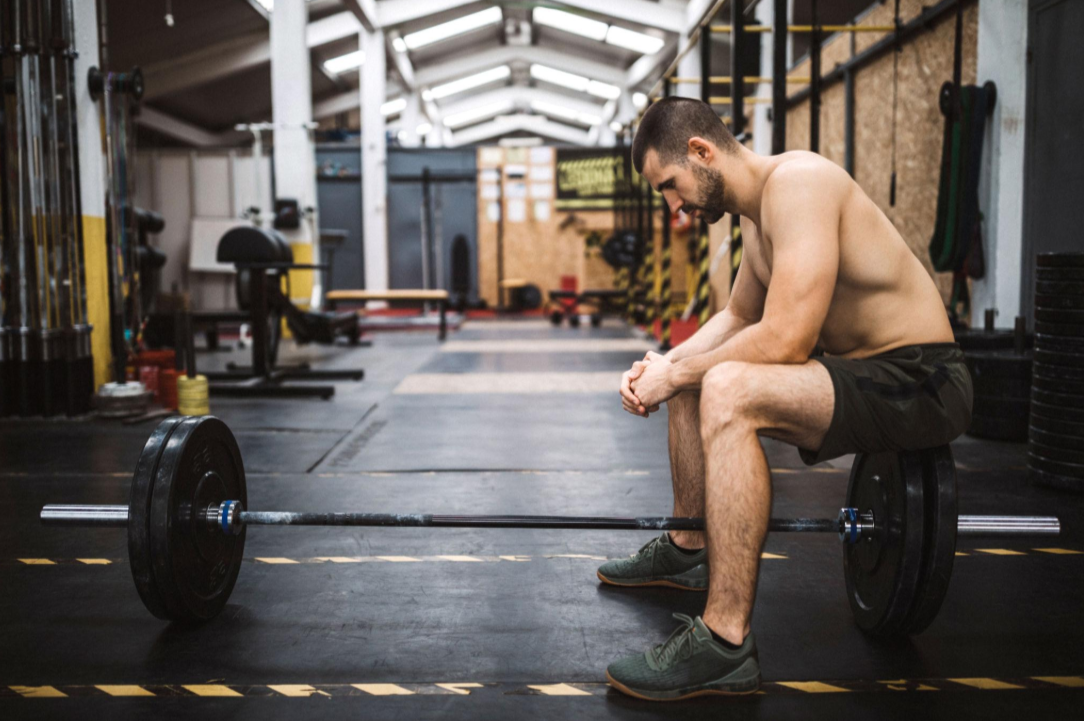
Sleep and Recovery Begin With Your Nervous System
This is where the conversation gets especially interesting.
Your nervous system doesn’t just control movement.
It helps regulate attention, arousal, stress responses, coordination, and the transition between states of activity and rest.
During the day, you may spend hours asking your system to perform.
Work.
Drive.
Train.
Solve problems.
Make decisions.
Deal with people.
Stay focused.
Push through discomfort.
Then you get home and expect your body to instantly switch off because you decided it’s bedtime.
It doesn’t always work that way.
If your system is still highly activated, falling asleep and staying asleep can become more difficult.
And now you have a cycle:
Stress → poor sleep → worse recovery → harder training → more stress.
This doesn’t mean every sleep problem is caused by the nervous system. Sleep is influenced by many factors, including circadian rhythms, environment, behavior, medical conditions, medications, and sleep disorders.
But your ability to shift between activation and recovery is an important part of the picture.
That’s why recovery isn’t simply about lying down.
It’s about creating conditions where your body can actually recover.

Sleep Loss Can Change How You Perform
Here’s where the research gets interesting.
A 2022 systematic review and meta-analysis examining 69 publications and 227 performance measures found that sleep loss had a negative effect on exercise performance across several categories, including strength, endurance, high-intensity exercise, speed/power endurance, and skill.
Another systematic review and meta-analysis focused specifically on endurance performance found that sleep deprivation produced a moderate negative effect, with longer-duration exercise appearing particularly affected.
That’s important if you’re doing endurance work.
Because sometimes the workout didn’t suddenly become harder.
You simply showed up with less recovery behind you.
And there’s another layer.
Sleep doesn’t only affect your muscles.
Your ability to concentrate, make decisions, react, and coordinate movement matters too.
That becomes particularly relevant when you’re doing complex movements, high-intensity conditioning, sport, or anything where technique starts to deteriorate as fatigue rises.
So sleep isn’t merely about feeling refreshed.
It can influence the quality of the work you’re capable of doing.
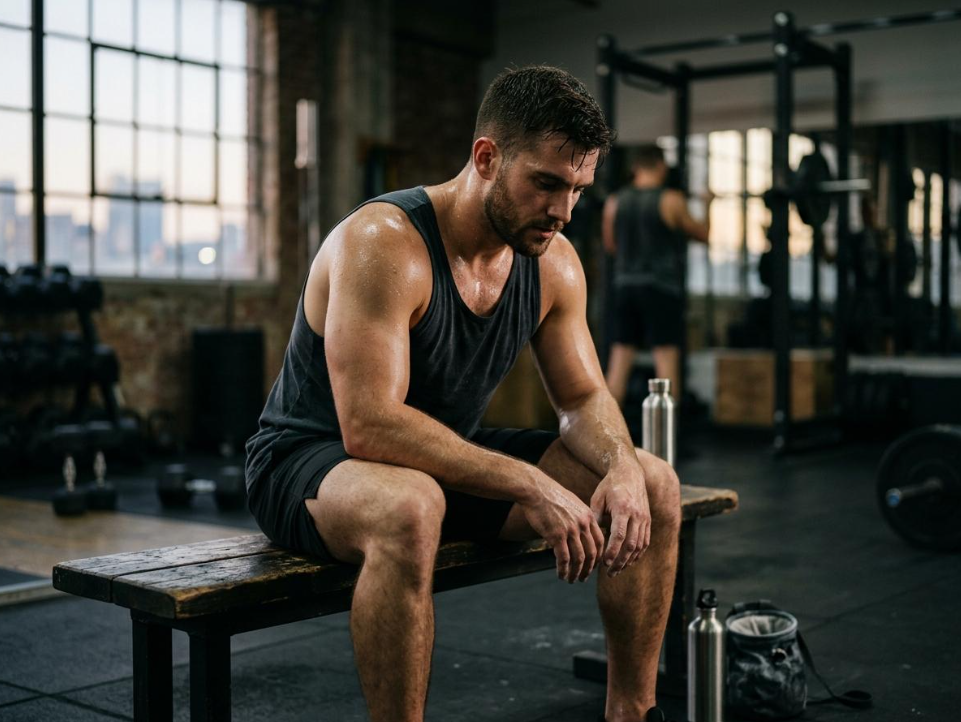
More Training Isn’t Always the Answer
This is one of the easiest traps to fall into.
You have a bad workout.
You feel slower than usual.
Your conditioning feels terrible.
Your strength isn’t there.
So you think:
I need to work harder.
Maybe.
Or maybe not.
If you’re consistently under-recovered, adding more training stress may not solve the underlying problem.
It may simply add another layer.
This is one reason sleep belongs in the same conversation as overtraining.
True overtraining syndrome is relatively uncommon and much more serious than simply having a few bad workouts. But persistent under-recovery can absolutely affect how you feel and perform, and inadequate sleep can be one contributor to that overall recovery burden.
A review of sleep and athletic performance has noted that reduced sleep can produce changes that may resemble some features associated with overtraining, while also emphasizing that the relationship is complex and not completely understood.
So before you automatically add another workout, another conditioning session, or another hour in the gym, there’s a question worth asking:
Am I actually recovering from what I’m already doing?

Sleep and Muscle Recovery
If you’re trying to build or maintain muscle, recovery matters just as much as the stimulus.
You don’t build muscle simply because you lifted something heavy.
The training provides the signal.
Your body then has to respond to that signal.
That requires adequate nutrition, recovery, and time.
Sleep extension research in athletes is not perfect, and the evidence varies depending on the population and performance measure. A systematic review found that sleep-extension interventions may benefit some aspects of athletic performance, although the authors described the evidence as limited and of varying quality.
That nuance matters.
We shouldn’t turn sleep into another fitness claim that sounds better than the evidence.
But the broader picture is clear enough to take seriously: insufficient sleep is associated with poorer recovery and performance, while interventions that increase sleep have shown benefits for some performance outcomes.
So if you’re training hard and trying to build muscle, don’t only ask:
“What program am I following?”
Ask:
“Am I giving my body enough opportunity to respond to the program?”

Sleep and Recovery After 40
As you get older, the answer isn’t necessarily to stop training hard.
In many cases, it’s to become more intelligent about how you train.
You may have more responsibilities.
Work.
Family.
Stress.
Less flexibility in your schedule.
And perhaps you’re trying to maintain strength, build muscle, improve endurance, and stay active at the same time.
That means recovery becomes increasingly important.
This doesn’t mean your body suddenly becomes fragile.
It means the margin for ignoring recovery can become smaller.
You can’t always recover from yesterday’s workout by simply pretending yesterday didn’t happen.
Your total stress load matters.
And sleep is one of the places where you can influence that equation every single night.
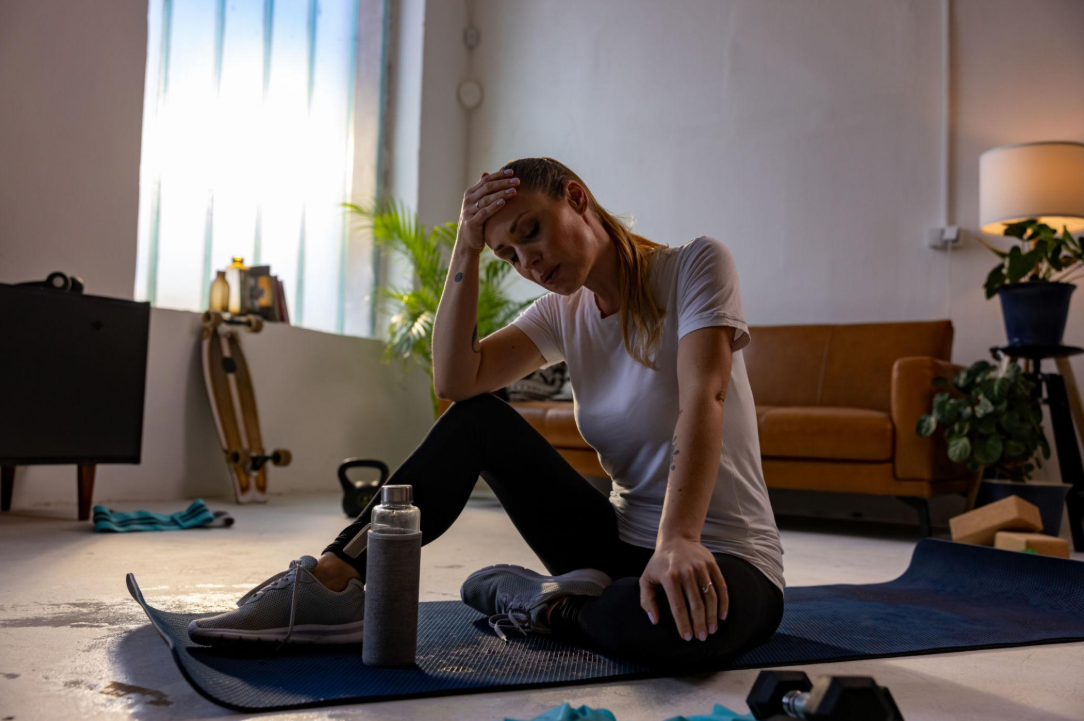
The Difference Between Being Tired and Being Under-Recovered
Everyone gets tired.
That’s normal.
You don’t need to panic every time you have a bad night’s sleep.
You also don’t need to become obsessed with your sleep tracker.
Instead, look at patterns.
Are you repeatedly struggling to fall asleep?
Are you waking frequently?
Are you waking up feeling unrefreshed?
Has your training performance started declining?
Are your workouts feeling harder than they normally do?
Are you relying heavily on caffeine just to feel normal?
Are you becoming more irritable or mentally drained?
Are you accumulating fatigue week after week?
One bad night doesn’t tell you much.
A pattern tells you more.
And if you consistently have trouble sleeping, especially if you suspect a sleep disorder, that’s something to discuss with a qualified healthcare professional rather than trying to solve entirely through training hacks.

How to Improve Sleep and Recovery Without Making It Complicated
You don’t need a $500 sleep system.
You don’t need to turn your bedroom into a laboratory.
Start with the basics.
1. Give Yourself Enough Time to Sleep
This sounds obvious.
It isn’t.
If you need to wake up at 6:00 AM, you go to bed at midnight.
However, you don’t have a recovery problem that another supplement will fix.
Adults generally need at least seven hours of sleep per night, with individual needs varying.
Start by protecting the opportunity.
2. Create a Consistent Schedule
Your body responds to rhythms.
Going to bed and waking up around the same times can help establish regularity.
The CDC also recommends maintaining a regular sleep schedule, including on weekends.
You don’t have to be perfect.
Consistency simply gives your body a clearer signal.
3. Get Light During the Day
Your environment influences your circadian system.
Getting natural light earlier in the day is one simple behavior that can help anchor your daily rhythm. The CDC specifically recommends getting natural light, particularly earlier in the day.
A morning walk can accomplish several things at once:
Light.
Movement.
Fresh air.
A little mental space.
That’s a pretty good recovery tool.
4. Stop Treating Every Workout Like a Test
This one matters if you’re training hard.
You don’t need to prove your toughness every day.
Some days should challenge you.
Some days should build volume.
Some days should develop skill.
Some days should help you recover.
That’s not weakness.
That’s programming.
5. Pay Attention to What Happens Before Bed
If you’re going directly from intense work, stressful conversations, bright screens, or a hard late-night workout into bed, don’t be surprised if your brain doesn’t immediately cooperate.
Create a transition.
Dim things down.
Slow things down.
Give your system a chance to recognize that the day is ending.
The goal isn’t perfection.
It’s a signal.
We’re done for today.

Your Sleep Doesn’t Have to Be Perfect
This is where I think the fitness industry sometimes makes recovery unnecessarily stressful.
Now people are worried about sleep scores.
HRV.
Deep sleep.
REM.
Resting heart rate.
Recovery scores.
And suddenly they’re lying in bed wondering whether they’re recovering correctly.
That’s not helpful.
Use the tools if they help you understand patterns.
But don’t let the tool become another source of stress.
You don’t need perfect sleep.
You need enough quality recovery, consistently enough, to support the life and training you’re asking your body to handle.
And if something is consistently wrong, investigate it.
Don’t just accept poor sleep as your normal.

The Nervous System Needs Both Challenge and Safety
This is the deeper connection.
A resilient nervous system isn’t one that never experiences stress.
It’s one that can respond to stress and then return toward recovery.
Training gives you controlled stress.
That’s part of why training can make you more capable.
But recovery gives your body the opportunity to process that stress and adapt.
This is why I keep coming back to the same idea:
You don’t become more resilient by eliminating every stressor.
You become more resilient by learning how to move through stress and recover from it.
Training.
Eating.
Sleeping.
Breathing.
Moving.
Resting.
Connecting.
Repeating.
That’s the cycle.
And sleep is not the part you do when everything else is finished.
Sleep is part of the work.

Here’s The Path
Maybe you’ve been looking at recovery as something that happens when you’re too tired to train.
Flip that around.
Recovery isn’t what happens when training stops.
Recovery is what allows training to work.
Start by looking at the patterns.
How much are you sleeping?
How consistent is your schedule?
How are you performing?
How do you feel when you wake up?
Are you training hard because your program calls for it—or because you feel like you have something to prove?
And when your body gives you a signal, do you listen?
You don’t have to overhaul your entire life tonight.
Start with one thing.
Protect your sleep.
Create a consistent window.
Get some natural light during the day.
Give yourself a transition before bed.
And then pay attention.
Because when you start respecting recovery, you may discover something important:
Rest isn’t taking you away from your goals.
It’s helping make the goals possible.
The Research Behind This Article
Sleep and Athletic Performance: The Effects of Sleep Loss on Exercise Performance, and Physiological and Cognitive Responses to Exercise
Journal: Sports Medicine
This review examines how sleep loss can affect exercise performance, physiological responses, cognitive function, and recovery, while also noting that the relationship is complex.
Effects of Acute Sleep Loss on Physical Performance: A Systematic and Meta-Analytical Review
Journal: Sports Medicine
This systematic review and meta-analysis examined 69 publications and found an overall negative effect of sleep loss on exercise performance across multiple categories.
How Much Does Sleep Deprivation Impair Endurance Performance? A Systematic Review and Meta-Analysis
Journal: European Journal of Sport Science
This review analyzed 31 studies involving 478 participants and found a moderate negative effect of sleep deprivation on endurance performance.
Sleep Interventions in Elite Sport — A Systematic Review
This systematic review examined 32 studies involving sleep interventions in elite sport and found evidence supporting strategies aimed at improving sleep quantity and quality, while emphasizing differences between interventions and outcomes.
Recommended Amount of Sleep for a Healthy Adult
Organizations: American Academy of Sleep Medicine and Sleep Research Society
The consensus recommendation is that adults should regularly obtain at least seven hours of sleep, while recognizing that healthy sleep also involves quality, timing, regularity, and the absence of sleep disorders.
Continue Your Journey
If you’re beginning to see recovery as part of performance rather than an interruption to it, these Full Armor articles are a natural next step:
- Overtraining: Essetnial Warning Signs You’re Pushing Too Hard — Understand what happens when training stress begins to outpace recovery.
- Nutrition for Recovery: Fuel Your Body for Endurance, Muscle Growth, and Performance — Learn how nutrition supports the recovery process.
- Endurance Training: Build Powerful Stamina and a More Resilient Body — Build endurance without ignoring the recovery required to adapt.
- Strength Training and the Nervous System: The Missing Link to Better Performance — Understand the connection between strength, adaptation, and your nervous system.
- Mobility After 40: The Key to Staying Strong and Active — Keep building physical capacity while respecting how your body moves and recovers.
Start Here
If you’re ready to build a stronger foundation, start with the FREE Full Armor Nervous System Reset Guide.
Five simple daily practices designed to help you regulate your nervous system, create better habits, and build a stronger foundation.
Get the Free Nervous System Reset Guide
If You Want To Go Deeper…
The Full Armor 21 Day Method helps you put these principles into practice through a daily framework focused on nervous system regulation, movement, recovery, intentional habits, and building resilience.
No responses yet