
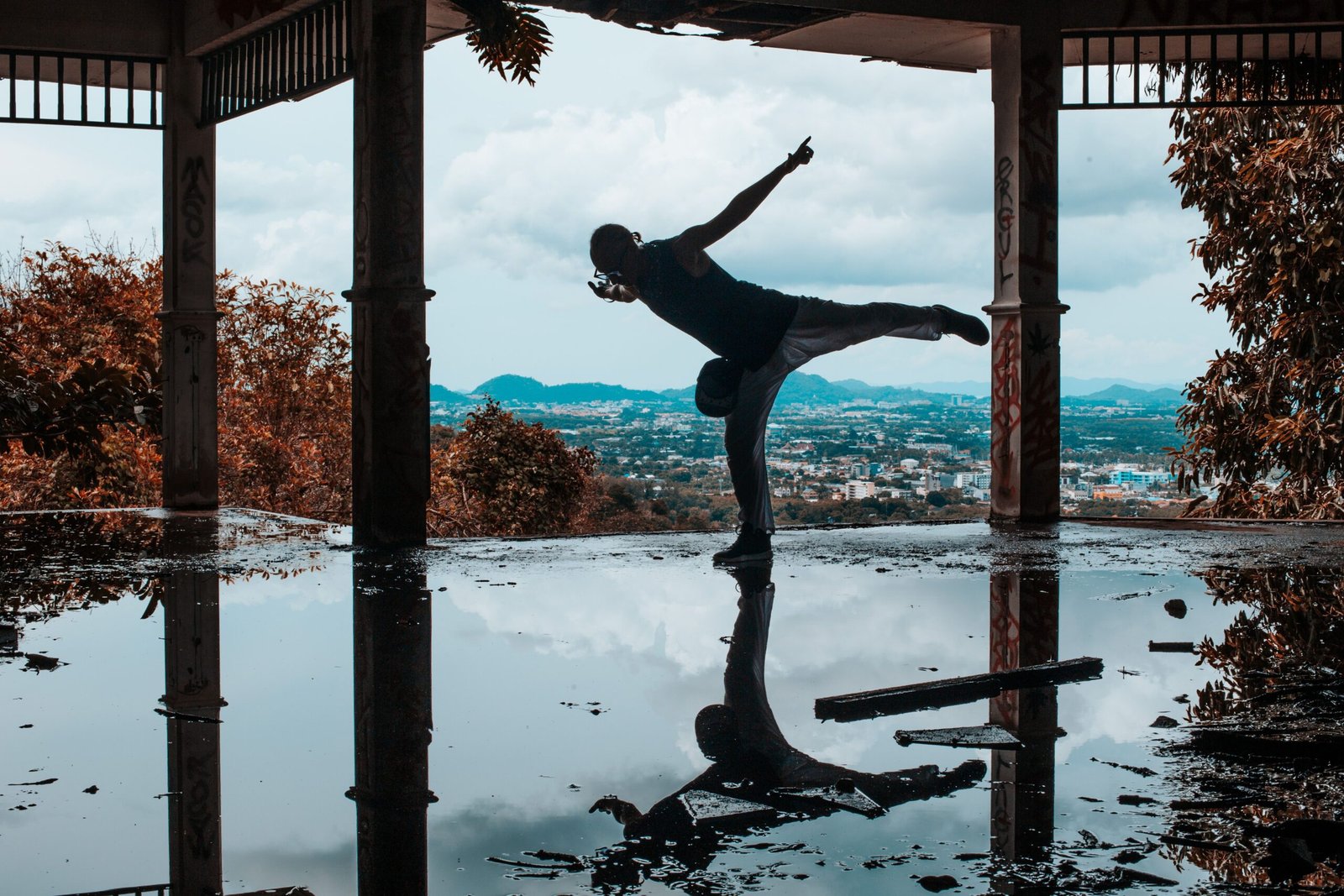
Proprioception exercises can reveal something most people never think about: your body has a built-in system that constantly tells your brain where you are in space.
Close your eyes and touch your nose.
You probably can.
Now lift your foot off the ground without looking at it. Move your arm behind your back. Walk across a room without watching every step.
Your brain somehow knows where your body is—even when your eyes aren’t helping.
That’s proprioception.
It’s one of the most overlooked systems in the human body, yet you’re using it every second you’re awake. It helps you know where your limbs are, how your joints are positioned, how much force you’re producing, and how your body is moving through space.
And here’s the part most people never think about:
Your muscles don’t have to tell your brain where they are. Your nervous system is constantly listening.
Every squat, step, reach, jump, lift, stumble, and recovery requires information traveling between your body and brain.
That’s why proprioception matters.
It’s not simply about balance.
It’s about your ability to feel your body, control your body, and respond to the world around you.
And once you understand that, you start seeing movement differently.
What Are Proprioception Exercises?
Proprioception is your body’s internal sense of position and movement.
Researchers describe proprioceptive information as signals that help the nervous system detect things such as limb position, movement, force, and effort. This information comes from sensory receptors throughout the body, including receptors in muscles, joints, and skin.
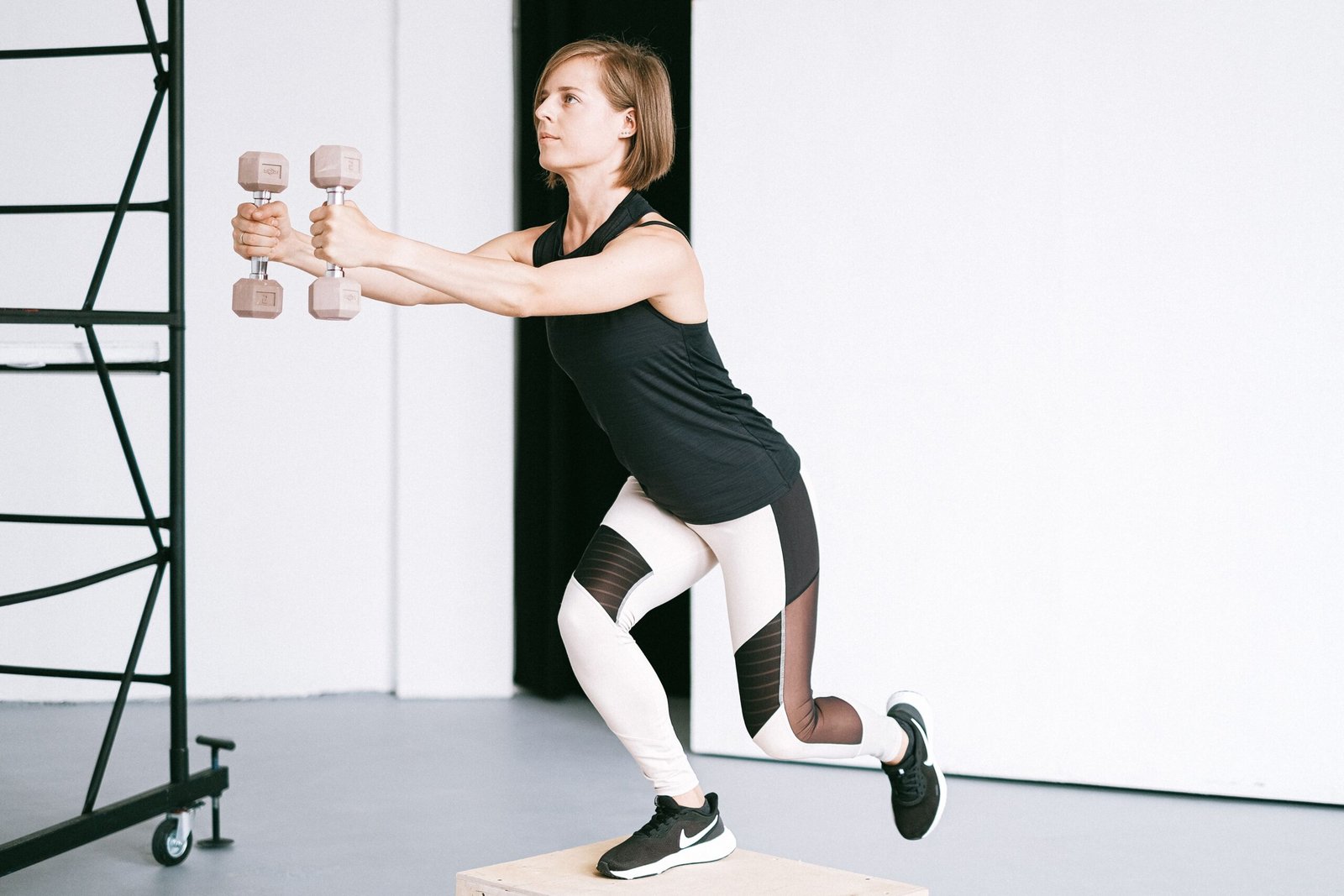
Think about what happens when you pick up a dumbbell.
You don’t consciously calculate:
Where is my elbow?
How much is my shoulder moving?
How much tension is in my muscles?
How much force do I need?
Your nervous system is processing much of that information automatically.
That’s proprioception exercies at work.
It’s one of the reasons you can move without constantly staring at the body part you’re moving.
How Proprioception Exercises Train Your Nervous System
This is where proprioception becomes especially interesting.
Your nervous system doesn’t simply send commands from your brain to your muscles.
It’s a two-way conversation.
Your brain sends instructions.
Your body sends information back.
Then your brain adjusts the movement.
That loop happens incredibly quickly.
You reach for something and your hand starts moving.
Sensory information tells your brain where your arm is.
Your brain adjusts.
You continue reaching.
You grab the object.
Your grip changes based on how heavy it feels.
All of that happens without you needing to consciously manage every individual muscle.
This constant feedback is one reason movement can become automatic with practice.
The nervous system learns what efficient movement feels like.
And the more you practice a movement, the more familiar that pattern becomes.

The Hidden Benefits of Proprioception Exercises
Our last article focused on balance training.
Proprioception takes us one layer deeper.
Balance isn’t simply about standing on one leg.
Your nervous system has to know where your body is before it can effectively keep you upright.
Imagine standing on a moving boat.
Your eyes see the horizon.
Your inner ear detects movement.
Your feet and joints detect changes in pressure and position.
Your muscles sense changes in length and tension.
Your brain combines all of this information and constantly adjusts your body.
That’s why balance is really a sensory and nervous-system challenge.
Proprioception is one of the information streams helping make those corrections possible.
A systematic review and meta-analysis published in European Journal of Translational Myology found that sensorimotor and proprioceptive exercise programs improved several measures of balance, although the researchers also noted that the overall quality of evidence ranged from very low to low.
That’s an important distinction.
The evidence is promising—but science doesn’t require us to exaggerate what it proves.
Proprioception Exercises for Strength and Movement Control
Here’s something that gets overlooked in the strength conversation:
Strength isn’t just how much force your muscles can produce.
It’s also how well your nervous system can coordinate that force.
Think about a heavy squat.
Your nervous system has to coordinate your feet, ankles, knees, hips, spine, trunk, and breathing while you produce force against the ground.
If your body loses position, your nervous system has to respond.
If the load shifts, you have to adapt.
If your foot changes position, your body has to make adjustments.
Strength without control can be limiting.
Control without strength can also be limiting.
You want both.
That’s why proprioception belongs in the conversation about performance.
A systematic review published in Frontiers in Human Neuroscience examined 51 studies involving proprioceptive training and found evidence of meaningful improvements in somatosensory and sensorimotor function, while also noting the need for additional research.
Your ability to produce force matters.
Your ability to control that force matters too.

The Best Proprioception Exercises to Start Today
You don’t need complicated equipment to challenge your proprioceptive system.
In fact, some of the simplest proprioception exercises can create a meaningful challenge.
The key is to remove some of the certainty your nervous system normally relies on.
Single-Leg Balance
Stand on one foot for 20–30 seconds.
Notice what happens.
Your ankle moves.
Your toes grip.
Your hip adjusts.
Your trunk makes tiny corrections.
You’re not standing perfectly still.
You’re constantly responding.
That’s the nervous system doing its job.
Single-Leg Reach
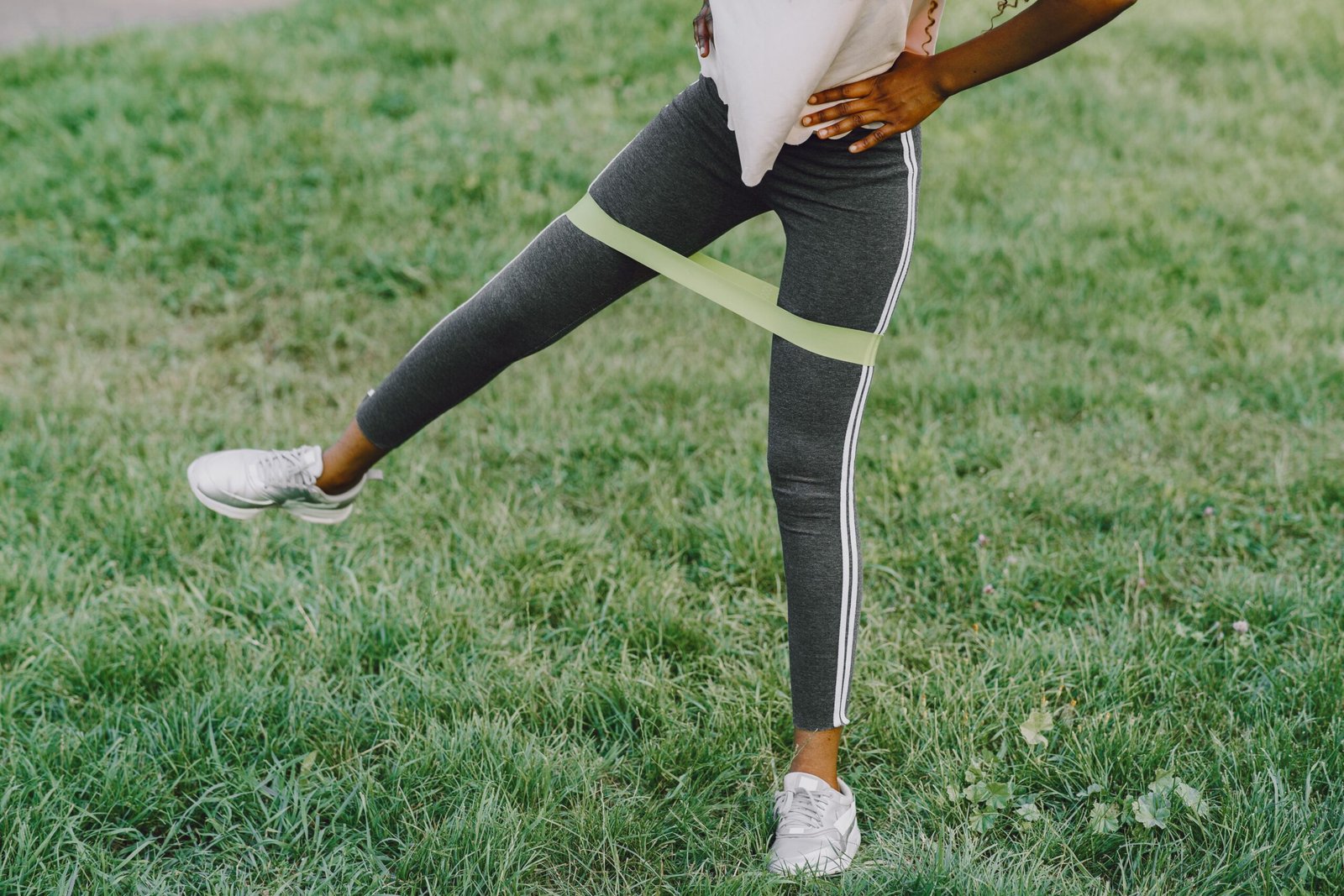
Stand on one leg and slowly reach the opposite foot forward, sideways, and behind you.
Return to the starting position each time.
This forces your nervous system to control movement while your base of support changes.
Slow Step-Downs
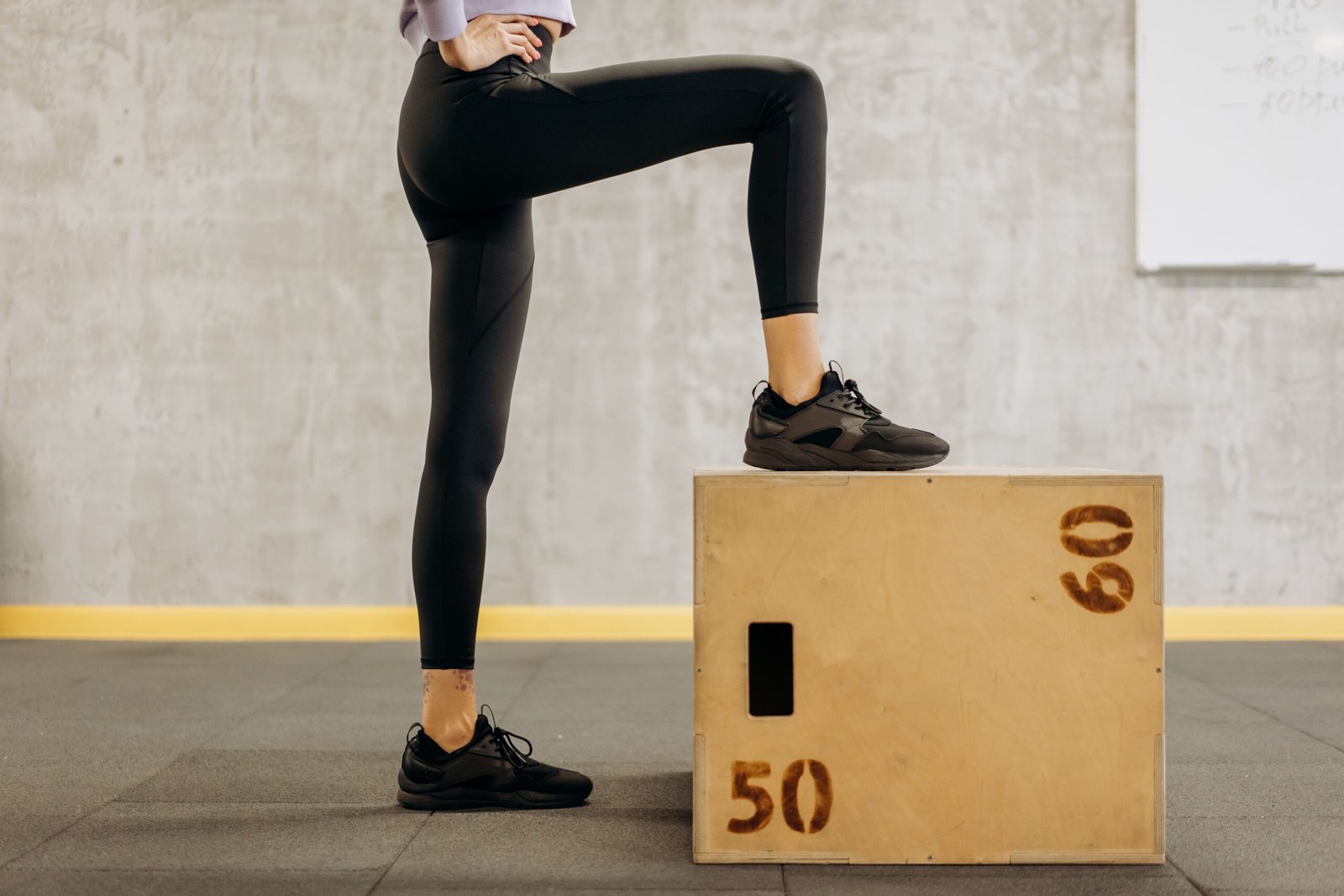
Stand on a low step.
Slowly lower one heel toward the floor and return to the starting position.
Don’t rush.
The slower you move, the more opportunity you have to become aware of what’s happening.
Single-Leg Romanian Deadlift
Balance on one leg while hinging at the hip and reaching the opposite leg backward.
Start with bodyweight.
Then gradually add resistance.
You’re combining strength, joint position, balance, and movement control in one exercise.
Uneven Carries
Carry a weight in one hand while walking.
Don’t let your body lean toward the weight.
Your nervous system has to constantly adjust your posture as you move.
You can also change the challenge by walking over grass or another safe, slightly variable surface.
The goal isn’t instability for the sake of instability.
The goal is controlled adaptation.
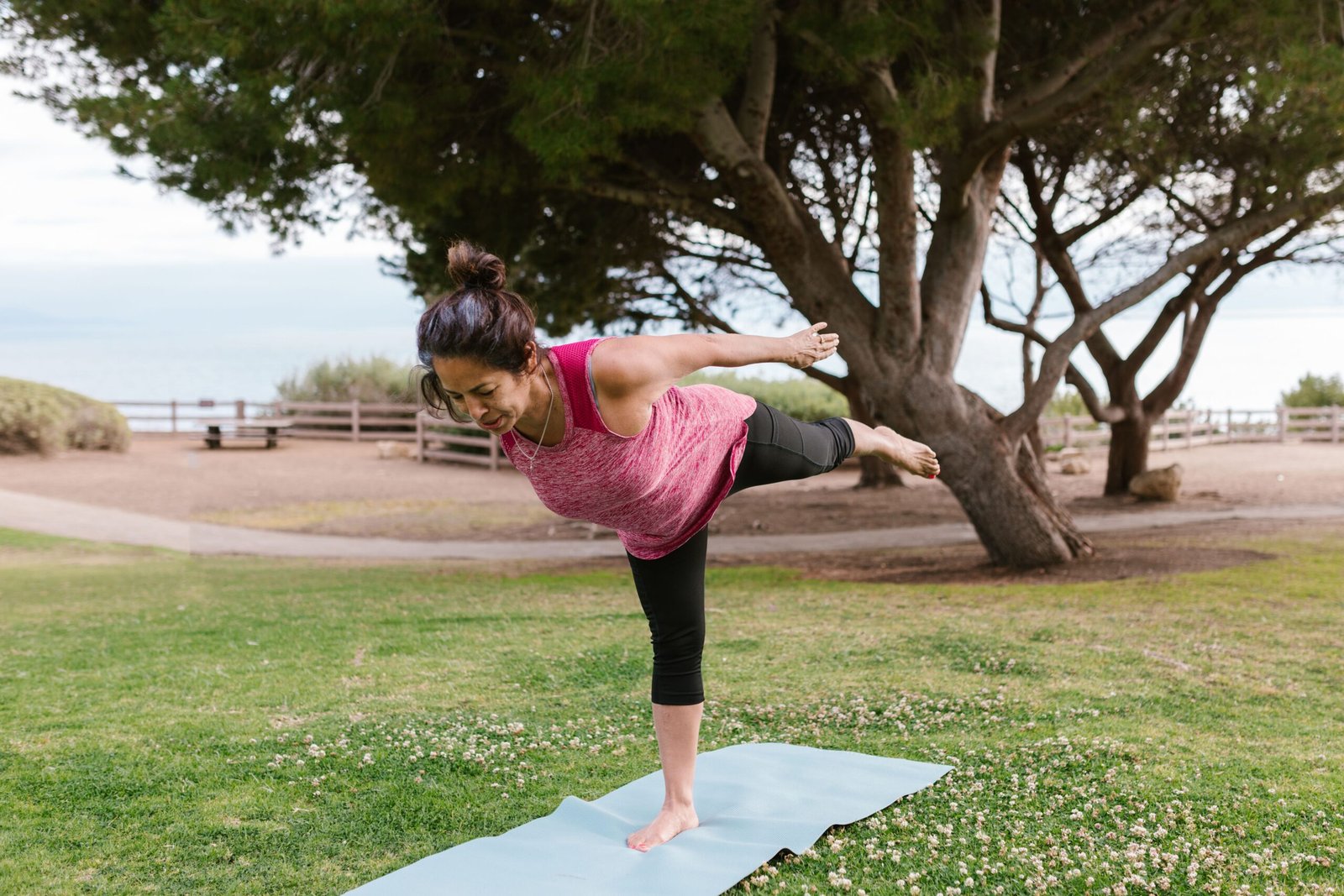
Proprioception Exercises Without Vision
Here’s a simple experiment that can make proprioception obvious.
Stand near something you can hold onto.
Stand on two feet.
Close your eyes.
Notice what happens.
Then, if you feel completely stable, try briefly standing on one foot with your eyes closed—but only in a safe environment and with something nearby to grab.
Suddenly, the task becomes much harder.
Why?
Because you’ve removed one major source of information: vision.
Your nervous system now has to rely more heavily on other sensory information to maintain control.
This is one reason exercises performed with reduced visual input can become dramatically more challenging.
But this isn’t something you need to do recklessly.
The goal isn’t to prove how unstable you can become.
The goal is to understand how much information your nervous system is processing every moment you’re moving.
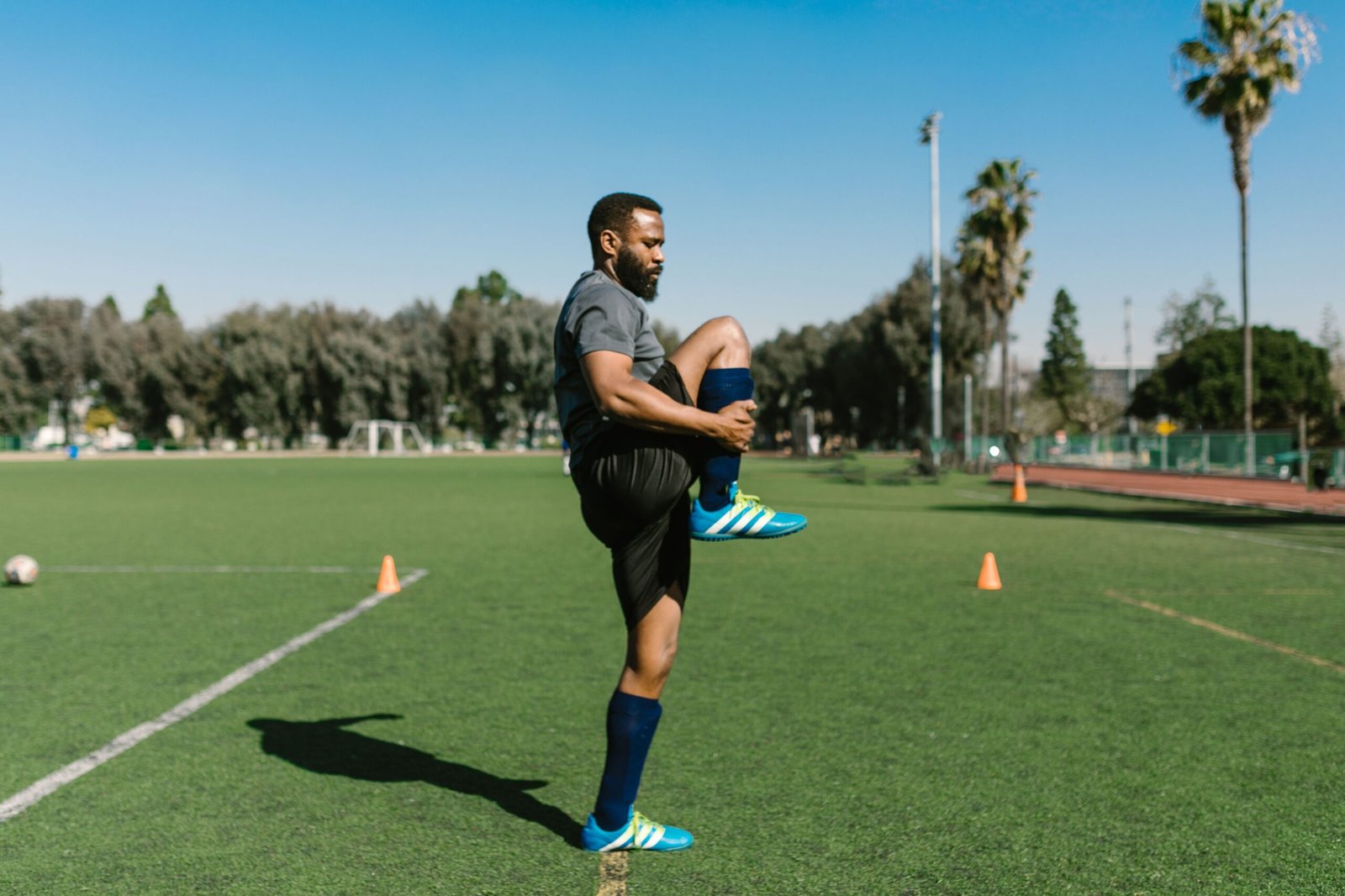
Proprioception Exercises for Better Athletic Performance
Athletes live in a world of constant adjustments.
A basketball player changes direction.
A soccer player reacts to another player.
A runner lands slightly differently on uneven terrain.
A fighter responds to an unexpected movement.
A lifter stabilizes a heavy load.
The body rarely gets to operate in perfectly predictable conditions.
That’s why proprioception exercises matters beyond rehabilitation.
A 2024 systematic review examining proprioceptive training and sports performance concluded that proprioceptive training can improve areas such as balance, coordination, motor learning, and physical performance, while also noting differences among training methods and study quality.
The lesson isn’t that proprioception is some secret performance hack.
It’s simpler than that. Here are few to try:
- Lateral bounds and stick — Jump sideways and land on one leg, holding the landing for 2–3 seconds before the next rep.
- Single-leg Romanian deadlift — Hinge on one leg while keeping the hips and knee controlled.
- Barefoot balance work — Perform controlled squats, calf raises, or single-leg movements barefoot to increase sensory input from the feet.
- Unstable-surface exercises — Use a balance pad or similar unstable surface for controlled single-leg stands, reaches, or squats.
- Crawl variations — Bear crawls and lateral crawls challenge your brain to coordinate multiple joints while maintaining body position.
- Reactive movement drills — Have a partner give you an unpredictable direction to shuffle, cut, or reach.
- Single-leg landing drills — Step or jump down from a low height and practice absorbing the landing with control.
- Eyes-closed balance — Remove visual input during simple balance exercises and let your proprioceptive system do more of the work.
The better your nervous system can sense and respond to your body, the more information it has available to control movement.
What the Research Says About Proprioception Exercises
The Proprioceptive Senses and Human Movement
The Proprioceptive Senses: Their Roles in Signaling Body Shape, Body Position and Movement, and Muscle Force
Physiological Reviews
This review explains how proprioceptive information contributes to sensing body position, movement, force, effort, and heaviness, providing the sensory information the nervous system uses to control movement.
View the PubMed research
Proprioceptive Training and Motor Function
The Effectiveness of Proprioceptive Training for Improving Motor Function: A Systematic Review
Frontiers in Human Neuroscience
This systematic review examined 51 studies and found converging evidence that proprioceptive training can improve somatosensory and sensorimotor function, while identifying the need for further research.
View the PubMed research
Proprioceptive Training and Sports Performance
Effects of Proprioceptive Training on Sports Performance: A Systematic Review
BMC Sports Science, Medicine and Rehabilitation
This review examined how proprioceptive training affects sports performance and found evidence supporting improvements in balance, coordination, motor learning, and physical performance, while recognizing limitations in the available research.
View the PubMed research
Proprioceptive Exercise and Balance
Sensorimotor and Proprioceptive Exercise Programs to Improve Balance in Older Adults: A Systematic Review with Meta-analysis
European Journal of Translational Myology
This meta-analysis found significant improvements across several balance measures following sensorimotor and proprioceptive exercise, while grading the overall certainty of evidence from very low to low.
View the PubMed research
Here’s The Path
There’s something humbling about realizing how little of your movement you actually control consciously.
You walk without thinking about every muscle.
You reach without calculating joint angles.
You catch yourself when you stumble before you’ve had time to decide what to do.
Your body is constantly talking to your brain.
And your brain is constantly listening.
That’s proprioception.
Maybe the bigger lesson isn’t simply that you should train it.
Maybe it’s that you should become more aware of the conversation already happening inside you.
Pay attention to how your feet feel against the ground.
Notice how your body shifts when you lift.
Slow down occasionally.
Move deliberately.
Challenge your balance.
Explore different positions.
Don’t always chase heavier weight, faster times, or more repetitions.
Sometimes the most powerful training is simply learning to feel what you’re doing.
Because awareness creates better control.
Better control creates better movement.
And better movement gives you more freedom to live, train, work, play, and serve the people around you.
Your body isn’t just a machine that needs to be pushed.
It’s a living system that needs to be understood.
Heal. Bless. Prosper.
That’s the path.
Continue Your Journey
- Balance Training: The Hidden Key to a Stronger Nervous System
- Isometric Exercises: The Hidden Nervous System Benefits You Need
- Mobility After 40: The Key to Staying Strong and Active
- How Strength Training Regulates Your Nervous System
- Seven Proven Exercise Recovery Tips to Help You Recover Fast
Start Your Recovery
If you want a simple daily practice for becoming more aware of your nervous system, start with the Free Full Armor Nervous System Reset Guide.
Get the Free Full Armor Nervous System Reset Guide
If You Want To Go Deeper
The Full Armor 21-Day Method takes that work further by giving you a structured path for building awareness, regulation, and consistency.
No responses yet