

Coordination exercises can expose something strength training alone doesn’t always reveal: you can have strong muscles and still struggle to move well.
Think about trying a new exercise for the first time.
Your muscles might be strong enough to do it.
But your body doesn’t quite know what to do.
Your arms move at the wrong time. Your feet feel awkward. You lose your balance. You have to slow everything down and think about every part of the movement.
Then something changes.
You practice.
A few repetitions later, it feels easier.
Eventually, you don’t have to think about it at all.
That’s not necessarily because your muscles suddenly became stronger.
Your nervous system learned the movement.
That’s what makes coordination so fascinating.
It’s not simply about being athletic or naturally graceful.
It’s your brain’s ability to organize information and turn it into controlled movement.
And you can train it.
What Are Coordination Exercises?
Coordination exercises challenge your brain and body to work together more efficiently.
Every movement requires timing.
Your brain has to determine which muscles need to activate, how much force they need to produce, when they need to relax, and how the movement needs to change as your environment changes.
That sounds complicated.
You experience it as something incredibly simple:
Walking.
Reaching.
Running.
Throwing.
Catching.
Climbing stairs.
Lifting a weight.
Your nervous system is coordinating all of it.
Coordination also depends on several sensory systems working together, including vision, proprioception, balance, and information from your muscles and joints.
This is why coordination isn’t just a “sports skill.”
It’s a nervous-system skill.
How Coordination Exercises Train Your Nervous System
Your brain isn’t simply telling your body what to do.
It’s constantly receiving information from your body and adjusting what happens next.
You reach for a glass.
Your eyes tell your brain where the glass is.
Your proprioceptive system tells your brain where your arm is.
Your muscles and joints provide information about movement and position.
Your brain combines that information and adjusts the movement.
You grab the glass.
You don’t consciously think through any of it.
That’s the remarkable part.
Your nervous system is performing an enormous amount of work underneath your awareness.
Coordination exercises give that system opportunities to practice.
The movements don’t have to be complicated.
Sometimes making a familiar movement slower, changing the pattern, using the opposite side, or combining upper- and lower-body movements is enough to make your brain pay attention.
And when your brain has to pay attention, you’re training more than muscle.

The Hidden Benefits of Coordination Exercises
Most people think coordination is something you either have or you don’t.
That’s not the whole story.
Coordination is trainable.
And improving it can influence much more than how smoothly you perform a particular exercise.
Better Body Awareness
Coordination requires you to understand where your body is and what it’s doing.
That makes coordination closely connected to proprioception—the body’s ability to sense position and movement.
This is one reason coordination training naturally follows balance and proprioception in our Full Armor progression.
Balance teaches control.
Proprioception gives you information.
Coordination teaches you how to organize that information into movement.
More Efficient Movement
When your nervous system becomes better at organizing movement, you don’t necessarily need to work harder.
You may simply move better.
That’s an important distinction.
Fitness culture often tells us to add more:
More weight.
More repetitions.
More intensity.
More speed.
But sometimes the better question is:
Can I perform this movement with greater control?
Improved Reaction and Adaptability
Real life doesn’t happen in a perfectly controlled gym environment.
You trip.
You step off a curb.
Someone bumps into you.
You change direction.
You catch something that falls.
Your environment changes—and your nervous system has to respond.
Coordination exercises that challenge timing and movement variability can help you practice responding to changing demands.
Better Performance
Whether you’re lifting weights, running, playing a sport, hiking, dancing, or simply moving through your day, coordinated movement matters.
Performance isn’t only about how much force you can produce.
It’s also about how effectively you can organize that force.
Best Coordination Exercises to Start Today
You don’t need complicated equipment.
In fact, start simple.
The goal is to make your brain think about movement rather than simply completing repetitions on autopilot.
Cross-Crawl
Stand tall.
Lift your right knee while reaching your left hand toward it.
Return to the starting position and switch sides.
Continue slowly for 30–60 seconds.
This simple pattern requires your brain to coordinate opposite sides of your body.
Progression: Increase the speed while maintaining control.
Bird Dog
Start on your hands and knees.
Extend your right arm and left leg simultaneously.
Pause.
Return to the starting position and switch sides.
Keep your hips as still as possible.
This challenges coordination between the upper and lower body while also requiring trunk stability.
Progression: Hold the extended position for several seconds.
Contralateral Carry
Hold a weight in one hand and walk while maintaining an upright posture.
Then switch hands.
The asymmetrical load forces your nervous system to make constant adjustments while you move.
Progression: Increase walking distance or use a slightly heavier load.
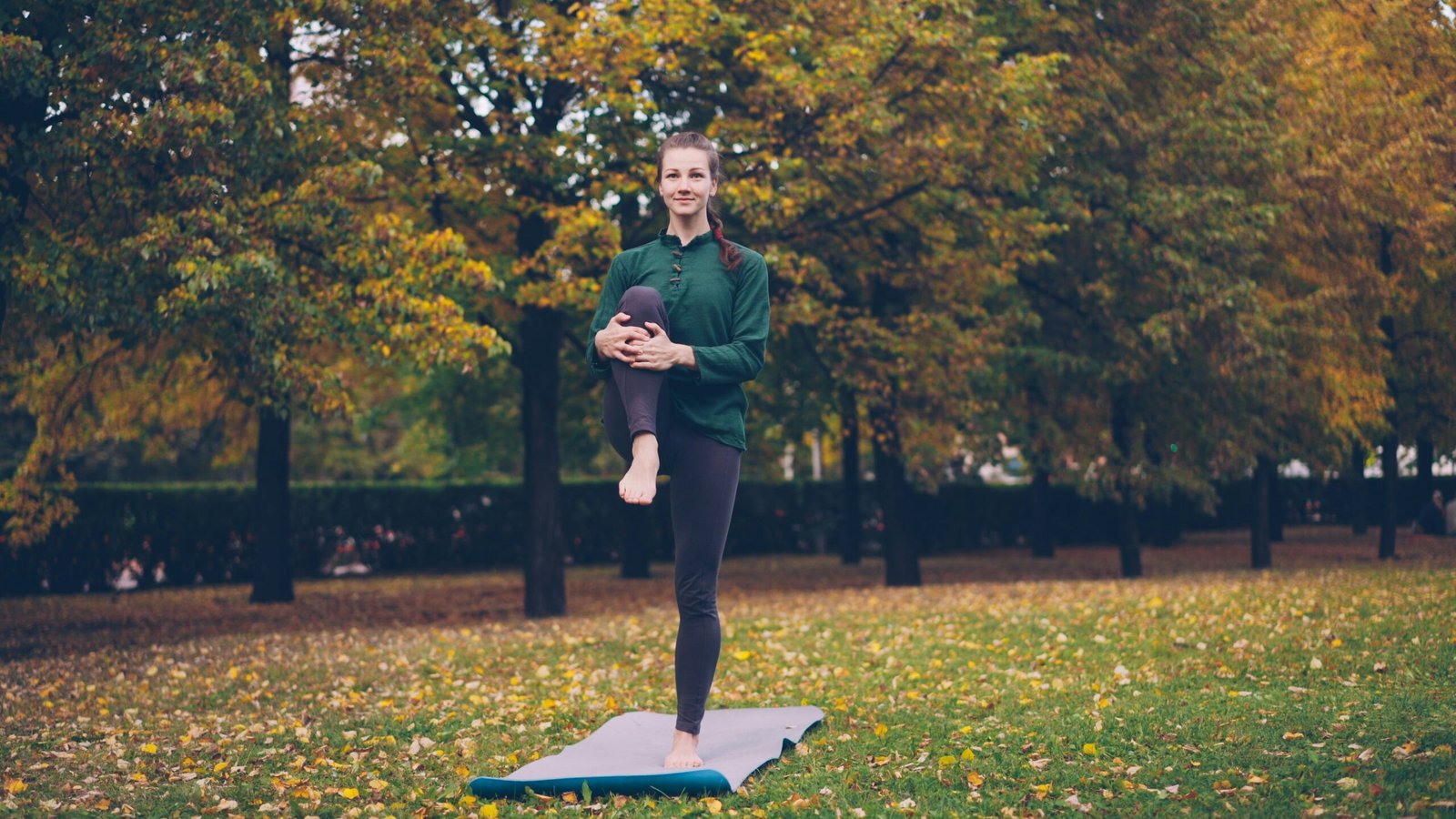
Single-Leg Reach
Stand on one leg.
Reach your opposite leg forward, sideways, and behind you.
Return to center between each direction.
This combines balance, proprioception, strength, and coordination.
Progression: Hold a light weight.
Ball Toss
Stand facing a wall and gently throw a tennis ball against it.
Catch it with the opposite hand.
Start slowly.
As your coordination improves, increase the distance or speed.
This adds vision, reaction, timing, and hand-eye coordination to the challenge.
Step-and-Reach
Step forward with one foot while reaching with the opposite arm.
Return to the starting position.
Alternate sides.
The movement looks simple, but changing the position of your arms and legs at the same time forces your nervous system to coordinate multiple pieces of information.
Progression: Add lateral and backward steps.
How to Progress Your Coordination Exercises
Don’t make coordination exercises harder simply by making them faster.
That’s one of the easiest ways to turn a useful exercise into sloppy movement.
Instead, progress one variable at a time.
You can:
- Increase speed.
- Reduce visual input.
- Add resistance.
- Change direction.
- Use an unstable environment carefully.
- Combine upper- and lower-body movements.
- Change the movement pattern.
- Add a reaction component.
- Perform the movement on the opposite side.
The goal is controlled complexity.
If the movement becomes so difficult that you’re simply trying not to fall apart, you’ve probably progressed too quickly.
Challenge your nervous system.
Don’t overwhelm it.
Coordination Exercises and Proprioception
If you read our previous article on proprioception exercises, you’ll recognize the connection.
Proprioception tells your brain information about where your body is.
Coordination uses that information to help organize movement.
Imagine driving a car.
Proprioception is part of the information coming into the system.
Coordination is part of what allows the system to turn that information into an organized response.
The two aren’t separate.
They’re part of the same conversation between your brain and body.
Research supports this connection. A systematic review of 70 studies found that proprioceptive training was associated with improvements in both proprioceptive and motor performance, with active movement interventions making up the majority of the training approaches studied.
That doesn’t mean every coordination exercise automatically makes you better at everything.
It means the nervous system’s ability to sense and control movement is trainable.
And that’s the bigger idea.
Coordination Exercises for Everyday Movement
You don’t have to be an athlete to benefit from better coordination.
Think about ordinary life.
Getting out of a car.
Carrying groceries while opening a door.
Walking across uneven ground.
Climbing stairs while carrying something.
Reaching overhead.
Getting up from the floor.
Playing with your kids.
Working in the yard.
Your body rarely moves one joint at a time.
Real movement is integrated.
Your nervous system has to coordinate multiple muscles, joints, sensory systems, and movement patterns simultaneously.
That’s why training coordination can be valuable even when your goal isn’t athletic performance.
You’re not training for a sport.
You’re training for life.
What the Research Says About Coordination Exercises and Motor Control
Proprioceptive Training and Motor Performance
The Effectiveness of Proprioceptive Training for Improving Motor Performance and Motor Dysfunction: A Systematic Review
Frontiers in Rehabilitation Sciences
This systematic review examined 70 studies and found that proprioceptive training was associated with improvements in both proprioceptive and motor performance, particularly with active movement-based interventions. The findings support the connection between sensory information and motor control.
Proprioceptive Training and Motor Function
The Effectiveness of Proprioceptive Training for Improving Motor Function: A Systematic Review
Frontiers in Human Neuroscience
This review analyzed 51 studies and found converging evidence that proprioceptive training can improve somatosensory and sensorimotor function. The researchers also noted that active movement with and without visual feedback tended to be among the more beneficial approaches.
Proprioceptive Training and Sports Performance
Effects of Proprioceptive Training on Sports Performance: A Systematic Review
BMC Sports Science, Medicine and Rehabilitation
This systematic review examined research involving proprioceptive training and sports performance and found evidence for improvements in balance, coordination, motor learning, and physical performance, while noting differences between training methods and limitations in the available evidence.
Learning to Sense and Control Movement
A Systematic Review of the Learning Dynamics of Proprioception Training: Specificity, Acquisition, Retention, and Transfer
Neuroscience & Biobehavioral Reviews
This systematic review analyzed 106 studies and found evidence that proprioceptive learning can improve with training, with effects showing features of motor learning including specificity, acquisition, and retention.
When Coordination Gets Hard, Slow Down
There’s another lesson hidden inside coordination training.
When something feels awkward, most people want to speed through it.
Get it over with.
Finish the set.
Move on.
But awkwardness can be useful.
It tells you your nervous system hasn’t completely mastered the pattern yet.
Instead of rushing past that feeling, slow down.
Pay attention.
Feel your feet.
Notice your breathing.
Notice where your body shifts.
Then repeat the movement.
This is where training becomes more than exercise.
It becomes awareness.
And awareness changes how you interact with your own body.
Continue Your Journey
Balance Training: The Hidden Key to a Stronger Nervous System
Proprioception Exercises: Unlock Better Body Control
Isometric Exercises: The Hidden Nervous System Benefits You Need
How Strength Training Regulates Your Nervous System
Seven Proven Exercise Recovery Tips to Help You Recover Fast
Here’s The Path
You don’t need to make every workout harder.
Sometimes you need to make it smarter.
Challenge your strength.
Challenge your mobility.
Challenge your balance.
But don’t forget to challenge your ability to coordinate all of it.
Because your body isn’t a collection of isolated muscles.
It’s a system.
Your brain, nervous system, muscles, joints, senses, breathing, and environment are constantly communicating.
The better that communication becomes, the more capable you become of responding to life.
So occasionally put the heavy weight down.
Slow the movement down.
Try the other side.
Close your eyes when it’s safe.
Change the pattern.
Pay attention.
Feel what your body is doing.
You’re not just exercising.
You’re teaching your nervous system how to move through the world with greater awareness and control.
That’s the deeper work.
Heal.
Bless.
Prosper.
That’s the path.
Start Your Recovery
Your nervous system influences how you move, recover, perform, and respond to stress.
Start building better daily habits with the Free Full Armor Nervous System Reset Guide.
Get the Free Full Armor Nervous System Reset Guide
If You Want To Go Deeper
The Full Armor 21-Day Method gives you a structured path for building awareness, regulation, consistency, and resilience.
No responses yet