
Have you ever had one of those moments when something happens so quickly that your body responds before you even realize you’ve made a decision? You catch something that slips out of your hand. You stumble and somehow recover before you hit the ground. Someone steps unexpectedly into your path and you move without thinking about it. Those moments can make you realize just how much your body is doing beneath your conscious awareness. Reaction time exercises give us a way to train that system deliberately—not simply to become faster, but to improve the communication between what you see, what your brain understands, and how your body responds.
That’s what makes reaction time exercises so interesting.
We tend to think of speed as something that belongs to muscles. Fast legs. Fast hands. Fast athletes. But movement doesn’t begin with the muscle. It begins with information.
Something changes.
Your senses detect it.
Your brain has to figure out what matters.
Then your nervous system has to organize a response.
Only then does your body move.
And when you start looking at reaction time that way, it becomes much bigger than an athletic skill. It becomes a window into how well your nervous system can perceive, adapt, coordinate, and respond when life doesn’t give you time to prepare.
That’s where this gets interesting.
Because the goal isn’t to become someone who reacts to everything as quickly as possible.
The goal is to become someone who can respond well when something changes.
What Are Reaction Time Exercises?
Reaction time exercises challenge your brain and body to recognize a stimulus and produce an appropriate Reaction time exercises challenge your brain and body to recognize a stimulus and produce an appropriate response.
The stimulus might be:
- Something you see
- A sound you hear
- A change in your surroundings
- A physical sensation
- A signal from another person
Your nervous system receives that information, processes it, selects a response, and organizes movement.
That’s why reaction time isn’t simply a muscle quality.
It’s a brain-body skill.
You can have strong legs and still be slow to respond to an unexpected change. You can have excellent balance and still struggle when the environment suddenly changes. You can be powerful enough to catch yourself but fail to initiate the movement quickly enough.
Reaction time exercises help train that gap between perception and response.
How Reaction Time Exercises Train the Nervous System
Your nervous system is constantly gathering information.
Your eyes are watching.
Your ears are listening.
Your muscles and joints are providing information about position and movement.
Your brain is making sense of all of it.
Then it has to decide what happens next.
Most traditional exercises are predictable.
You know when the squat is coming.
You know how many repetitions you’re doing.
You know where the weight is.
You know what movement comes next.
That predictability is useful. It allows you to build strength, coordination, technique, and capacity.
Reaction training adds something different:
uncertainty.
You might respond to a sound.
Catch an object.
Change direction when you see a signal.
Move when someone calls a direction.
Now your brain cannot simply run a rehearsed movement pattern.
It has to pay attention.
It has to interpret.
It has to respond.
That’s why good reaction time exercises aren’t necessarily the drills that make you move the fastest.
They’re the drills that challenge you to recognize information and respond accurately.
The Difference Between Reaction Time and Reflexes
Reaction and reflex are often used as if they mean the same thing.
They don’t.
A reflex is generally an automatic response through a neural pathway that doesn’t require the same kind of conscious decision-making as a voluntary reaction.
For example, touching something painfully hot can produce a rapid withdrawal response.
Catching a ball is different.
You have to see the ball, interpret its movement, organize a response, and coordinate your body to intercept it.
Both can happen quickly.
But they’re different processes.
When we’re training reaction time, we’re primarily interested in improving the ability to perceive information and organize an appropriate movement response.
That distinction matters because the training isn’t simply about making a muscle contract faster.
It’s about improving the whole process that happens before and during movement.
Why Reaction Time Exercises Matter Beyond Sports
Reaction time sounds like an athletic quality.
But everyday life is full of situations that require it.
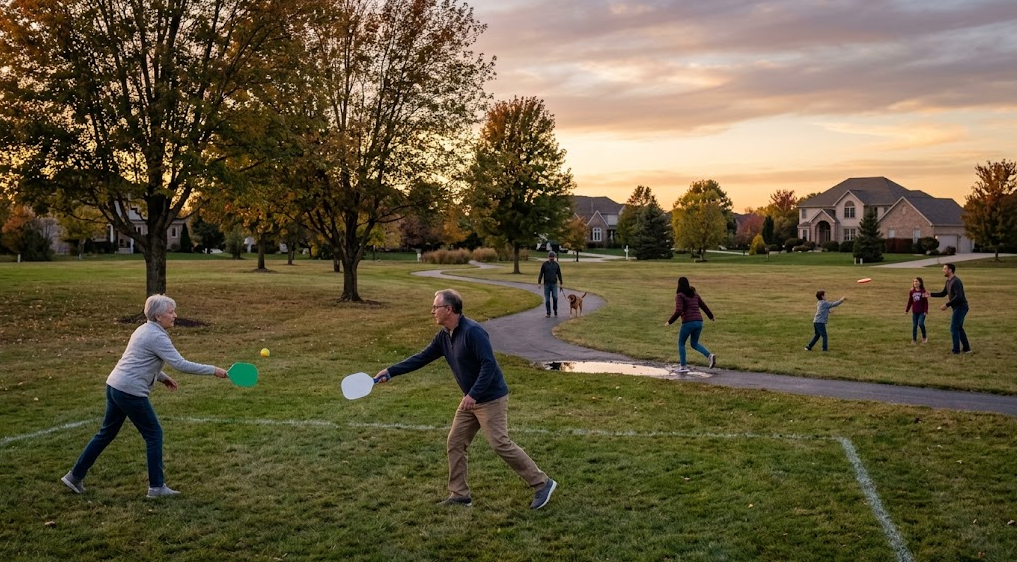
You’re walking down the stairs and your foot lands differently than expected.
Your body adjusts.
You’re carrying something and it begins slipping.
You react.
You’re walking through a parking lot and a vehicle moves unexpectedly.
You stop.
You’re moving across uneven ground and suddenly lose stability.
You correct.
None of those situations gives you time to prepare.
Your nervous system has to work with the information available in that moment.
That’s why reaction training can have value beyond competition.
You’re practicing the ability to adapt.
And adaptation is one of the bigger themes running through everything we do at Full Armor.
A resilient system isn’t one that never encounters stress.
It’s one that becomes better at responding to it.
The Best Reaction Time Exercises to Start With
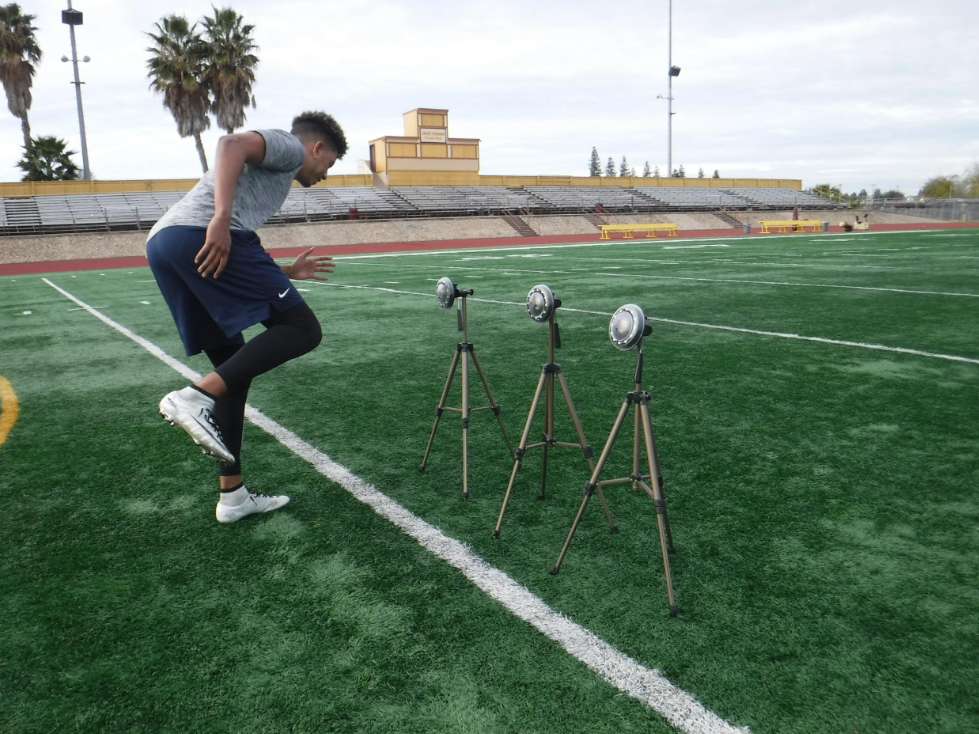
You don’t need expensive equipment or complicated technology.
Start by giving your nervous system simple problems to solve.
The goal is not frantic movement.
The goal is controlled responsiveness.
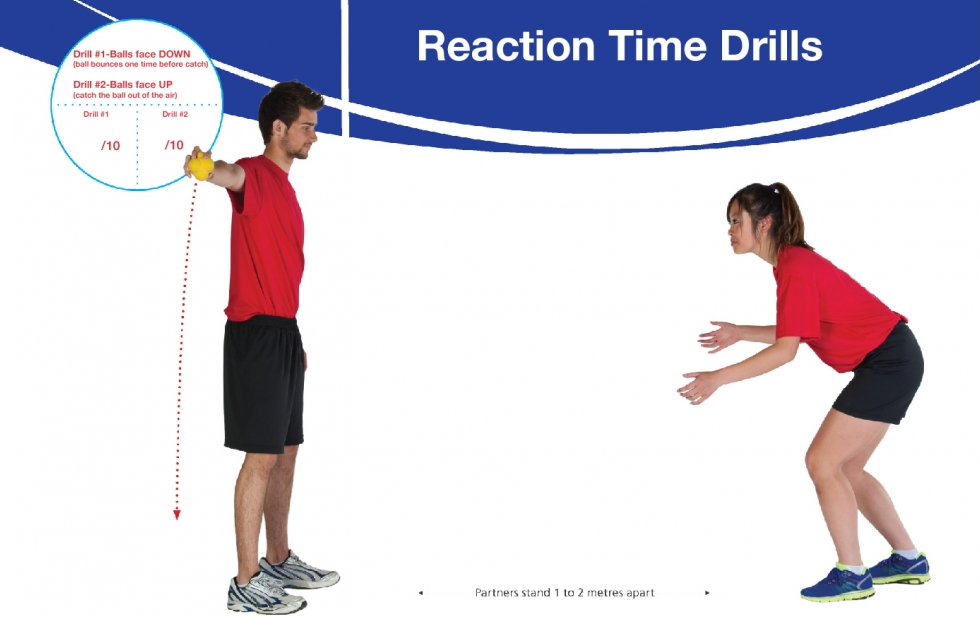
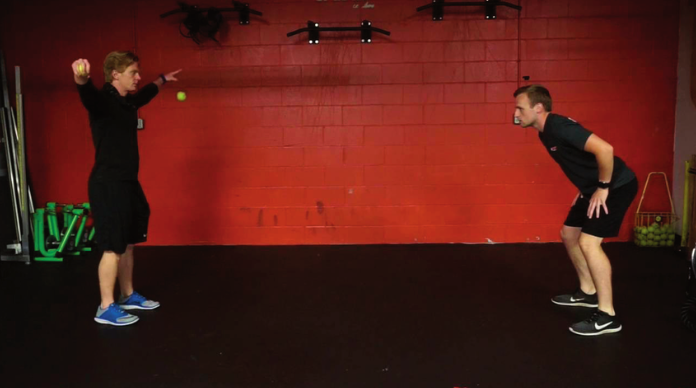
1. Tennis Ball Drop
Have a partner hold a tennis ball around shoulder height.
Stand with one hand positioned below it.
Without warning, have them drop the ball.
Try to catch it.
Start with one hand and then switch sides.
Once you become comfortable, have your partner vary the height and timing.
Now you can’t simply anticipate the exact moment the ball will fall.
You have to watch.
Process.
Respond.
2. Wall Ball Reaction Drill
Stand several feet from a wall.
Throw a tennis ball against the wall with one hand and catch it with the opposite hand.
Alternate sides.
Start slowly.
As your coordination improves, increase the speed.
Then change the angle of the throw so the ball returns to different positions.
Now you’re combining visual processing, coordination, reaction, and movement.
3. Partner Direction Drill
Have a partner stand several feet away.
Assign four directions:
- Forward
- Backward
- Left
- Right
Your partner calls a direction randomly.
Move in that direction and return to the starting position.
The important part is that you don’t know what direction is coming.
Your nervous system has to hear the cue, interpret it, and initiate movement.
4. Auditory Reaction Drill
Stand in an athletic position.
Have a partner assign different movements to different sounds.
For example:
One clap: step left.
Two claps: step right.
Three claps: step backward.
Now your response depends on an auditory signal instead of a visual one.
That changes the challenge.
You’re teaching your nervous system to use a different source of information to initiate movement.
5. Ball Toss With Movement
Have a partner gently toss a ball toward different locations around you.
Catch it while maintaining your stance.
As you improve, add a step toward the ball before catching it.
Now you’re combining:
Perception → decision → movement → coordination
That’s much closer to the demands of real-world movement than simply repeating a predetermined exercise.
6. Mirror Drill
Stand facing a partner.
One person leads.
The other person mirrors the movement.
The leader can step sideways, forward, backward, squat, reach, or change direction.
Switch roles.
The drill looks simple.
It isn’t.
You have to continuously observe another person’s movement and organize your own response.
How to Progress Reaction Time Exercises
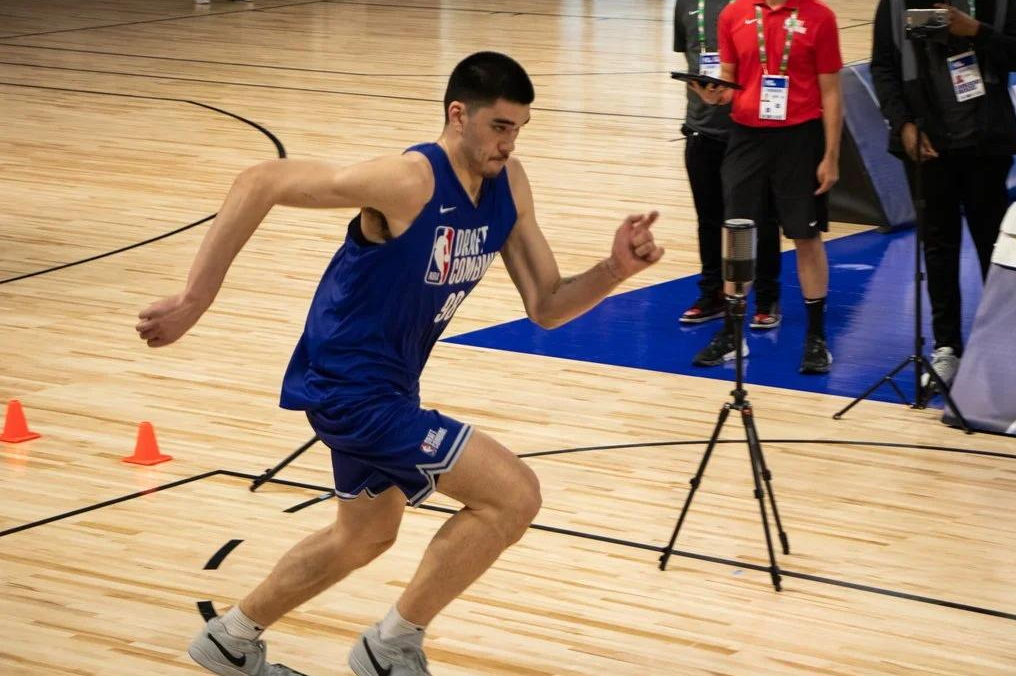
Don’t make everything faster immediately.
That’s one of the easiest ways to turn reaction training into sloppy movement.
Start with accuracy.
Then control.
Then unpredictability.
Then speed.
A useful progression looks like this:
Step 1: Learn the movement.
Step 2: Respond accurately.
Step 3: Introduce unpredictability.
Step 4: Increase speed.
Step 5: Add movement complexity.
Step 6: Combine reaction with balance, strength, or coordination.
This progression matters because speed without control isn’t necessarily useful.
Imagine a car with a powerful engine but poor steering.
More power doesn’t solve the problem.
Your nervous system works the same way.
The goal isn’t simply to produce a faster response.
It’s to produce an appropriate response.
Reaction Time Exercises and Nervous System Control
This is where reaction training connects directly to nervous system regulation.
We’re not trying to keep the nervous system operating at maximum speed all day.
That isn’t regulation.
That’s stimulation.
A resilient nervous system needs flexibility.
Sometimes the right response is fast.
Sometimes it is slow.
Sometimes it is stopping.
Sometimes it is changing direction.
Sometimes it is doing nothing.
The deeper goal is the ability to shift when the situation requires it.
That is a much more useful definition of performance.
You’re not trying to become someone who reacts to everything.
You’re becoming someone who can recognize what is happening and respond appropriately.
What Reaction Time Exercises Actually Require
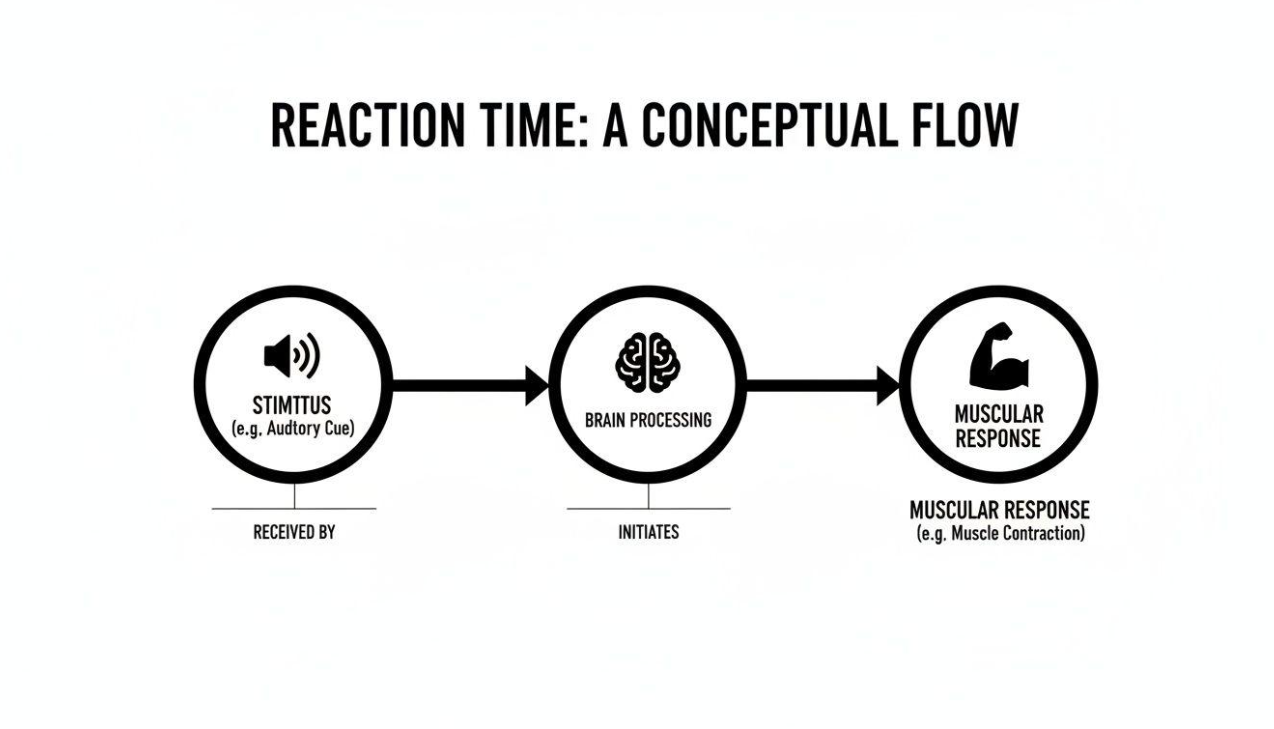
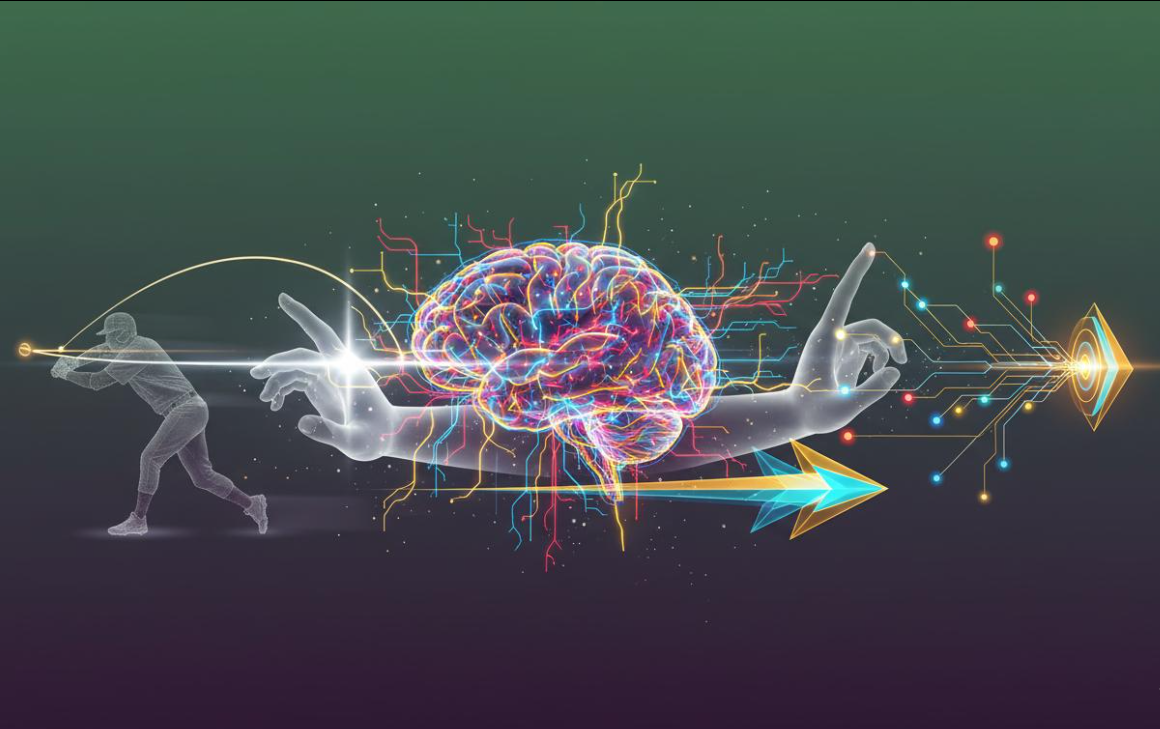
Think about what happens when someone throws a ball unexpectedly.
First, something changes in your environment.
Your sensory system detects it.
Your brain processes the information.
You determine what matters.
A response is selected.
Your nervous system organizes movement.
Your muscles execute it.
That entire chain happens rapidly.
So reaction time is not simply about the final movement.
It is the result of multiple systems working together.
See.
Process.
Decide.
Respond.
That’s nervous-system training.
And it explains why reaction training belongs in conversations about performance, balance, coordination, and resilience.
Reaction Time Exercises Are Also About Uncertainty
There is another reason I like this type of training.
You can’t control the stimulus.
You have to work with what appears.
That is a useful lesson outside the gym.
Life does this constantly.
Something changes.
The plan doesn’t work.
Someone says something you weren’t expecting.
Your body feels different.
The environment shifts.
The question becomes:
Can you respond without immediately losing control?
That doesn’t mean staying calm in every circumstance.
It means developing the capacity to notice what is happening before automatically becoming overwhelmed by it.
The physical drill gives you a small, controlled version of that experience.
You see something.
You don’t know exactly what’s coming.
You respond.
You recover.
Then you do it again.
Over time, you’re not just training movement.
You’re practicing adaptability.
How to Build Reaction Training Into Your Week
You don’t need an hour-long reaction workout.
For most people, a few minutes can be enough to introduce the stimulus.
Try adding 5–10 minutes of reaction work before a movement session when you’re fresh enough to respond with quality.
For example:
Day 1: Tennis ball drop + wall ball
Day 2: Partner direction drill
Day 3: Mirror drill + ball toss
You can also use reaction exercises as a warm-up before sport or performance training.
Keep the volume low enough that your responses remain sharp.
Once fatigue becomes significant, you’re no longer practicing the same quality.
And that’s an important Full Armor principle:
Training is not about doing more just because you can.
It’s about giving your body the right signal and then giving it enough recovery to adapt.
Here’s The Path
There’s a bigger lesson hiding inside reaction time.
Life rarely tells you what’s coming.
You don’t always get a warning before something changes.
You don’t always get time to prepare.
But you can train your capacity to respond.
That’s what reaction time exercises really give us.
You’re practicing uncertainty in a controlled environment.
Something changes.
You notice it.
You don’t know exactly what is coming.
You respond.
And then you recover.
The goal isn’t to become someone who reacts to everything as quickly as possible.
It’s to become someone who can recognize what is happening and respond appropriately.
That matters in sport.
It matters in movement.
It matters when you’re walking down the stairs.
It matters when life doesn’t go according to plan.
And maybe that’s the deeper connection.
You can’t control every stimulus that comes into your life.
But you can train your capacity to meet it.
You can become more aware.
More coordinated.
More adaptable.
More resilient.
You’re not simply training your body to move faster.
You’re training your system to respond better.
That’s the kind of strength that follows you outside the gym.
The Research Behind This Article
Effects of Neuromuscular Training on the Reaction Time and Electromechanical Delay of the Peroneus Longus Muscle
Archives of Physical Medicine and Rehabilitation
This study examined whether six weeks of neuromuscular training could improve responses to an unexpected walking perturbation. It supports the broader idea that targeted neuromuscular training can influence how the body responds to sudden disturbances.
A Systematic Review and Bayesian Meta-analysis Provide Evidence for an Effect of Acute Physical Activity on Cognition in Young Adults
Scientific Reports
This systematic review and Bayesian meta-analysis examined 113 studies involving 4,390 participants and found a small beneficial effect of acute physical activity on cognition, including reaction-time measures.
The Effects of Moderate Physical Exercise on Adult Cognition: A Systematic Review
Frontiers in Aging Neuroscience
This systematic review examined the relationship between moderate exercise and adult cognition and included reaction-time measures among the cognitive outcomes considered.
Continue Your Journey
Reaction time doesn’t exist by itself.
It builds on the movement skills you’ve already been developing.
If you want to understand the larger picture, continue with these Full Armor resources:
Why You Don’t Feel Like Yourself Anymore
Start with the deeper nervous-system question: what happens when prolonged stress, over stimulation, and disconnection begin changing how you experience yourself? The Full Armor homepage currently identifies this as a core starting article for people feeling disconnected or stuck in survival mode.
7 Signs Your Nervous System Is Dysregulated
Explore the broader Full Armor framework for movement, breathwork, recovery, discipline, and daily practices that support nervous-system regulation.
Continue from reaction time into the larger relationship between movement, strength, mobility, endurance, resilience, and nervous-system adaptation.
Start Here
Start building a stronger foundation with the FREE Full Armor Nervous System Reset Guide.
Inside you’ll discover practical daily practices to:
- Regulate your nervous system
- Reduce stress
- Improve recovery
- Build healthier habits
Get the Free Full Armor Nervous System Reset Guide
If You Want To Go Deeper…
The Full Armor 21 Day Method helps you put these principles into practice through a daily framework focused on:
- Nervous system regulation
- Movement
- Recovery
- Intentional habits
- Building resilience
If you want to go deeper, this gives you a structured way to take what you’re learning and actually live it.
No responses yet