
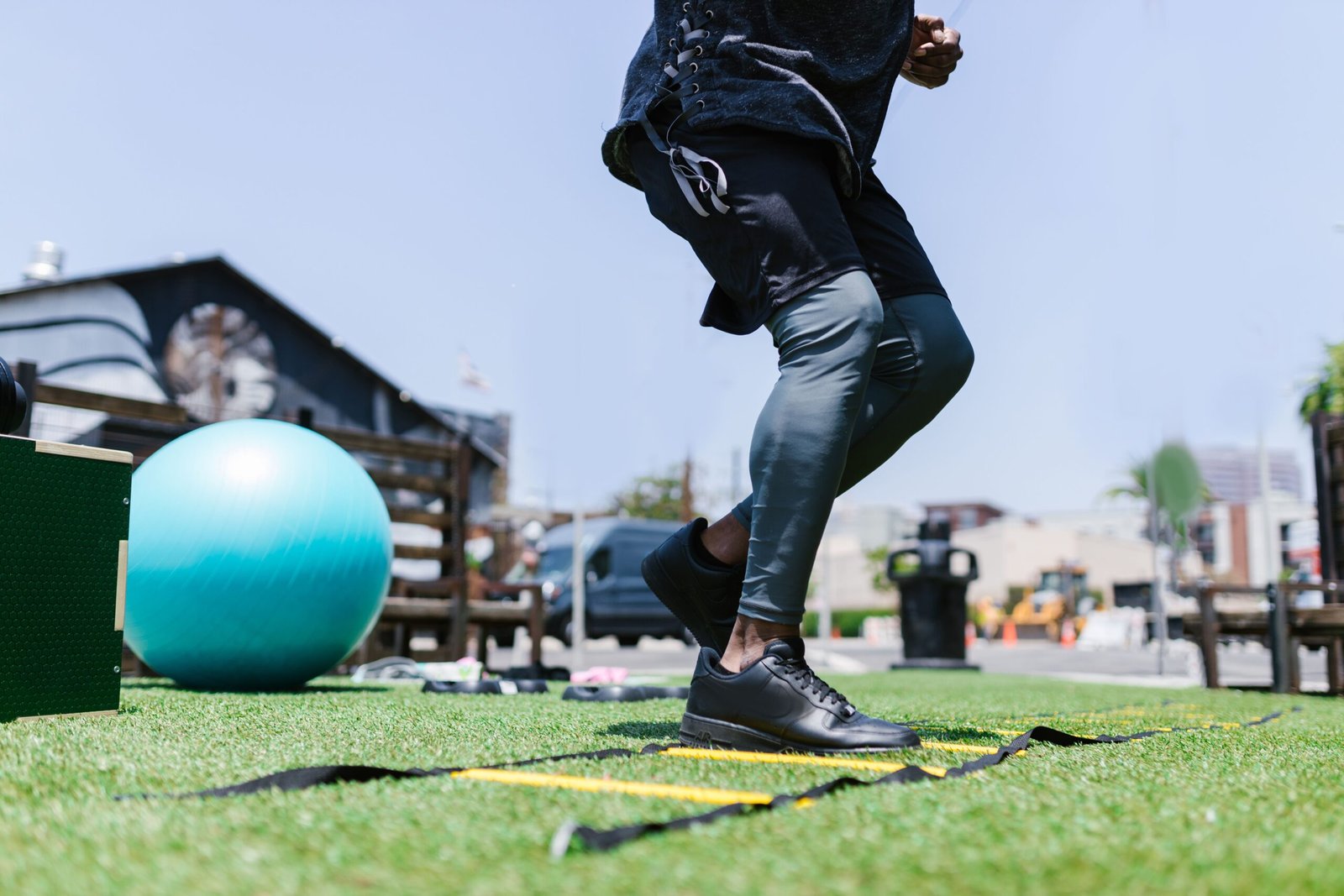
Have you ever been moving confidently in one direction when something suddenly changes and you have to adjust?
Maybe you’re playing a sport and an opponent cuts across your path. Maybe you’re running and have to avoid someone or something in front of you. Maybe you step onto an uneven surface and your body has to reorganize itself before you even have time to think about it.
Those moments reveal something that traditional strength training doesn’t always show.
Actually, Agility training isn’t simply about being fast. It’s about what your nervous system does when the plan changes.
You have to see what’s happening.
You have to process it.
You have to decide what to do.
Then your body has to produce the movement quickly enough to matter.
And sometimes, just when you think you’ve figured it out, the situation changes again.
That’s where agility becomes interesting.
Because reaction time asks, “How quickly can you respond?”
Agility asks a bigger question:
“How well can you respond while you’re already moving?”
That distinction matters for athletes, but it also matters for anyone who wants to move well, stay capable, and build a body that can adapt to the unexpected.
Your nervous system isn’t just controlling your muscles.
It’s helping you navigate the world.
What Is Agility Training?
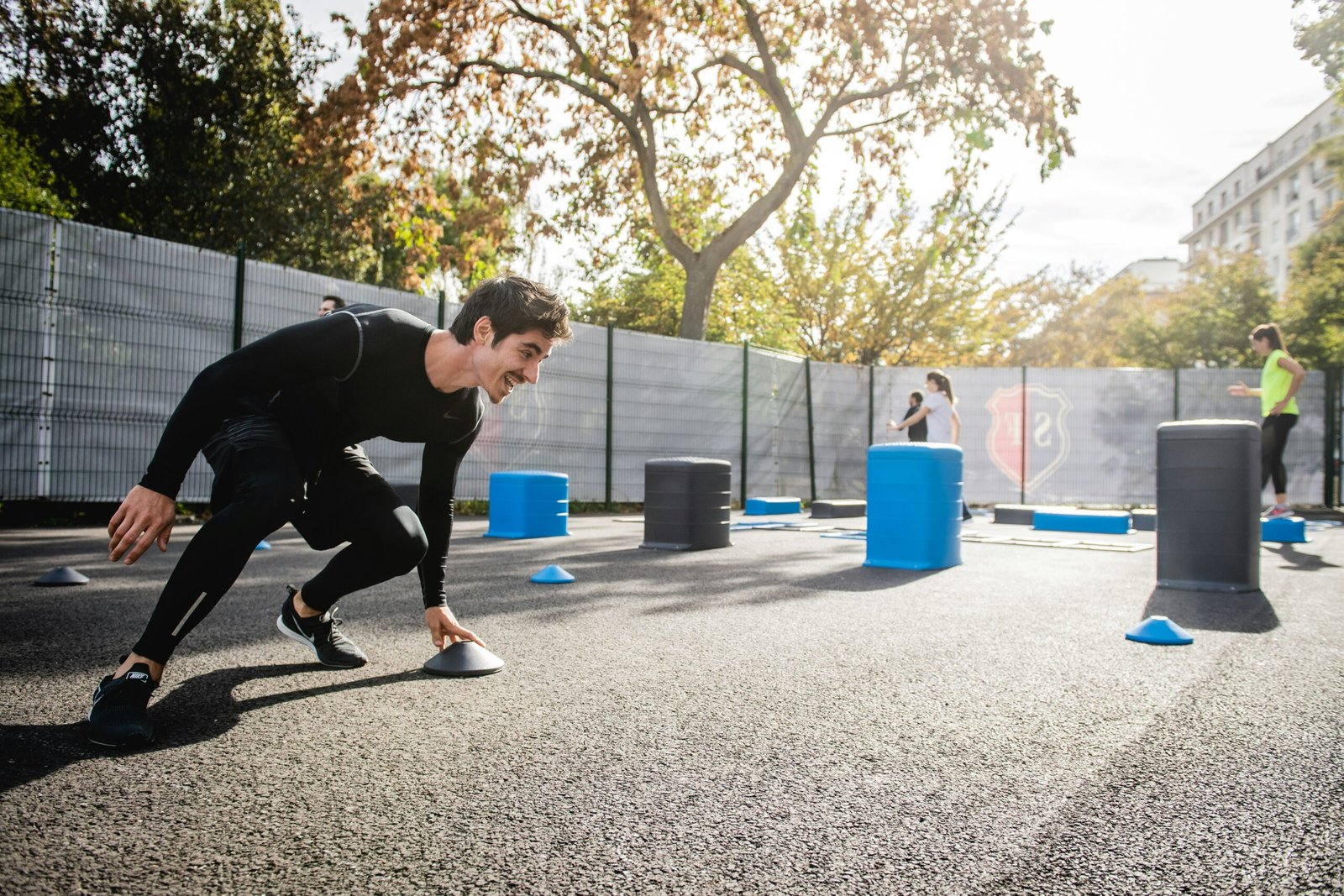
Agility training develops your ability to rapidly change speed, direction, or movement in response to a stimulus.
That last part is important.
A simple drill where you run around cones in a predetermined pattern is certainly useful movement training. It can develop acceleration, deceleration, coordination, footwork, and change-of-direction ability.
But true agility involves something more.
You don’t know exactly what is coming.
A stimulus tells you what to do.
That stimulus could be:
- A person moving
- A ball changing direction
- A visual signal
- A sound
- A coach’s command
- A change in your environment
Your nervous system has to take that information and turn it into movement.
That’s why agility sits at the intersection of physical ability and perception.
You need enough strength to produce force.
You need enough balance to control your position.
You need proprioception to understand where your body is.
You need coordination to organize the movement.
And you need reaction ability to respond to what you perceive.
Agility brings those pieces together.
How Agility Training Challenges the Nervous System
Think about what happens when you change direction.
You are already moving.
Then something tells you that the direction needs to change.
Your brain has to process that information while your body is in motion.
You may need to slow down.
Plant a foot.
Shift your center of mass.
Produce force in a different direction.
Accelerate again.
All of that requires communication between the brain, nervous system, muscles, joints, and sensory systems.
That’s why agility training can be such an effective way to challenge the nervous system.
You’re not just asking your muscles to contract.
You’re asking your entire movement system to adapt.
And that word matters.
Adaptation is one of the fundamental principles of training.
You expose the body to a demand.
The body responds.
With appropriate recovery, it adapts.
Then you give it a slightly different challenge.
Agility simply adds another layer:
The challenge can change while you’re performing it.
Agility Training vs. Change-of-Direction Training
These terms are often used interchangeably, but there is an important distinction.
A change-of-direction drill can be completely planned.
You know you’re going to sprint five yards, plant, cut left, sprint another five yards, and stop.
You’re still training valuable qualities.
You’re developing the ability to accelerate, decelerate, control your body, and produce force in multiple directions.
But you already know the answer.
Agility introduces a decision.
Imagine two athletes performing the same movement.
The first knows the entire sequence before starting.
The second doesn’t know which direction they will need to go until a partner moves.
The second athlete has to perceive and decide before executing the movement.
That is where agility becomes more than a footwork drill.
Recent research describes this distinction similarly: pre-planned change-of-direction tasks involve predetermined movement, while agility involves responding to a stimulus during movement.
Both have value.
They simply train different things.

Why Agility Training Matters Beyond Sports
It’s easy to assume agility only matters if you’re playing soccer, basketball, football, tennis, or another sport.
But your everyday environment is full of unexpected changes.
You’re walking and someone steps in front of you.
You step off a curb differently than expected.
You lose your balance.
Something falls.
You turn quickly because you hear something behind you.
Your body doesn’t get a written plan before these things happen.
It has to adapt.
That’s why maintaining the ability to change direction, control your body, and respond to unexpected information can be useful beyond athletic performance.
You don’t need to train like a professional athlete.
You need to maintain the ability to move when life requires you to move.
That becomes increasingly valuable as the goal shifts from simply looking fit to staying capable.
Strength matters.
Mobility matters.
Balance matters.
But the ability to combine them when something unexpected happens matters too.
The Best Agility Training Exercises to Start With
You don’t need elaborate equipment.
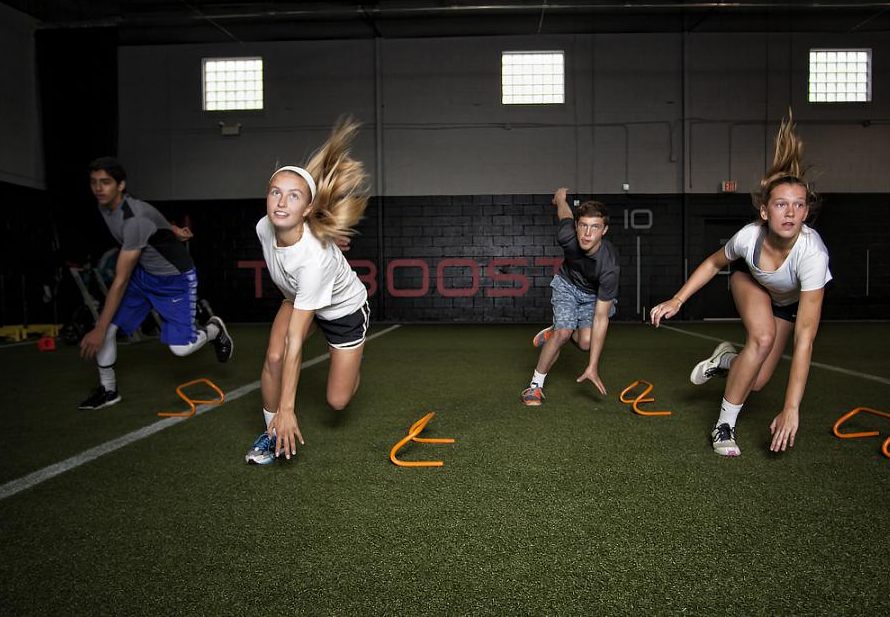
In fact, some of the most useful drills require little more than space, a partner, and something that provides a stimulus.
The goal is not to make every drill chaotic.
Start simple.
Build control.
Then introduce uncertainty.
Lateral Shuffle and Stick
Start in an athletic stance.
Shuffle several steps to one side.
Plant your outside foot and stop under control.
Hold the position for a moment.
Then return in the opposite direction.
This is a great starting point because you’re learning to decelerate before you try to react faster.
That matters.
If you can’t control your body while slowing down, simply moving faster isn’t necessarily an improvement.
Cone Change-of-Direction Drill
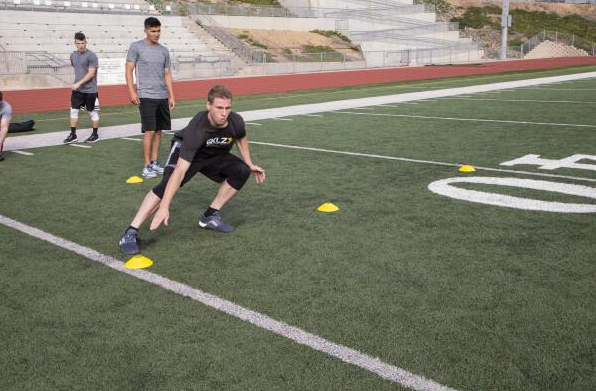
Set up three cones in a simple pattern.
Move forward toward the first cone.
Plant and change direction.
Accelerate toward the next cone.
Start with a predetermined pattern.
Once you’ve mastered it, have a partner call the direction of the next movement.
Now the drill changes.
You’re no longer simply remembering the pattern.
You’re processing information.
That’s when the nervous-system challenge increases.
Mirror Drill
Stand several feet from a partner.
One person leads.
The other person mirrors their movement.
The leader can move:
- Left
- Right
- Forward
- Backward
- Diagonally
The follower doesn’t know what’s coming.
This makes the drill deceptively difficult.
You aren’t simply moving your feet.
You’re continuously watching another person, predicting what might happen, and adjusting your movement.
Reactive Cone Drill
Set up several cones around you.
Have a partner call a color, number, or direction.
Move to the appropriate cone and return.
Begin with a walking pace.
Then increase speed.
Eventually, have the partner change the signal at unpredictable times.
Now your nervous system has to abandon one movement plan and immediately create another.
That is a valuable progression.
Ball Reaction and Direction Drill
Have a partner stand several feet away with a ball.
They can point, throw, roll, or move the ball in different directions.
Your job is to respond appropriately.
The ball provides an external stimulus.
You don’t know exactly where it will go.
You have to perceive it and move.
This connects the reaction-time work from the previous article to agility.
Reaction gives you the ability to respond.
Agility asks you to respond while managing movement through space.
How to Progress Agility Training
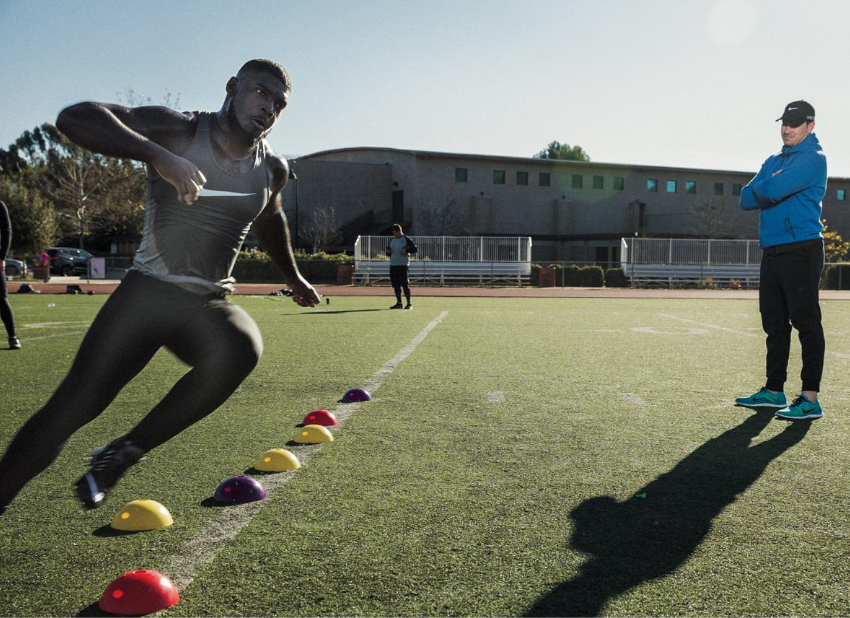
Don’t start by trying to move as fast as possible.
Start by becoming good at changing direction.
Then become good at changing direction under control.
Then add speed.
Then add uncertainty.
A simple progression looks like this:
Step 1: Control
Learn to accelerate, decelerate, stop, and change direction safely.
Step 2: Coordination
Introduce different movement patterns and directions.
Step 3: Speed
Increase movement speed while maintaining control.
Step 4: Reaction
Introduce an external signal.
Step 5: Decision-making
Make the signal unpredictable.
Step 6: Complexity
Combine reaction, balance, acceleration, deceleration, and directional changes.
This progression is important because agility isn’t simply about doing a drill faster.
You’re developing a system.
Research supports the idea that change-of-direction performance can be improved through multiple training approaches—including sprint, plyometric, resistance, and combined methods—rather than there being one universally superior exercise.
The right progression depends on what you’re trying to improve.
Agility Training and the Brain-Body Connection
Here’s where this gets deeper.
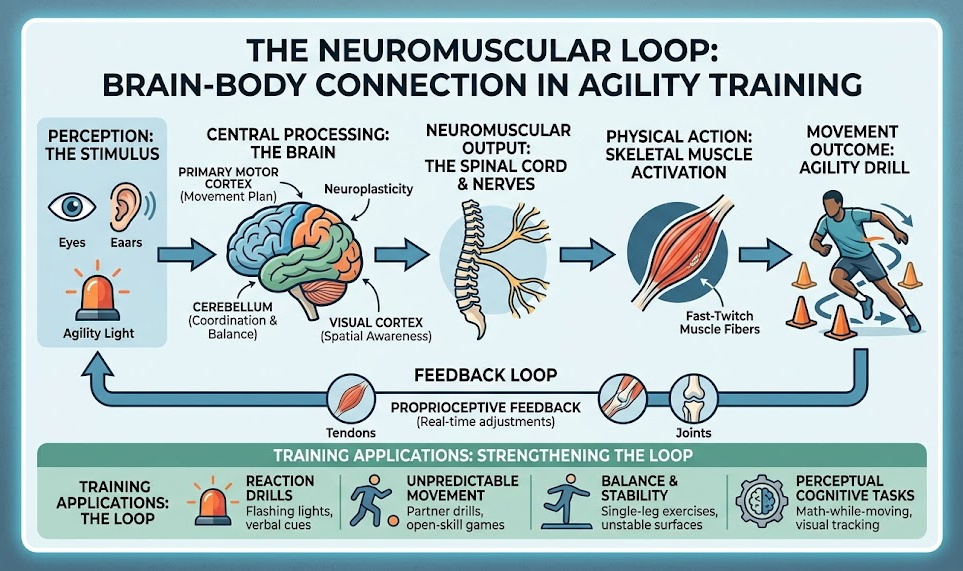
When you react to a stimulus, your body doesn’t simply receive an instruction from your brain.
There is a continuous conversation happening between sensory information and movement.
You see something.
Your brain interprets it.
Your body position matters.
Your previous movement matters.
Your environment matters.
Then you make a decision.
And the movement begins.
As you move, new information comes in.
That information can change the next decision.
So agility isn’t really a straight line.
It’s a loop:
Perceive → Decide → Move → Receive New Information → Adapt
That’s why agility can be such a powerful example of nervous-system training.
You’re practicing the ability to update your response.
Agility Training Requires More Than Speed
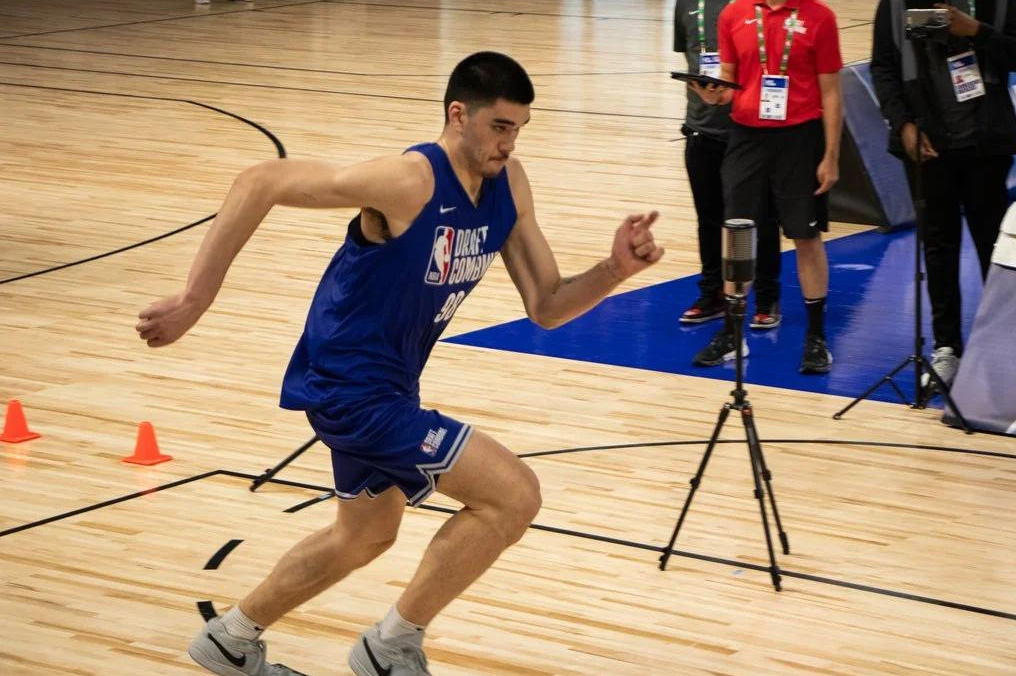
Speed gets most of the attention.
But speed without control can become a liability.
Imagine two people running toward the same point.
One can accelerate extremely quickly but struggles to stop.
The other is slightly slower but can decelerate, plant, change direction, and accelerate again without losing control.
Which one has better movement?
It depends on the situation.
That’s why effective agility training should include acceleration and deceleration, not just maximum-speed movement.
Your ability to slow down is part of your ability to change direction.
Your ability to control your body is part of your speed.
And your ability to perceive what’s happening determines whether you’re moving in the right direction in the first place.
Agility Training and Nervous System Resilience
There’s a deeper Full Armor connection here.
We often talk about nervous-system regulation as if the goal is simply to become calmer.
But regulation isn’t just calmness.
It’s flexibility.
Your nervous system needs to be able to respond when demand increases and return toward recovery when the demand decreases.
Agility provides a physical example of that flexibility.
You accelerate.
You decelerate.
You change direction.
You stabilize.
You accelerate again.
The demand changes.
Your response changes.
Then you recover.
That doesn’t mean agility drills are automatically a form of nervous-system regulation, and we shouldn’t oversell the science.
But they do provide a useful training environment for perception, movement, adaptation, and controlled response.
And those are qualities that matter far beyond the cone drill.
How to Add Agility Training Without Overdoing It
More isn’t always better.
Agility requires attention and quality.
If you’re exhausted, your reactions slow down.
Your technique can deteriorate.
Your ability to decelerate can change.
Your decision-making can become less precise.
So agility work often makes sense when you’re relatively fresh.
For many people, five to fifteen minutes of quality work can be enough to add a meaningful stimulus to a training session.
You might use it as part of a warm-up.
You might place it before strength training.
You might use it as a dedicated performance session.
The important thing is to match the demand to your current ability.
Start with control.
Earn speed.
Then add uncertainty.
That’s how you build adaptability without turning every session into chaos.
Here’s The Path
There’s something bigger hiding inside agility training.
You don’t always get to choose what happens next.
You don’t always get to prepare.
Sometimes life changes direction while you’re already moving.
And the question isn’t:
“Can I control what happens?”
You can’t.
The better question is:
“Can I learn to respond when it does?”
That’s what makes agility so much more than a sports-performance quality.
You’re teaching your body to pay attention.
You’re teaching it to recognize change.
You’re teaching it to adjust.
And you’re learning that changing direction doesn’t mean you’ve failed.
Sometimes changing direction is the skill.
You can have strength.
You can have balance.
You can have speed.
You can have discipline.
But if you can’t adapt when reality changes, those qualities can become difficult to use.
The goal isn’t to eliminate uncertainty.
It’s to become more capable inside it.
That applies to movement.
It applies to training.
And, in a much broader sense, it applies to life.
You don’t need to know exactly what’s coming.
You need to trust that you can meet what comes.
Train the body.
Pay attention to the signals.
Practice responding.
Recover.
Adapt.
Then do it again.
The Research Behind This Article
Optimizing Agility Training in Team Sport Players—The Role of Perception-Action Coupling: A Systematic Review with Multi-Level Meta-Analysis
Sports Medicine
This recent systematic review and meta-analysis specifically examined agility training while emphasizing perception-action coupling—the ability to connect what you perceive with the movement you produce. That distinction supports the article’s central point that true agility involves more than simply moving quickly.
PubMed — Optimizing Agility Training in Team Sport Players
Training to Improve Pro-Agility Performance: A Systematic Review
Journal of Human Kinetics
This systematic review examined 20 studies involving 638 participants and found positive effects from several training approaches—including sprint, plyometric, resistance, and combined training—on pro-agility performance.
PubMed — Training to Improve Pro-Agility Performance
Effect of Different Physical Training Forms on Change of Direction Ability: A Systematic Review and Meta-analysis
Sports Medicine
This review included 74 studies and 1,652 participants and found that multiple training approaches can improve change-of-direction performance, while also noting that the most effective method depends on the specific demands of the task.
PubMed — Effect of Different Physical Training Forms on Change of Direction Ability
Effects of Speed-Agility-Quickness Training on Pre-Planned Change-of-Direction Speed
Scientific Reports
A 2026 systematic review and meta-analysis of 22 studies found that speed-agility-quickness training significantly improved pre-planned change-of-direction speed and linear sprint performance in adolescent and young adult team-sport athletes. The findings are useful for understanding the physical side of agility, while true reactive agility also requires perception and decision-making.
PubMed — Effects of SAQ Training on Change-of-Direction Speed
Continue Your Journey
Agility brings several pieces of the movement puzzle together. If you want to build that progression from the ground up, continue with these Full Armor resources:
Balance Training: The Hidden Key to a Stronger Nervous System
Balance gives your nervous system the foundation for controlling your position before you ask it to rapidly change direction.
Proprioception Exercises: Unlock Better Body Control
Proprioception helps your nervous system understand where your body is in space—a critical piece of controlled movement and adaptation.
Coordination Exercises: Train Your Brain to Move Better
Coordination connects perception and movement, helping the body organize more complex actions.
Reaction Time Exercises: Train Your Nervous System to Respond Faster
Reaction time adds the next layer: responding quickly when an unexpected stimulus appears.
How Strength Training Regulates Your Nervous System
Strength provides the physical capacity behind acceleration, deceleration, stability, and force production.
Start Here
Start building a stronger foundation with the FREE Full Armor Nervous System Reset Guide.
Inside you’ll discover practical daily practices to:
- Regulate your nervous system
- Reduce stress
- Improve recovery
- Build healthier habits
Get the Free Full Armor Nervous System Reset Guide
If You Want To Go Deeper…
The Full Armor 21 Day Method helps you put these principles into practice through a daily framework focused on:
- Nervous system regulation
- Movement
- Recovery
- Intentional habits
- Building resilience
If you want to go deeper, the 21 Day Method gives you a structured way to turn these ideas into daily practice.
No responses yet