
There is a difference between being strong and being able to use your strength quickly. Power training teaches your body to produce force rapidly, combining strength, speed, coordination, and nervous-system control.
You might be able to lift a heavy weight, squat a significant load, or carry something difficult, but what happens when you need to produce force right now?
You stand up when you almost lose your balance. You push yourself away from something.
You jump, accelerate, catch yourself, or change direction. Those moments don’t give you time to slowly build force.
Your body has to respond—and it has to respond quickly.
That’s where power training becomes more than another fitness concept.
It’s about teaching your body to access the strength you’ve already developed when the situation demands speed.
And as we move through the progression from balance, to proprioception, to coordination, to reaction, and agility, power becomes the next question:
Can you produce enough force, quickly enough, when it actually matters?
What Is Power Training?
Power training focuses on producing force rapidly.
Strength is primarily about how much force you can produce.
Power adds speed to that equation.
A simple way to think about it is:
Power = Force × Speed
You can be very strong without being particularly powerful.
And you can be relatively strong while still improving how quickly you can express that strength.
For example, imagine two people performing a squat.
Both can squat the same amount of weight.
One person moves the weight slowly.
The other produces the force to move it rapidly.
Their maximum strength might be similar.
Their power output can be very different.
This distinction becomes especially important when we talk about real-world movement.
Getting up from a chair.
Climbing stairs.
Jumping.
Accelerating.
Changing direction.
Recovering from a stumble.
These aren’t simply strength tasks.
They often require you to produce enough force quickly enough.
That is the quality power training is designed to develop.

How Power Training Challenges the Nervous System
Here’s something that’s easy to miss.
The nervous system doesn’t simply tell your muscles to contract.
It helps determine how much force, how quickly, and in what sequence.
When you’re trying to move explosively, your nervous system has to coordinate a rapid sequence of events.
Muscles have to activate.
Force has to be produced.
Joints have to stabilize.
Movement has to be coordinated.
And the entire process has to happen quickly.
That’s why power training is not simply about having powerful muscles.
It is also about your ability to organize movement rapidly.
This is one reason high-velocity resistance training has attracted so much attention in research. Studies in older adults have found that high-speed resistance or power training can produce improvements in muscle power and aspects of physical function, although the size and certainty of those benefits vary across outcomes and studies.
The nervous system is part of that story.
You’re practicing the ability to recruit and coordinate force when speed matters.
Power Training vs. Strength Training
Strength and power aren’t competing ideas.
They build on each other.
Think about a foundation.
Strength gives you the capacity to produce force.
Power teaches you to express some of that force quickly.
That means power training doesn’t replace strength training.
For many people, strength provides the foundation that makes more dynamic training possible.
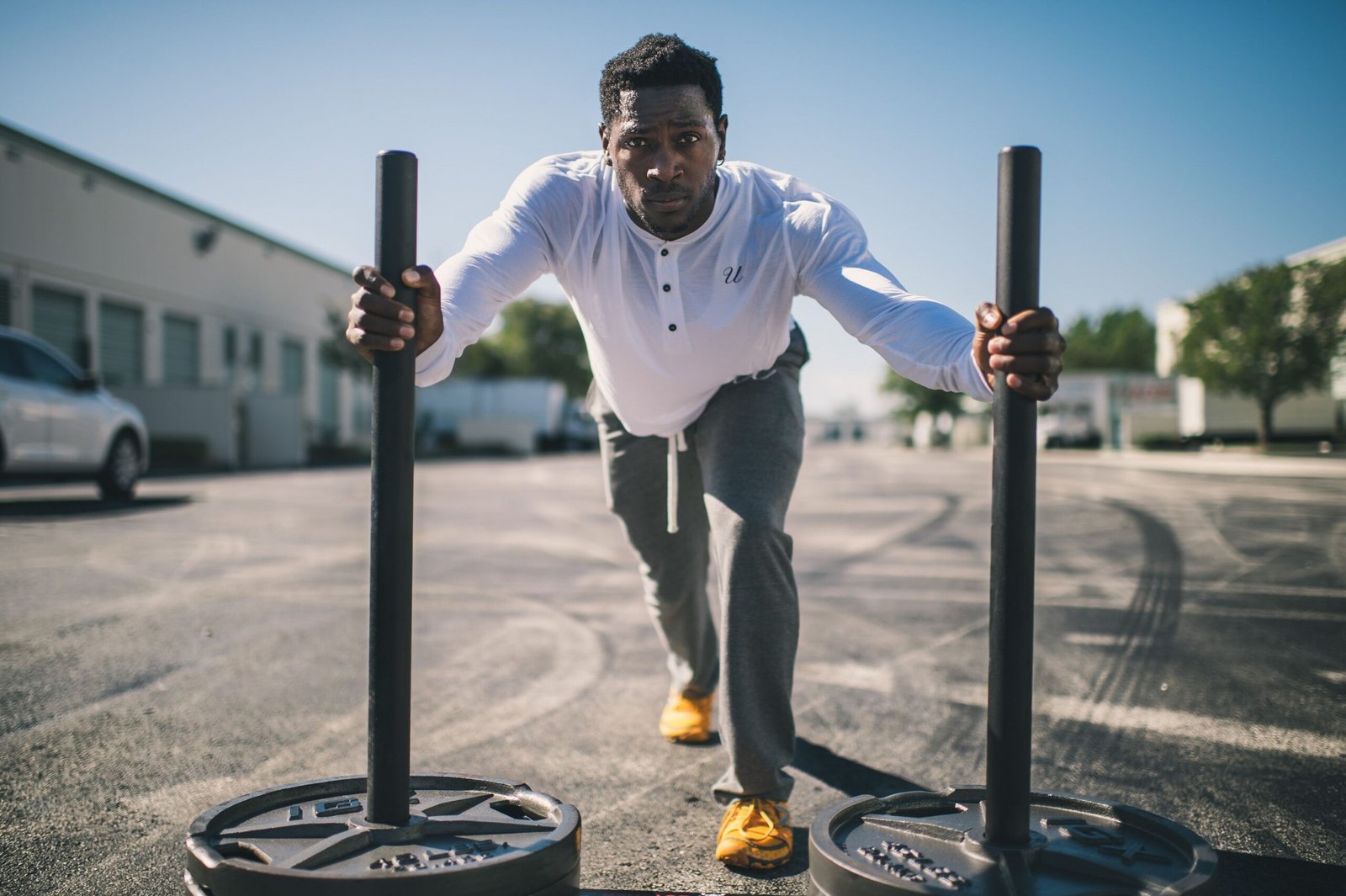
Imagine pushing a heavy sled.
The first part is about producing enough force to get it moving.
Once it moves, you want to accelerate it.
The physical qualities overlap, but the emphasis changes.
Strength asks:
How much force can I produce?
Power asks:
How quickly can I produce it?
And performance often depends on both.
A 2022 systematic review and meta-analysis comparing power training with traditional strength training in older adults found that power training produced greater improvements in muscle power and several activity-based measures, although the evidence quality was limited.
That doesn’t mean power training is universally better.
It means the qualities are different—and both deserve a place in a well-rounded training approach.
Why Power Training Matters Beyond Athletics
You don’t have to be an athlete to care about power.
Think about standing up quickly.
Getting out of the way.
Stepping over an obstacle.
Climbing stairs.
Catching yourself after a misstep.
Getting off the floor.
These movements require the ability to produce force rapidly enough to meet the demand.
That becomes increasingly important as we age.
Strength matters because you need enough force capacity.
But having the strength and being able to access it quickly aren’t exactly the same thing.
Research has increasingly examined muscle power because it may be closely related to functional performance. A systematic review and meta-analysis of 15 trials involving 583 older adults found that power training improved muscle power and several activity-based outcomes compared with traditional strength training.
Again, the lesson isn’t that everyone needs to start jumping onto boxes tomorrow.
The lesson is simpler:
Don’t train only for what your body can lift. Train for what your body can do with that strength.

The Best Power Training Exercises to Start With
Power training should match your current ability.
Explosive movement isn’t automatically better simply because it’s explosive.
The goal is to produce force quickly while maintaining control.
Start with movements you can perform confidently.
Medicine Ball Chest Pass
Stand facing a sturdy wall or have a qualified partner positioned safely in front of you.
Hold a medicine ball at chest height.
Brace your body.
Then drive the ball forward explosively.
The goal isn’t to grind through the movement.
It’s to produce force quickly.
Catch or retrieve the ball under control and repeat.
This is a simple way to introduce explosive upper-body movement without requiring complicated equipment.
Medicine Ball Slam
Hold a medicine ball overhead.
Use your entire body to drive it forcefully toward the ground.
Pick it up under control and repeat.
The movement combines the trunk, shoulders, hips, and legs.
Start with a manageable ball.
The goal is speed and coordination, not exhaustion.
Squat to Calf Raise
Start in a controlled squat.
Drive upward quickly and finish by rising onto your toes.
You don’t need to jump.
This provides a lower-impact way to introduce faster force production.
As your control improves, you can progress toward more explosive variations.
Jump Squat
Start in a comfortable squat position.
Drive through the floor and jump.
Land softly.
Reset.
Repeat only as long as you can maintain good landing mechanics.
If jumping isn’t appropriate for your current ability, use a fast bodyweight squat or another lower-impact movement instead.
Power training should challenge your system without ignoring your current capacity.
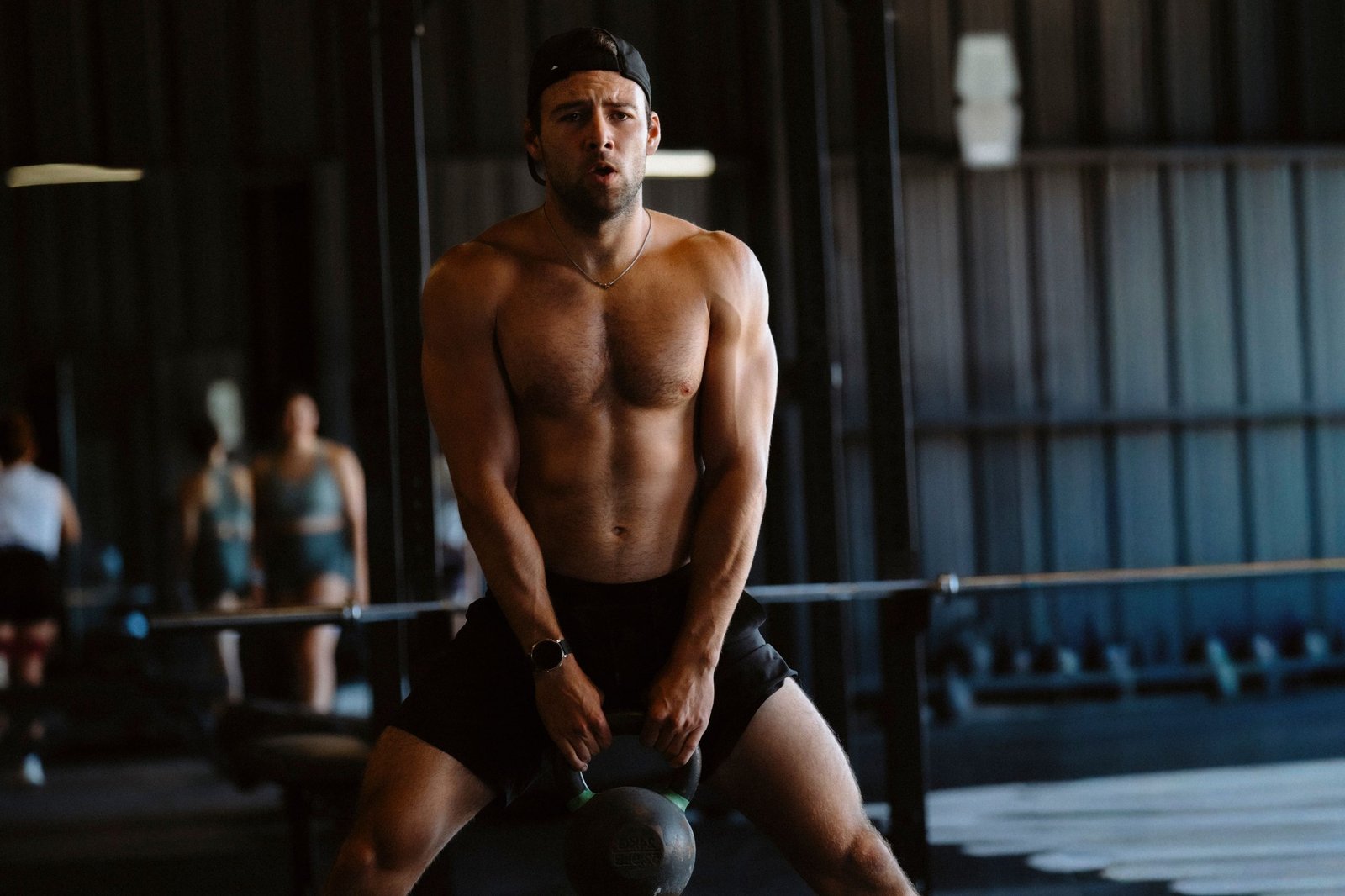
Kettlebell Swing
The kettlebell swing is a hip-dominant movement that requires rapid force production through the hips while maintaining control of the trunk.
The goal isn’t to lift the kettlebell with your arms.
It’s to generate force through the hips and transfer that force into the bell.
Because technique matters, learn the movement properly before trying to increase speed or load.
Fast Step-Up
Use a stable, appropriately sized step.
Place one foot on the platform.
Drive through the working leg and rise quickly.
Step down under control.
Alternate sides.
This provides a useful bridge between traditional strength work and faster functional movement.

How to Progress Power Training
Power training shouldn’t begin with maximum intensity.
The progression should be earned.
Start with movement quality.
Then develop strength.
Then introduce speed.
Then increase complexity.
A simple progression looks like this:
Step 1: Control
Learn the movement.
Step 2: Strength
Develop the force capacity needed to perform it safely.
Step 3: Speed
Perform the movement faster while maintaining technique.
Step 4: Load
Introduce appropriate resistance when the movement is well established.
Step 5: Complexity
Combine power with balance, reaction, or change of direction.
Step 6: Specificity
Train the type of power that actually matches your goal.
This is important because power is highly specific.
Jumping power isn’t identical to throwing power.
Upper-body power isn’t the same as lower-body power.
Linear acceleration isn’t the same as changing direction.
Train the quality you actually want.

Power Training and the Nervous System’s Ability to Adapt
This is where the Full Armor connection becomes deeper.
Your body doesn’t simply adapt to exercise.
It adapts to the demand you repeatedly give it.
Slow controlled strength work teaches one thing.
Fast explosive movement teaches another.
Balance challenges another system.
Reaction challenges another.
Agility combines several of them.
Power training adds another layer:
Can you organize force quickly?
That matters because the nervous system constantly has to match the body’s response to the demand.
Too little force and you can’t complete the task.
Too much force and movement becomes inefficient.
Too slow and you may miss the opportunity to respond.
Too fast without control and you create another problem.
The goal is not maximum output at all times.
It’s appropriate output for the situation.
That’s a nervous-system concept.
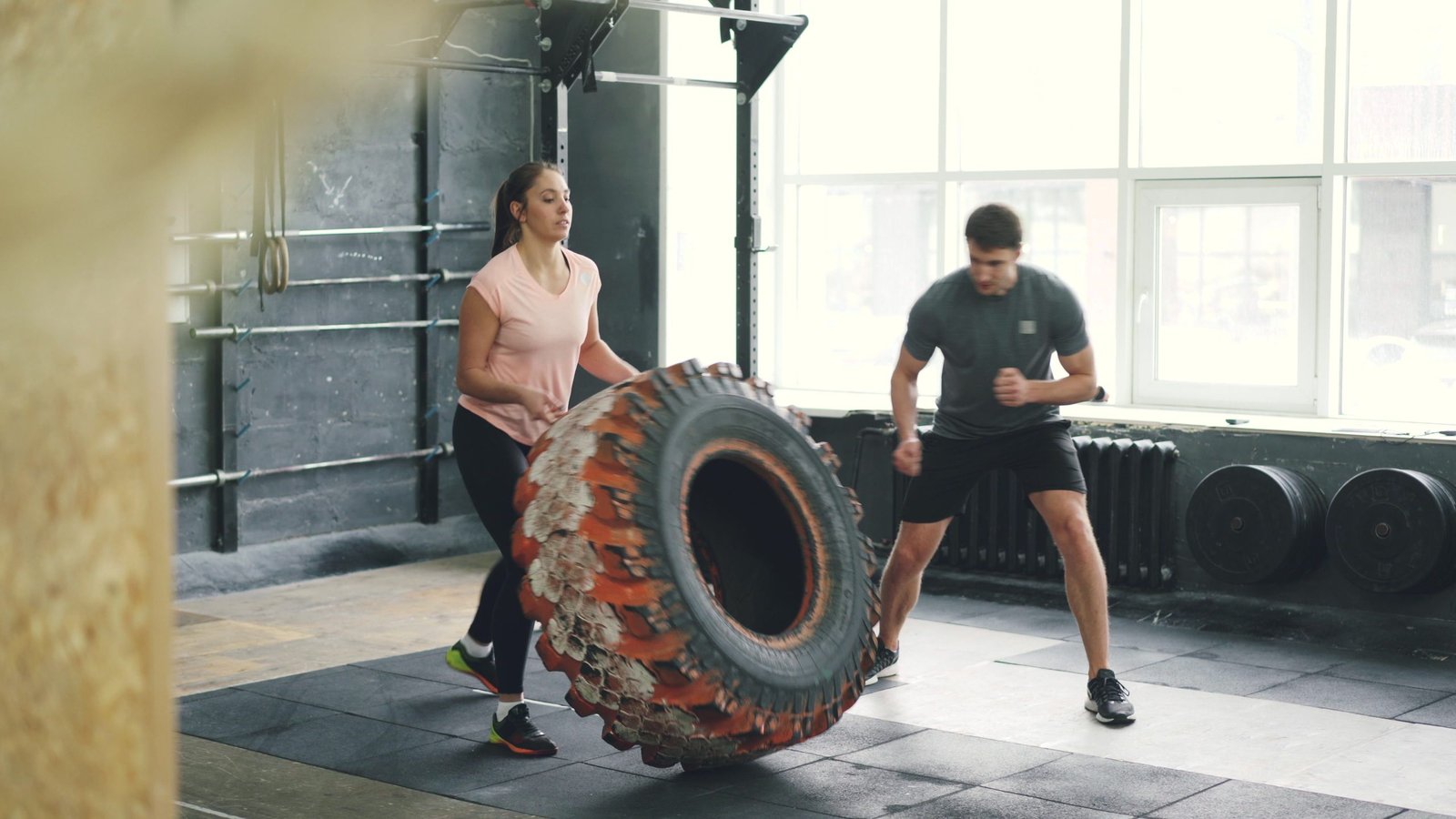
Power Training Isn’t the Same as Going All-Out
This distinction matters.
Explosive doesn’t mean reckless.
Power training isn’t about turning every exercise into a maximum-effort test.
You want quality.
That means enough rest to produce strong repetitions.
It means stopping when speed drops substantially.
It means maintaining control.
It means choosing movements appropriate to your experience and physical capacity.
If the first repetition looks explosive and the tenth looks slow and sloppy, you’re no longer training the same quality.
You’re training fatigue.
Fatigue has its place.
But power requires a different kind of attention.
Quality over quantity.

Power Training, Aging, and Staying Capable
One of the most compelling reasons to train power is that physical capability isn’t just about how much you can lift.
It’s about whether you can use your strength when you need it.
A systematic review and meta-analysis of 20 randomized clinical trials involving 566 community-living older adults found that power training was associated with modest improvements in physical function compared with traditional strength training, although the certainty of evidence was low.
Another systematic review found that both lower- and higher-intensity power training produced meaningful improvements in muscle power among healthy older adults, suggesting that explosive training does not necessarily require maximal loading to be useful.
That’s an important point.
You don’t necessarily need to chase the heaviest possible weight.
You need to give the body an appropriate signal.
And that signal can be adjusted.
Load.
Speed.
Range of motion.
Exercise selection.
Rest.
All of these variables matter.
How Power Fits Into the Full Movement Progression
Look at the progression we’ve been building.
Balance teaches your nervous system to maintain control.
Proprioception gives it information about where your body is.
Coordination helps organize that information into movement.
Reaction time teaches you to respond to an external stimulus.
Agility teaches you to adapt and change direction.
And now:
Power asks you to produce force quickly.
None of these qualities exists in isolation.
Imagine reacting to something while moving.
You need perception.
You need coordination.
You need balance.
You need the ability to change direction.
And if the situation demands it, you need enough power to produce force quickly.
That’s what real movement looks like.
Not isolated qualities.
A system.
Here’s The Path
There’s a temptation in fitness to keep chasing bigger numbers.
More weight.
More repetitions.
More speed.
More intensity.
But eventually, the question becomes more important than the number:
What are you actually training your body to do?
Power training gives you another answer.
You’re training your body to use strength quickly.
You’re teaching your nervous system to organize force when time matters.
You’re developing the ability to move with intention instead of simply moving with effort.
And that distinction matters.
Because life doesn’t always ask how much you can lift.
Sometimes it asks how quickly you can respond.
Can you catch yourself?
Can you get up?
Can you accelerate?
Can you move out of the way?
Can you produce force when you need it?
You don’t know which moment is coming.
That’s why capability matters.
Build strength.
Develop control.
Practice speed.
Respect recovery.
Then bring those qualities together.
The goal isn’t to become explosive for the sake of being explosive.
It’s to build a body that remains capable when the moment demands something from it.
The Research Behind This Article
Effectiveness of Power Training Compared to Strength Training in Older Adults: A Systematic Review and Meta-analysis
European Review of Aging and Physical Activity
This systematic review and meta-analysis included 15 trials and 583 participants and found that power training produced significant improvements in muscle power and several activity-based measures compared with traditional strength training. The authors noted that power training showed potential advantages for physical performance, while also identifying limitations in the available evidence.
High-Velocity Power Training Has Similar Effects to Traditional Resistance Training for Functional Performance in Older Adults: A Systematic Review
Journal of Physiotherapy
This systematic review and meta-analysis included 19 trials with 1,055 participants. High-velocity power training produced some advantages on measures such as the Short Physical Performance Battery and Timed Up and Go, although the authors rated much of the evidence as low quality and found similar effects to traditional resistance training for many outcomes.
The Effects of High- Versus Low-Intensity Power Training on Muscle Power Outcomes in Healthy, Older Adults: A Systematic Review
Journal of Aging and Physical Activity
This systematic review examined 27 studies and found meaningful improvements in muscle power across high-, moderate-, and low-intensity power-training groups, supporting the idea that useful power adaptations do not necessarily require maximal loading.
Comparison of Power Training vs Traditional Strength Training on Physical Function in Older Adults: A Systematic Review and Meta-analysis
jams Network Open
This systematic review and meta-analysis included 20 randomized clinical trials involving 566 older adults and found that power training was associated with modest improvements in physical function compared with traditional strength training, although the certainty of evidence was low.
Continue Your Journey
You’ve now moved from sensing and controlling movement into producing force quickly. These Full Armor articles build that progression:
Balance Training: Unlock Hidden Stability and Strength
Balance gives your nervous system the foundation for controlling your position while you move.
Proprioception Exercises: Unlock Better Body Control
Proprioception helps your nervous system understand where your body is and how it is moving through space.
Coordination Exercises: Train Your Brain to Move Better
Coordination helps turn sensory information into organized, controlled movement.
Reaction Time Exercises: Train Your Nervous System to Respond Faster
Reaction time adds another layer by challenging your nervous system to respond when an unexpected stimulus appears.
Powerful Agility Training: Train Your Nervous System to Move Faster
Agility takes reaction and movement into a more complex environment where you have to adapt and change direction.
Start Here
Start building a stronger foundation with the FREE Full Armor Nervous System Reset Guide.
Inside you’ll discover practical daily practices to:
- Regulate your nervous system
- Reduce stress
- Improve recovery
- Build healthier habits
Get the Free Full Armor Nervous System Reset Guide
If You Want To Go Deeper…
The Full Armor 21 Day Method helps you put these principles into practice through a daily framework focused on:
- Nervous system regulation
- Movement
- Recovery
- Intentional habits
- Building resilience
If you want to go deeper, the method gives you a structured way to turn these principles into daily practice.
No responses yet