

There is a point in almost every workout where the easy part is over.
Your breathing gets heavier.
Your legs start feeling different.
The first burst of energy is gone.
And now you have a choice.
You can slow down because your body is uncomfortable, or you can learn how to stay present and keep moving.
That is where endurance training becomes interesting.
It isn’t simply about running farther, riding longer, or seeing how long you can suffer. Endurance training teaches your body how to sustain effort, manage fatigue, regulate intensity, and continue responding when the initial excitement wears off.
And there is something deeper happening underneath all of that.
Your nervous system is learning what sustained effort feels like.
It is learning how to manage increasing physical demand without immediately treating that demand as a reason to stop.
Over time, that changes more than your cardiovascular fitness.
It changes your relationship with discomfort.

What Is Endurance Training?
Endurance training is physical training designed to improve your ability to sustain activity over time.
Running is one example.
Walking, cycling, swimming, rowing, hiking, and other forms of sustained movement can also develop endurance.
But endurance isn’t simply about duration.
It is about your body’s ability to continue producing useful work while managing fatigue.
Think about the difference between sprinting across a parking lot and walking for an hour.
The sprint demands a huge amount of energy in a short period.
The walk requires your body to regulate effort over a much longer period.
Both are useful.
They simply train different qualities.
Endurance training teaches your body to become more efficient at sustained work.
Your heart has to keep supplying blood.
Your lungs have to continue exchanging oxygen.
Your muscles have to keep producing force.
Your nervous system has to coordinate the movement.
And your brain has to continuously evaluate how much effort you can afford to spend.
That last part is easy to overlook.
Your body isn’t simply working harder.
It is constantly regulating.

How Endurance Training Challenges Your Nervous System
Every physical challenge sends information to your nervous system.
As exercise continues, your brain receives information about breathing, heart rate, muscle fatigue, temperature, energy availability, and perceived effort.
Your nervous system has to make sense of all of it.
How hard are you working?
How much longer can you sustain this pace?
Do you need to slow down?
Can you increase your effort?
Can you recover while still moving?
This is one reason endurance training can become such a valuable nervous-system practice.
You aren’t trying to eliminate discomfort.
You’re learning to interpret it.
There is a huge difference.
Discomfort doesn’t automatically mean something is wrong.
Sometimes it simply means you’re working.
Of course, pain, dizziness, chest pain, unusual shortness of breath, or other concerning symptoms should never be ignored.
But normal exertion is something your body can learn to tolerate.
That process requires exposure.
You experience effort.
You recover.
You adapt.
Then you experience a little more.
That is how capacity grows.

Endurance Training Builds the Ability to Sustain Effort
Most people are familiar with explosive effort.
Lift something heavy.
Sprint.
Jump.
Push hard.
Go.
But life isn’t always explosive.
Sometimes the challenge is simply continuing.
Keep walking.
Keep working.
Keep climbing.
Keep moving.
Keep thinking clearly when you’re tired.
Keep showing up after the excitement is gone.
That is where endurance matters.
A strong endurance base gives your body a larger reserve for sustained activity.
You don’t necessarily need to feel amazing while doing it.
You simply become better at continuing.
This is especially important as you get older.
You want the ability to spend an afternoon walking with your family.
Carry groceries.
Work in the yard.
Climb stairs.
Travel.
Play with your kids or grandkids.
Train without feeling destroyed afterward.
Endurance isn’t only an athletic quality.
It is a quality of life.

Endurance Training Doesn’t Have to Be Hard Every Time
This is one of the biggest misunderstandings about endurance training.
People often assume that if the workout doesn’t leave them exhausted, it wasn’t effective.
That’s not true.
In fact, some of the most useful endurance work can feel surprisingly manageable.
A 2026 systematic review and meta-analysis examining low-intensity endurance training found improvements in aerobic fitness and several cardiometabolic health measures in working-age adults. The researchers also found that higher intensity was associated with greater VO₂max adaptations, but improvements occurred with low-intensity training as well.
That’s important.
You don’t have to turn every workout into a battle.
Sometimes the goal is simply to spend time moving.
Build the engine.
Develop the foundation.
Teach your body that sustained effort is normal.
This is where walking, easy cycling, comfortable running, hiking, and other lower-intensity activities become valuable.
They give you an opportunity to accumulate work without constantly asking your body to operate at its limit.

Why Endurance Training Can Improve Your Recovery
Endurance and recovery might seem like completely different subjects.
They’re not.
Your ability to recover is partly about how effectively your body can shift between states.
You need to be able to increase output when necessary.
You also need to be able to come back down.
That transition matters.
Research examining exercise training and cardiac parasympathetic activity in previously sedentary people found improvements in measures of cardiac parasympathetic modulation following exercise training, although the researchers noted limitations in the available evidence and insufficient data to determine effects on heart-rate recovery specifically.
In practical terms, that gives us an interesting connection.
Training doesn’t only teach your body how to work.
It can also help your system become better at regulating itself around physical stress.
That doesn’t mean every endurance workout automatically “resets” your nervous system.
It means consistent exercise can contribute to the body’s ability to regulate physiological demands.
And that is a very different idea from simply exercising harder.

Endurance Training and the Difference Between Effort and Exhaustion
There is a point where effort becomes useful.
There is also a point where more effort simply becomes more fatigue.
Learning the difference is part of becoming a better athlete.
Imagine you’re halfway through a long run.
Your breathing is elevated.
Your legs are working.
You’re uncomfortable.
But you can still maintain your pace.
That’s productive discomfort.
Now imagine your form is falling apart, your breathing is becoming uncontrolled, your pace has collapsed, and you’re simply forcing yourself forward because you believe stopping means you’re weak.
That’s different.
Endurance training isn’t about proving that you can suffer the most.
It is about developing the ability to regulate effort.
Sometimes you push.
Sometimes you hold steady.
Sometimes you back off.
Sometimes you recover.
That isn’t weakness.
That’s control.

High-Intensity Endurance Training Has a Place Too
Low-intensity endurance work is valuable, but that doesn’t mean high-intensity training should be ignored.
Quite the opposite.
High-intensity interval training can be a powerful tool for improving respiratory fitness.
A 2024 umbrella review analyzed 24 systematic reviews and meta-analyses representing 429 primary studies and nearly 13,000 participants. The researchers found that HIIT improved respiratory fitness compared with both non-exercise controls and moderate-intensity continuous training.
But here’s the important part:
That doesn’t mean every workout should be HIIT.
High-intensity training creates a significant demand.
If you use it constantly, you may simply create more fatigue than you can recover from.
A better approach is to understand that different intensities serve different purposes.
Easy work builds your foundation.
Moderate work develops sustained capacity.
Hard intervals challenge your upper limits.
Recovery gives your body the opportunity to adapt.
You need the conversation between all four.

Endurance Training Teaches You How to Pace Yourself
One of the most valuable skills you can develop through endurance training has nothing to do with your muscles.
It’s pacing.
When you’re new to endurance work, it is easy to start too fast.
You feel good.
Your energy is high.
You push.
Then halfway through the session, you realize you’ve spent too much too early.
Now you’re trying to survive the rest.
That experience teaches you something.
You learn that sustainable effort matters.
You learn to listen to your breathing.
You learn to recognize when you’re drifting above a pace you can maintain.
You learn that going slower at the beginning can sometimes allow you to go faster overall.
That lesson carries beyond exercise.
Life has a pacing problem too.
We sprint into projects.
We overcommit.
We try to change everything at once.
Then we burn out.
Endurance teaches another way.
Start.
Set a sustainable pace.
Keep going.
Adjust when necessary.
Recover.
Continue.
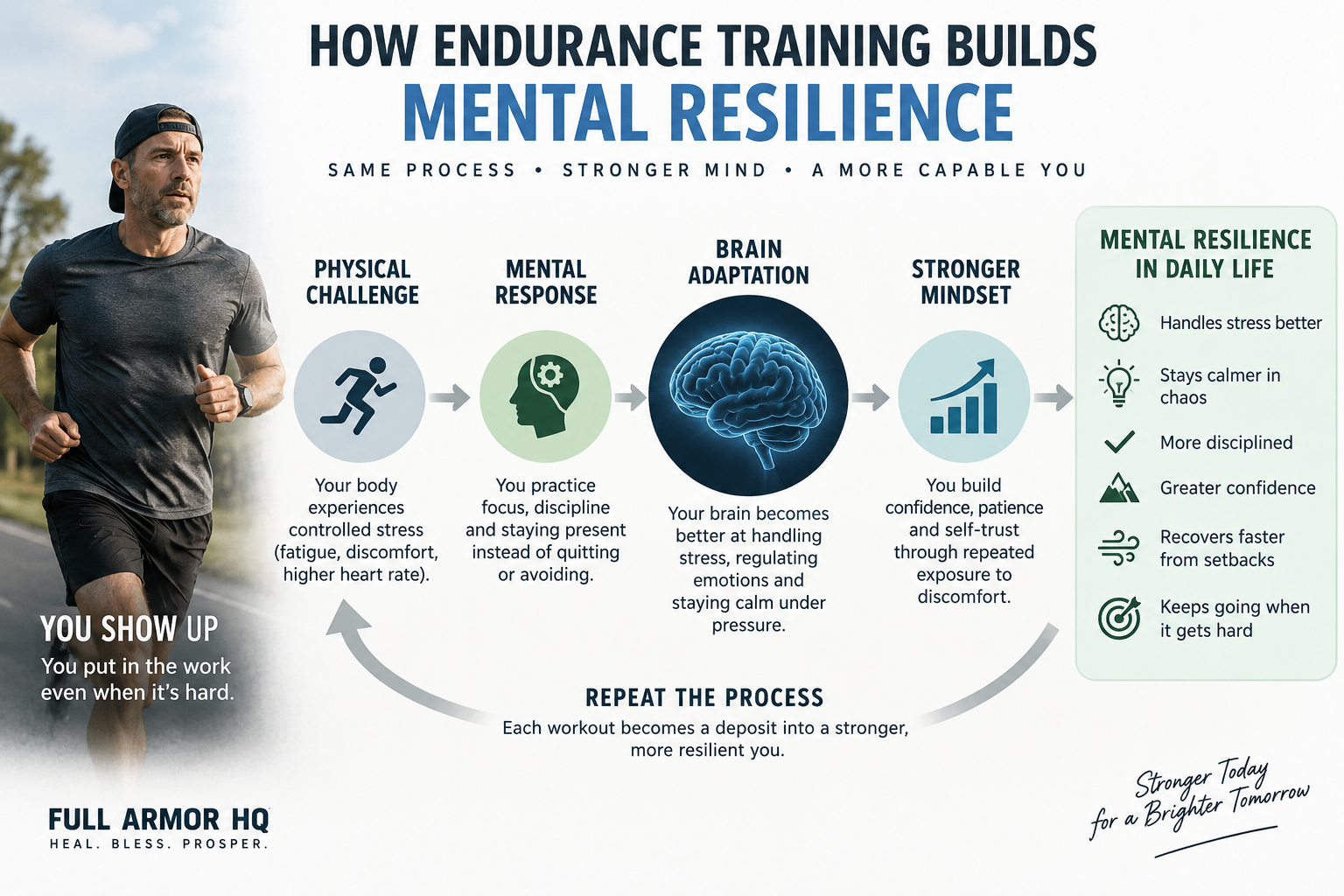
Endurance Training and Mental Resilience
There is something psychologically powerful about doing something longer than you wanted to.
You reach the point where your mind says:
I’m done.
But sometimes you’re not.
You have more capacity.
You just haven’t learned how to access it yet.
This doesn’t mean ignoring legitimate physical limits.
It means learning the difference between “this is uncomfortable” and “I need to stop.”
That distinction is developed through experience.
You gradually collect evidence.
I can keep going.
I can breathe through this.
I can slow down without quitting.
I can recover and continue.
I can handle discomfort without panicking.
Those experiences matter.
Your nervous system doesn’t learn resilience because someone tells you that you’re resilient.
It learns through repeated experiences in which you face a manageable challenge, respond, and discover that you were capable of more than you thought.
That’s the evidence.

A Simple Way to Build Endurance
You don’t need to completely rebuild your training program to improve endurance.
Start with consistency.
1. Walk More
Walking is one of the simplest ways to accumulate aerobic work.
Take a longer walk.
Walk after meals.
Walk on recovery days.
Walk instead of sitting when you have the opportunity.
The goal isn’t always intensity.
Sometimes it’s simply giving your body more time in motion.
2. Add Easy Sustained Cardio
Choose something you enjoy.
Walking.
Cycling.
Jogging.
Swimming.
Rowing.
Hiking.
Start with a duration you can complete without destroying yourself.
Then gradually increase the time.
3. Include Harder Intervals Strategically
Once your foundation is established, add short periods of harder effort.
For example:
- Warm up gradually.
- Perform a controlled hard effort.
- Recover.
- Repeat.
- Cool down.
The exact structure should match your fitness level and goals.
The point is not to make every interval maximal.
The point is to challenge your cardiovascular system while maintaining control.
4. Pay Attention to Recovery
Your endurance improves between challenging sessions too.
Sleep.
Nutrition.
Hydration.
Rest.
Easy movement.
Stress management.
All of these affect your ability to adapt.
Training is the stimulus.
Recovery is where adaptation gets a chance to happen.
5. Progress Slowly
You don’t need to double your running distance next week.
Add a little.
Then give your body time to respond.
Your cardiovascular system, muscles, connective tissue, and nervous system all need time to adapt.
Consistency beats dramatic jumps.

Endurance Training After 40
After 40, endurance training can become even more valuable—not because your body suddenly stops working, but because maintaining capacity becomes something worth being intentional about.
You want to preserve your ability to move for longer periods.
You want your heart and lungs challenged.
You want your legs capable of carrying you.
You want to recover from activity instead of needing days to feel normal again.
And you want physical capacity that supports the rest of your life.
That doesn’t require training like a professional endurance athlete.
It requires maintaining the ability to work, recover, and adapt.
Strength gives you force.
Balance gives you stability.
Proprioception gives you information.
Coordination helps organize movement.
Reaction gives you speed of response.
Agility gives you the ability to change direction.
Power allows you to express force quickly.
And endurance gives you the ability to keep going.
Each quality matters.
Together, they create a more capable human body.
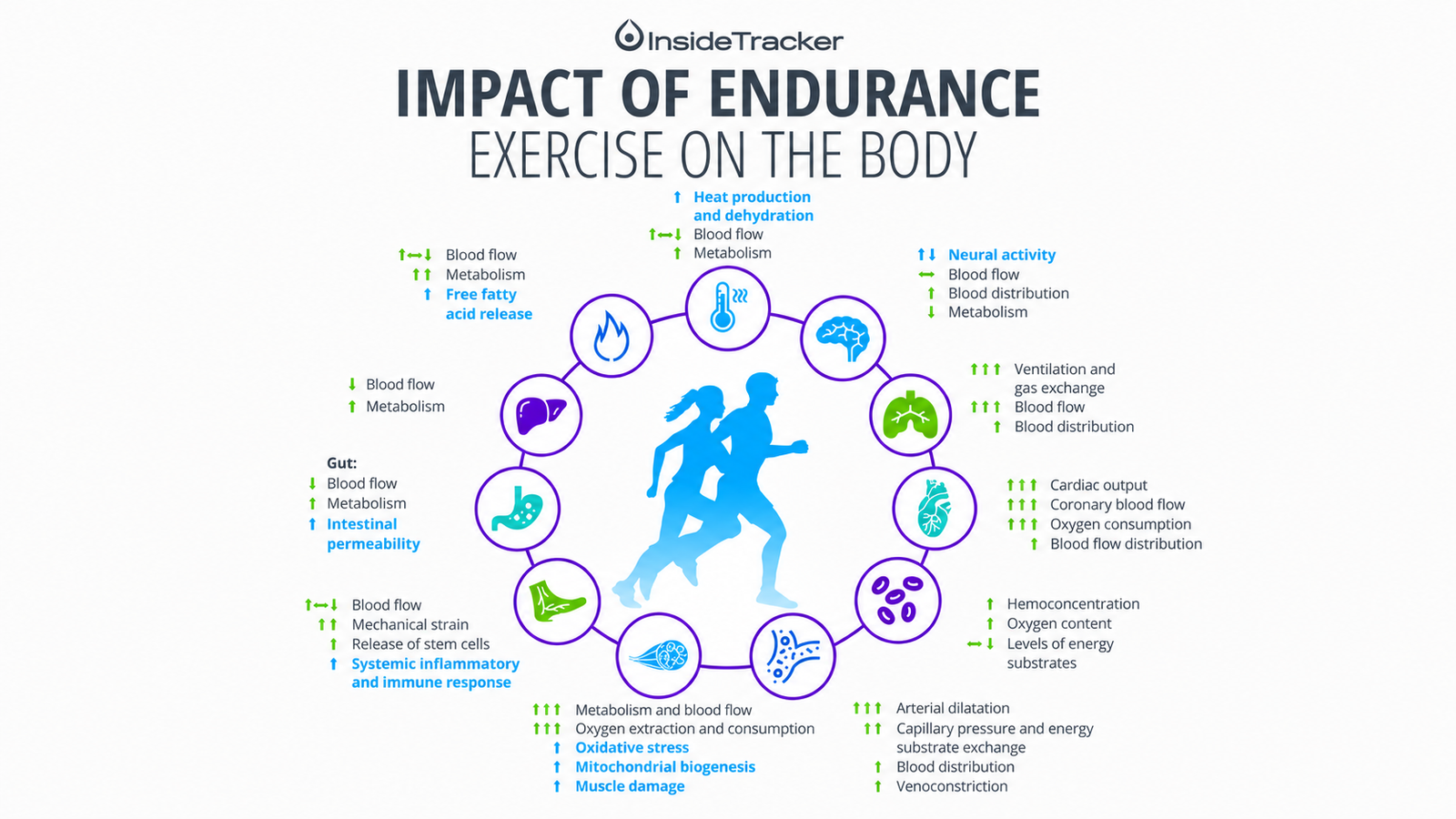
The Bigger Connection Between Endurance and Your Nervous System
This is where the Full Armor approach comes back into focus.
Your body is not a collection of separate systems.
You don’t have a “fitness system” over here and a “nervous system” somewhere else.
Everything is communicating.
Your breathing affects your state.
Your state affects how you move.
Your movement creates sensory information.
Your cardiovascular system responds to demand.
Your brain interprets what you’re experiencing.
Your muscles respond.
Then your brain receives more information.
It is a constant conversation.
Endurance training gives that conversation a particular challenge:
Can we sustain this?
Can we remain coordinated?
Can we regulate effort?
Can we recover?
Can we keep going?
Over time, the answers become more confident.
Not because you convinced yourself with positive thinking.
Because your body has experienced it.

Don’t Confuse Endurance With Constant Suffering
There is a difference between becoming more resilient and becoming addicted to exhaustion.
You don’t need to destroy yourself to become fit.
You don’t need to finish every workout crawling to your car.
You don’t need to feel destroyed to know that you trained effectively.
Sometimes the strongest thing you can do is stop before you cross the line.
Sometimes the smartest workout is an easy one.
Sometimes walking is enough.
Sometimes your body needs recovery more than another hard session.
That isn’t losing your edge.
It’s learning how to manage your resources.
And that is exactly what endurance requires.
The Research Behind This Article
Effects of Low-Intensity Endurance Training on Aerobic Fitness and Risk Factors of Cardiometabolic Health in Working-Age Adults: A Systematic Review and Meta-Analysis
Journal: Scandinavian Journal of Medicine & Science in Sports
This 2026 systematic review and meta-analysis examined 50 studies involving 824 participants in low-intensity endurance-training groups. It found improvements in aerobic fitness and several cardiometabolic measures, supporting the value of lower-intensity endurance work as part of a broader training approach.
High-Intensity Interval Training and Cardiorespiratory Fitness in Adults: An Umbrella Review of Systematic Reviews and Meta-Analyses
Journal: Scandinavian Journal of Medicine & Science in Sports
This umbrella review synthesized 24 systematic reviews and meta-analyses representing 429 primary studies and 12,967 participants. The evidence consistently supported HIIT as an effective method for improving respiratory fitness in adults.
Does Exercise Training Improve Cardiac-Parasympathetic Nervous System Activity in Sedentary People? A Systematic Review with Meta-Analysis
Journal: International Journal of Environmental Research and Public Health
This systematic review examined exercise training and cardiac parasympathetic activity in sedentary adults and found improvements in measures including RMSSD and high-frequency HRV, providing evidence for a connection between regular exercise and autonomic regulation.
Here’s The Path
Endurance isn’t about becoming the person who can suffer the longest.
It’s about becoming the person who can keep going without losing control.
There will always be moments when the first burst of motivation disappears.
Your body gets tired.
The excitement fades.
The work becomes uncomfortable.
That’s where endurance becomes something bigger than fitness.
You learn to regulate your effort.
You learn to breathe.
You learn to slow down without quitting.
You learn that discomfort doesn’t automatically mean danger.
You learn that recovery isn’t failure.
And eventually, you start carrying those lessons outside of training.
You become a little more patient.
A little more steady.
A little less reactive.
You stop needing everything to feel easy before you keep moving.
That’s what makes endurance training so valuable.
You’re not just building the capacity to go farther.
You’re building the capacity to stay with something long enough for adaptation to happen.
And sometimes that’s exactly what life requires.
Continue Your Journey
You’ve been building a progression:
Balance → Proprioception → Coordination → Reaction → Agility → Power → Endurance
Now keep building the system.
- Balance Training: Unlock Hidden Stability and Strength
- Proprioception Exercises: Unlock Better Body Control
- Coordination Exercises: Train Your Brain to Move Better
- Isometric Exercises: The Hidden Nervous System Benefits You Need
- Strength Training and the Nervous System
- Exercise Recovery Tips: 7 Proven Ways to Recover Faster
Start Here
If you want a simple place to begin putting these ideas into practice, start with the FREE Full Armor Nervous System Reset Guide.
It gives you practical daily practices designed to help you build awareness, regulate your nervous system, and create a stronger foundation for movement, recovery, and everyday life.
Get the FREE Full Armor Nervous System Reset Guide
If You Want To Go Deeper…
The Full Armor 21 Day Method helps you put these principles into practice through a daily framework focused on awareness, discipline, nervous system regulation, personal growth, movement, recovery, and resilience.
No responses yet